
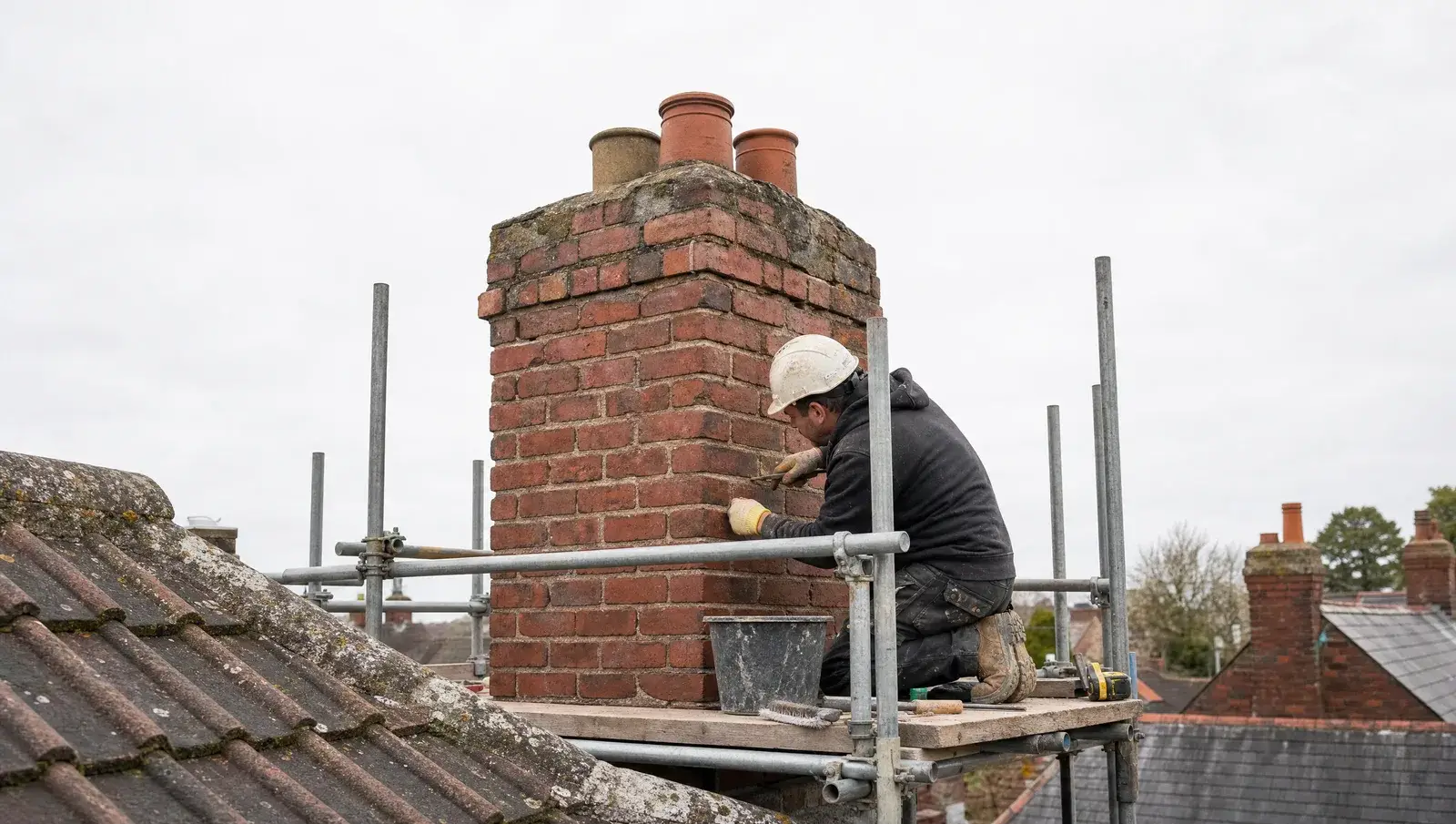
Chimney repair costs: repointing, flaunching and rebuilds
Real 2026 prices for every common chimney job, from mortar and flashing to rebuilding the stack, plus who pays when the chimney is shared. Prices updated July 2026.
The chimney is the most exposed brickwork on the house: it takes weather from every direction, at the highest point, with nothing sheltering it. That is why chimney mortar fails decades before the walls below it do, and why most chimney bills are really access bills with some mortar on top. This guide prices every common job and explains where the money actually goes. For a figure tailored to your own home, use our roof cost calculator.
Chimney repair costs (2026)
| Job | Typical cost |
|---|---|
| Repointing full stack | £400 – £900 |
| Flaunching repair | £150 – £400 |
| Lead flashing renewal | £300 – £800 |
| New pot or cowl | £150 – £400 |
| Rebuild stack above roofline | £1,000 – £2,500 |
| Full chimney removal | £1,500 – £3,500 |
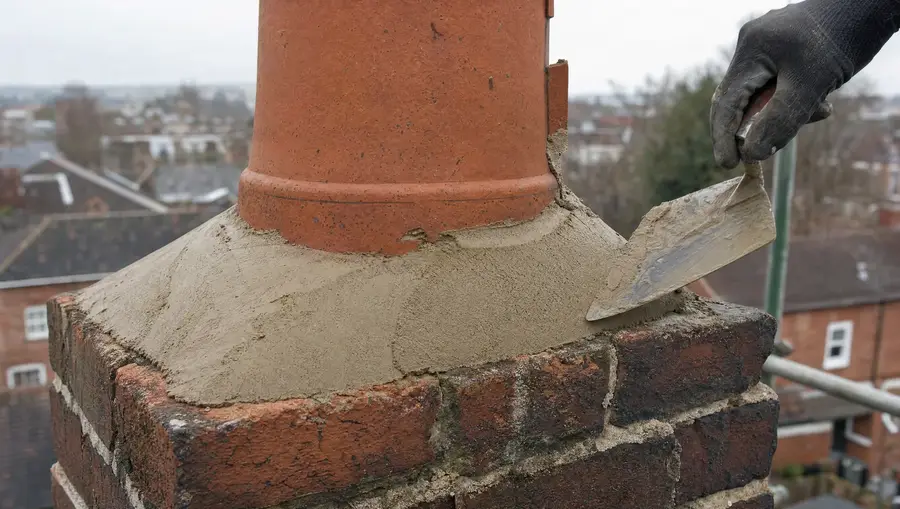
Flaunching is the mortar bed the pots sit in; flashing is the lead sealing the joint between stack and roof. Both fail more often than the brickwork itself, and both are handled by a chimney repair specialist, with leadwork a trade in its own right on older stacks.
Why access drives the cost
A chimney sits at the highest, least reachable point of the roof, so nearly every job on this page needs a scaffold tower around the stack: typically £150 to £300, and usually included in the quotes you receive rather than itemised separately. That access cost is fixed whether the roofer repoints one joint or the whole stack, which is why small chimney jobs feel expensive and why it pays to do everything the stack needs in one visit. Full detail on access pricing is in the scaffolding cost guide.
Signs your chimney needs work
The stack usually announces itself before anything falls. Watch for mortar shedding: crumbling joints, sandy grit in the gutters, or mortar fragments on the ground below the chimney. A stack that has started to lean needs a professional look promptly, because wind loading on a leaning chimney only pushes it further. Inside the house, damp appearing on the chimney breast wall points at failed flaunching, flashing or pointing letting water track down the flue. Any of these on a stack that has not been touched in decades justifies getting it inspected before winter.
Shared stacks on terraces and semis
On terraced and semi-detached houses, one stack often serves two properties and straddles the boundary, which makes it a party structure. In practice that means repair costs are usually split with the neighbour, since both homes benefit and both are exposed if it fails. Sort the practicalities before work starts: agree the contractor, the scope and the split, and get that agreement in writing. A shared stack repaired unilaterally is a recipe for a dispute about the bill afterwards.
Get real prices for your chimney
Up to three itemised quotes from vetted local roofers, checked against the fair rates on this page. Free, no obligation.