
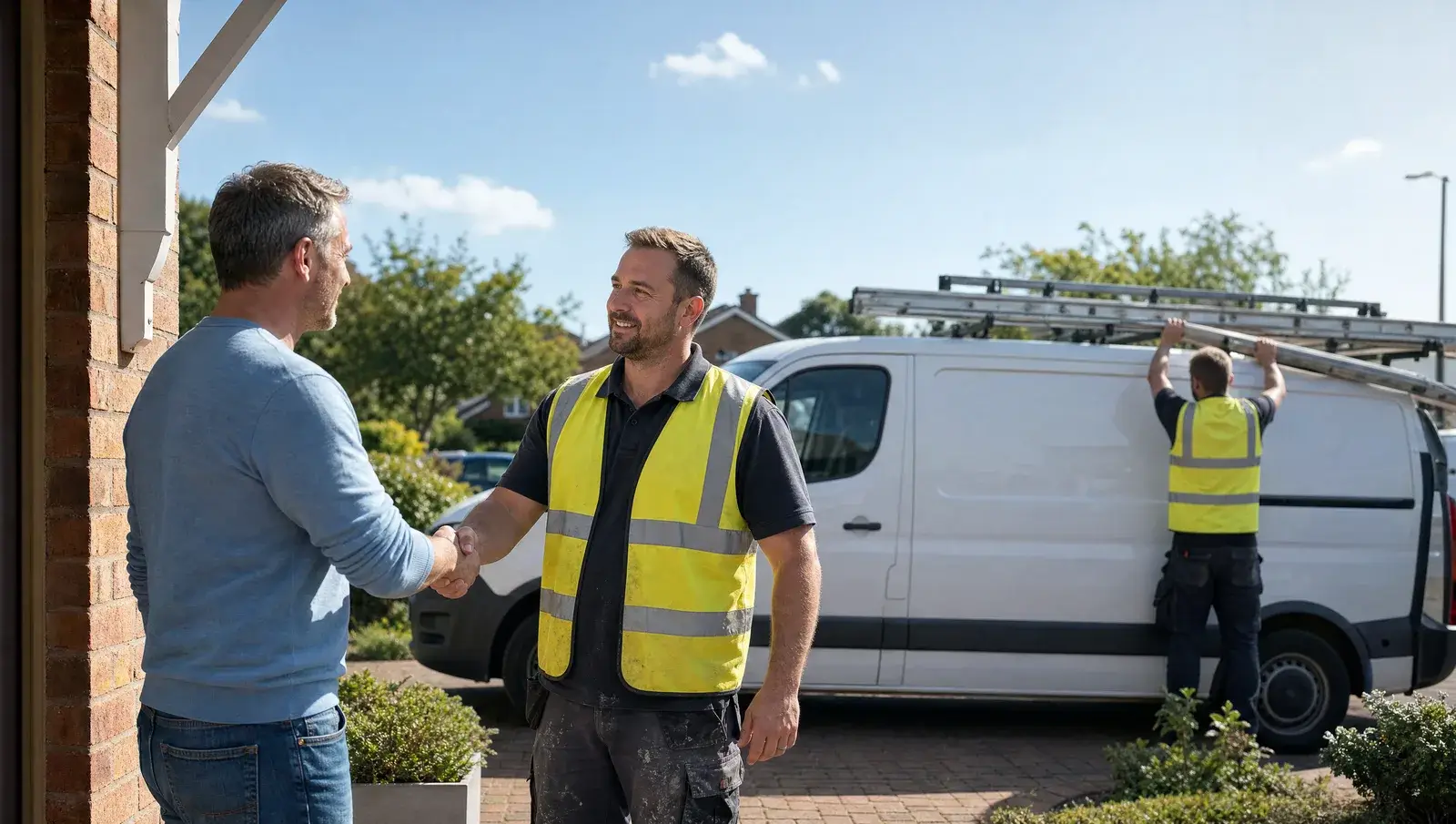
How to choose a roofer you can trust
The 12-point vetting checklist that separates professionals from chancers, before a single ladder goes up.
Want the checks done for you? Every Expert Roofer Verified member has passed all four, and we did the checking.
Roofing has a trust problem for a simple reason: you cannot see the work from the ground, and by the time you can see a problem, the roofer is long gone. The fix is to do your vetting before the job, not your arguing after it. Work through this checklist and most bad outcomes become impossible.
The 12-point roofer vetting checklist
- See the insurance, don't just hear about it. Ask for the public liability certificate and check the expiry date. If they employ anyone, employer's liability insurance is a legal requirement too.
- Check the company records. Look the business up on Companies House. A trading history under the same name matters; a string of dissolved companies behind the current one is a pattern, not bad luck.
- Insist on a written, itemised quote. Materials, membrane, battens, scaffold, waste and guarantee, each as its own line. One number on a text message is not a quote. Our guide to reading roofing quotes shows exactly what good looks like.
- Ask for references from recent local jobs. Not photos, addresses. A confident roofer will have customers within a few miles happy to vouch for them, ideally from the last few months.
- Never pay big money up front. A small materials deposit on a large job is normal. A large cash sum before work starts is the single strongest predictor of a bad ending.
- Get the guarantee in writing, ideally insurance-backed. A verbal "guaranteed for ten years, mate" dies with the company. An insurance-backed guarantee survives it.
- Expect realistic timelines. Good roofers are booked days or weeks ahead. "We can start tomorrow" from a cold approach usually means no one else will hire them.
- Verify trade memberships at source. TrustMark, NFRC and similar bodies all have online member searches. Check there, not the logo on the van; logos are the most-faked trust signal in the trade.
- Read reviews across more than one platform. Google, Checkatrade, Trustpilot. Patterns across platforms are hard to fake; a single perfect profile is not.
- Check the paperwork is consistent. The company name on the quote should match the insurance, the bank account and the VAT registration. Mismatched names across documents are a classic cowboy tell.
- Judge the communication. Punctual for the survey, answers questions straight, happy to be asked about insurance and references. The person who is evasive before you pay will be invisible after.
- Trust the gut check. Pressure to sign today, prices that drop the moment you hesitate, stories about spare materials from another job: if it feels like a pitch rather than a service, it is.
The walk-away signals
Some things end the conversation on their own: door-knocking after a storm, "we noticed your roof from the road", cash-only pricing, no fixed address, and quotes that undercut everyone else by thousands. Most of these are the opening moves of well-worn cons, and we break each one down in our guide to roofing scams and how to avoid them.
Compare like with like
Once you have two or three vetted candidates, make them quote the same specification, the same materials, the same scope. The cheapest number on different specs is not a saving, it is a smaller job wearing a better price. Sanity-check every figure against our 2026 cost guides before you sign anything.
Skip the vetting homework
We check insurance, records, references and reviews before a roofer ever quotes you. Up to three itemised quotes, free, no obligation.