
Roof sealants and coatings: what actually works
Liquid systems are genuinely useful in the right place and a waste of money in the wrong one. Here is the honest line between the two.
No corner of roofing has a wider gap between the best and worst products than sealants and coatings. The same aisle holds professional liquid membranes with 20-year certifications and buckets of glorified paint sold on fear. The material type will not tell you which is which; where and how it is used will.
Where liquid systems genuinely work
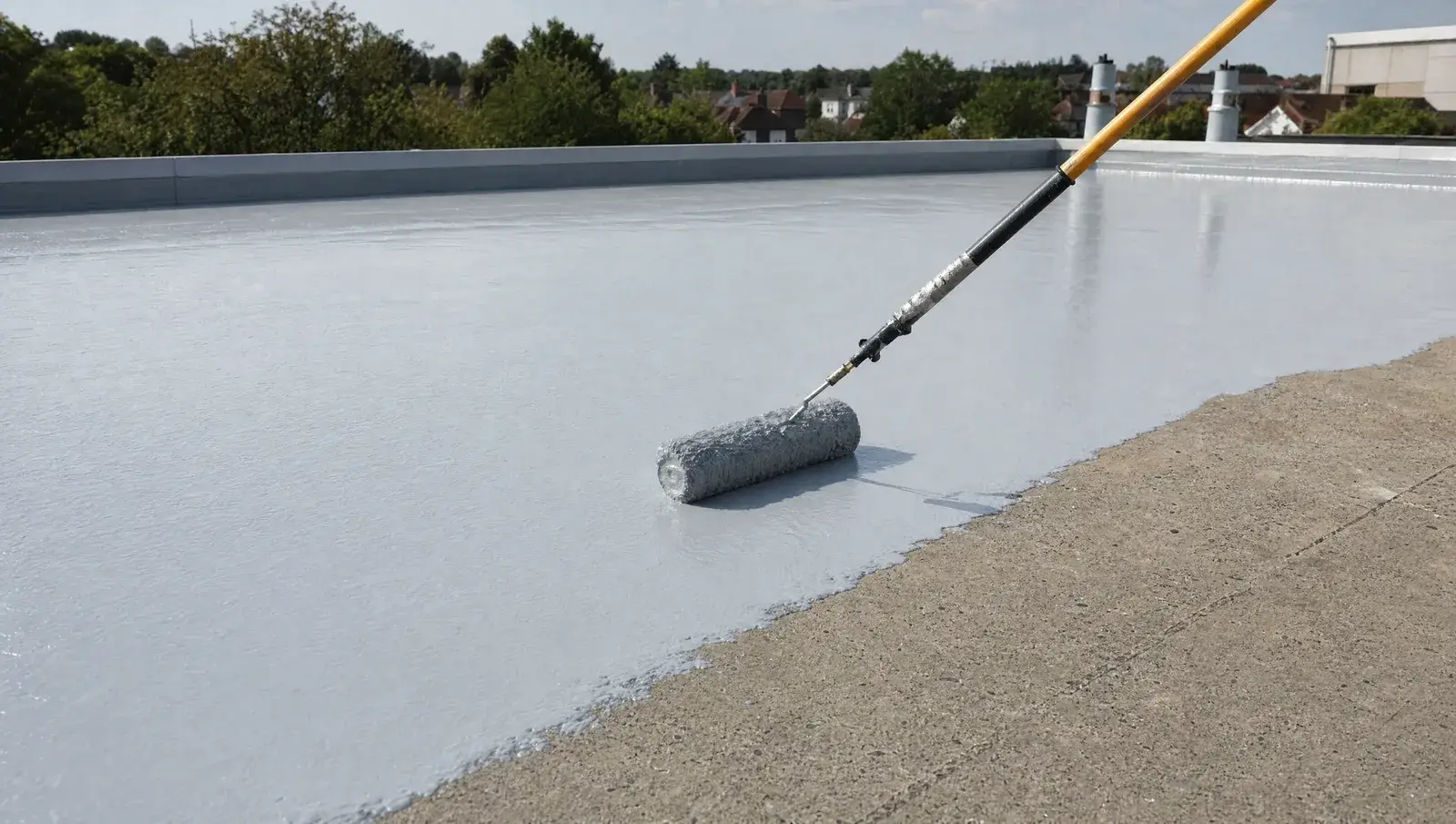
- Overlaying a sound flat roof: reinforced liquid rubber and polyurethane systems, professionally applied over a dry, stable deck, are a legitimate alternative to stripping and re-covering, and the only sensible option on roofs crowded with pipes, plant and rooflights.
- Details and upstands: liquid-applied reinforcement around rooflights, parapets and penetrations, where sheet materials are fiddly, is standard good practice.
- Flashing tapes for small repairs: quality bitumen tapes are honest products for a cracked flashing, a gutter joint or a shed roof: 5 to 10 years of service from a careful application.
- Gutter sealants: the right polymer sealant on clean, dry joints is a proper fix, not a bodge.
Where coatings are the scam end of roofing
The heavily marketed offer runs like this: a cold-caller or leaflet promises to "restore" your tired tiled roof with a sprayed sealant or coloured coating, "half the price of a new roof". The problems: paint adds nothing to the structural life of worn tiles; sprayed coatings can seal up the ventilation gaps a tiled roof needs, trapping moisture in the battens and felt; the finish often peels patchily within a few years; and surveyors and mortgage lenders assign painted roofs no added value, and sometimes flag them. Several trading standards bodies have prosecuted roof-coating firms. If a roof is tired enough to be sold a coating, the honest options are targeted repairs or a re-roof.
Preparation decides everything
Every legitimate coating manufacturer says the same thing in the data sheet: the surface must be clean, dry, stable and primed. On a real job that means washing and stripping moss and chalky residue, letting the deck dry properly, priming to suit the substrate, and reinforcing every joint and detail with matting before the liquid goes down. That preparation is most of the labour and most of the cost, which is exactly why cowboy quotes skip it. A coating slapped on a damp, dirty roof blisters within a season or two, whatever the bucket promised.
What sealants and coatings cost
DIY tapes and sealants are pocket-money purchases; professional liquid systems are priced per job because the preparation, reinforcement and number of details drive the labour. As a rule of thumb, a professionally applied liquid overlay on a sound roof usually costs somewhat less than a full strip and re-cover, but more than the naive per-litre arithmetic suggests. Compare it properly against replacement in EPDM (£90 – £130 per m²) or GRP (£110 – £150 per m²) using our flat roof cost guide, then get itemised quotes for both routes.
Coating vs repair vs replace
If the roof is sound with a tired surface, a professional liquid overlay is a fair middle path. If the damage is one split or a failed detail, a targeted repair through our flat roof repair service is cheaper and cleaner. If the roof holds water, feels spongy underfoot or the deck is rotten, coating over it seals the problem in: replacement is the honest answer. When a quote offers to coat a roof nobody has inspected from underneath, treat that as your answer about the contractor too.
Coat, repair or replace?
Get up to three honest, itemised quotes from vetted local roofers before you commit either way. Free, no obligation.