
Leadwork and flashing specialists
Chimney flashings, valleys and soakers fitted the traditional way, by vetted local roofers who work lead properly.
Leadwork specialists renew and repair the lead detailing that seals every junction on a roof. Tiles and slates shed water down the slopes, but wherever the roof meets something else, a chimney, a wall, another roof plane, a dormer, it is lead that keeps the water out. That is why so many "roof leaks" are really leadwork failures, and why leaks that only appear in heavy or wind-driven rain so often trace back to a flashing.
What leadwork covers
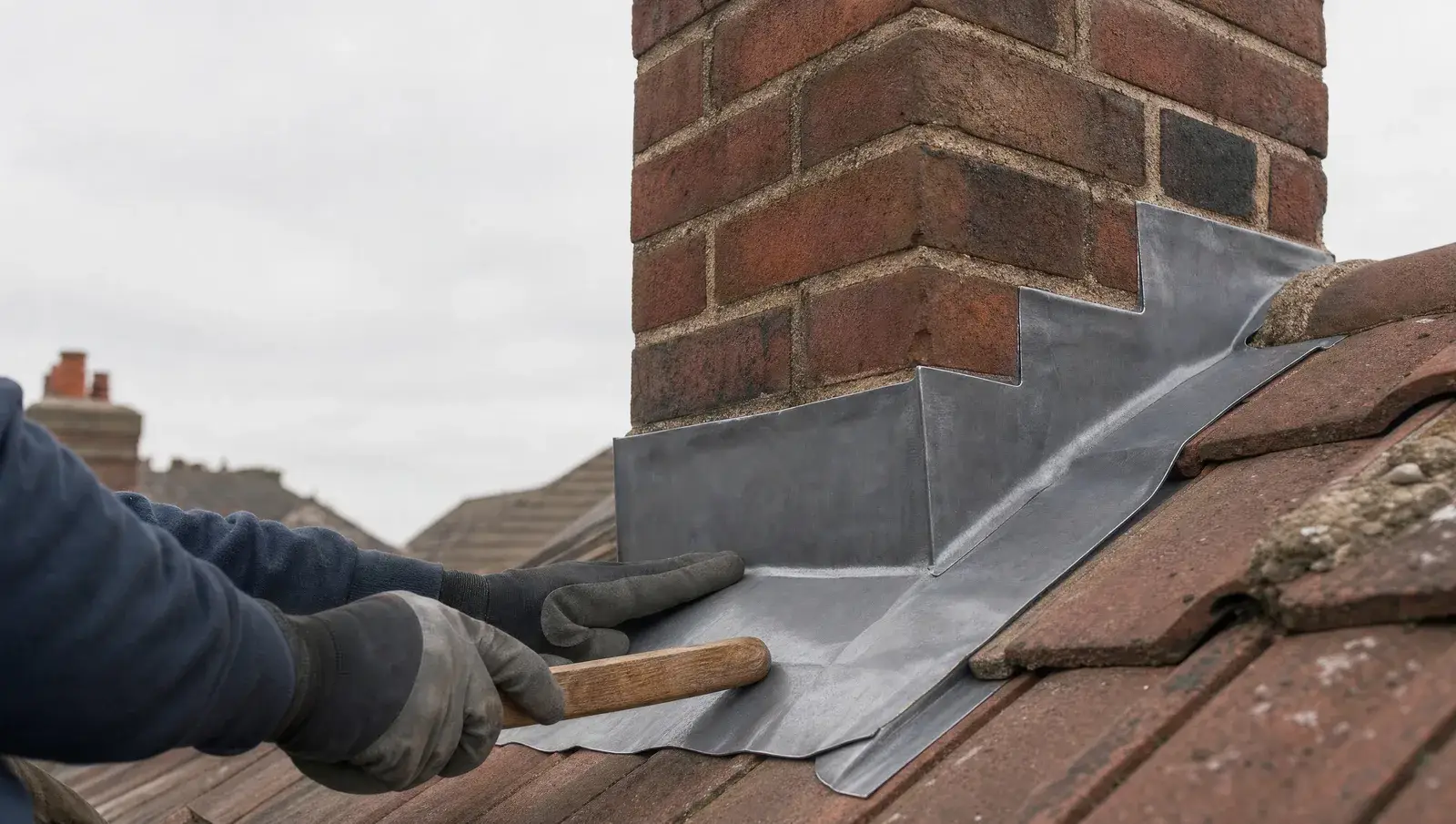
- Chimney flashings: the apron at the front of the stack, step flashings up the sides and a back gutter behind. This is the most common leadwork job on UK homes.
- Abutment and step flashing: where a roof meets a wall, such as an extension or porch roof running into the house.
- Lead valleys: the channels where two roof slopes meet, which carry more running water than any other part of the roof.
- Soakers: small lead pieces interleaved with tiles or slates alongside walls and chimneys, hidden under the step flashing.
- Bay tops, dormers and porches: small lead-covered roofs where the sheet itself is the covering, not just the seal.
Code weights: the basics
Lead sheet is graded by thickness into code weights, and matching the code to the job is what separates leadwork that lasts decades from leadwork that splits early. As a rule of thumb, Code 3 is used for soakers, Code 4 is the standard for flashings and aprons, and Code 5 or heavier suits valleys, back gutters and anything that carries running water. Each piece also has a maximum length: lead expands and contracts with temperature, so oversized pieces fatigue and crack. If a quote does not mention code weights at all, ask why.
When you need a leadwork specialist
- A damp patch on the chimney breast, especially one that appears after driving rain.
- Flashing that has visibly cracked, split, or lifted away from the mortar joint.
- Mortar fillets used instead of lead, common on older houses, which crack and fall away.
- Previous "repairs" in sealant or self-adhesive flashing tape that have started weeping again.
- A re-roof or chimney repair, when renewing the leadwork while access is up is the cheapest it will ever be.
How the job is done
A proper leadwork job follows the same sequence every time. The old lead or failed fillet is stripped out and the masonry joint raked clean. New lead is cut to length, dressed to the profile of the tiles or slates with dressing tools rather than forced flat, and turned at least 25mm into the mortar joint. It is then fixed with lead wedges, pointed or sealed, and finished with patination oil so it weathers evenly. Good leadwork looks unhurried and neat; bad leadwork looks stretched, flat and smeared with sealant.
What leadwork costs
Chimney flashing renewal is the benchmark job at £300 – £800, covered in detail in our chimney repair cost guide. Valleys, bay tops and larger details vary too much in length, code weight and access to carry a standard price, so they are priced on inspection. The honest way to budget is to get two or three itemised quotes and compare what each roofer proposes to strip, renew and guarantee.
Find a leadwork specialist near you
Up to three itemised quotes from vetted local roofers who work lead properly. Free, no obligation.