
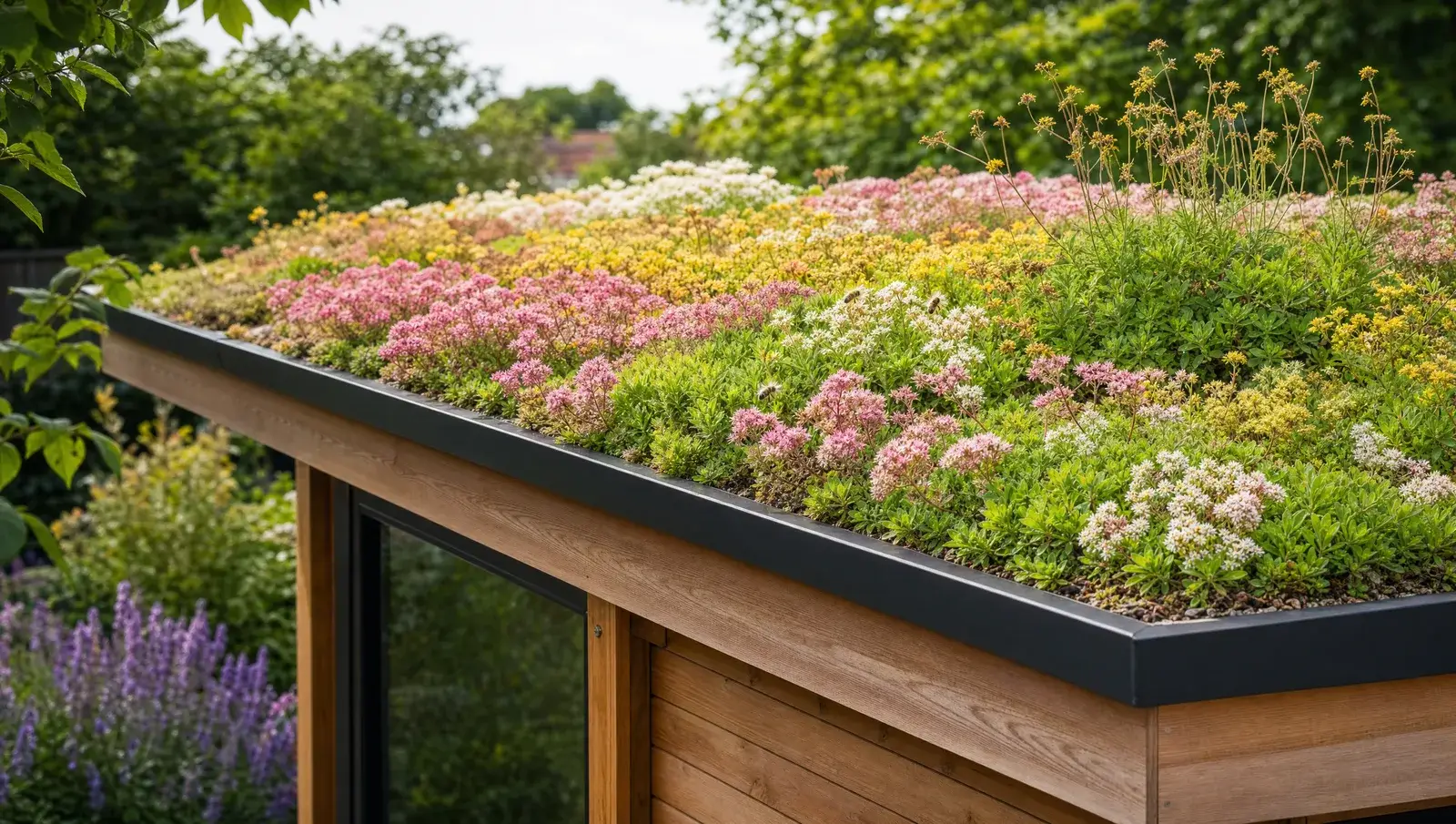
Green roofs: sedum and living roofs
Extensive sedum blankets vs full roof gardens: the real benefits, the structural facts, and why the waterproofing underneath matters most.
A green roof is not a roofing material in itself: it is a planted build-up that sits on top of a waterproof roof. Get that order of priorities right and everything else follows. The membrane underneath does the actual weatherproofing; the planting protects it, looks good and earns its keep ecologically.
Extensive vs intensive
| Extensive (sedum) | Intensive (roof garden) | |
|---|---|---|
| Substrate depth | 60 – 150mm | 300mm+ |
| Weight | Light, but real when saturated | Heavy; needs structural engineering |
| Planting | Sedum, wildflower, moss mixes | Lawns, shrubs, even small trees |
| Maintenance | 1 – 2 visits a year | Regular gardening plus irrigation |
| Typical home use | Garden studios, extensions, garages | Rare; flat-roofed terraces on larger builds |
Almost every domestic enquiry is really about an extensive sedum roof on a garden office, shed or single-storey extension, so that is what the rest of this page covers.
What green roofs genuinely deliver
- Biodiversity: flowering sedum feeds bees and pollinators from spring to late summer, turning dead roof space into habitat.
- Runoff attenuation: the substrate absorbs and slows rainfall, easing pressure on drains during downpours, which is why planners increasingly like them.
- Membrane protection: UV and thermal cycling age flat roofs fastest; a green roof shields the membrane from both, so it typically lasts longer than the same membrane left bare.
- Insulation and cooling: a modest but real buffer, most noticeable as summer cooling in the room below.
- Looks and planning goodwill: a flowering roof softens a garden building, and a green roof commitment can smooth a planning application.
The honest downsides
- Weight: even a light sedum system is a serious load when rain-saturated; the structure must be checked before anything is laid.
- Cost premium: you are buying a full waterproof roof plus a living system on top of it.
- Not zero maintenance: low, not none. Skip the annual weed pull and you get sycamore saplings rooting towards your membrane.
- Drought browning: sedum goes red-brown in long dry spells. It recovers, but it will not look lush year-round.
- Repairs cost more: finding a leak under a planted build-up means lifting sections, so getting the membrane right first time matters.
What lies beneath: the part that matters
A green roof is only as good as the deck under it. The standard domestic build-up is a firm timber deck, a fully adhered EPDM rubber membrane (£90 – £130 per m² supplied and fitted as a plain roof), a root barrier, a drainage and filter layer, then substrate and planting. EPDM suits green roofs because it is seamless on most domestic sizes and tolerates constant damp. If the existing flat roof is old felt, replace it before greening it; burying a tired membrane under substrate just makes the inevitable leak expensive to reach. Our flat roofing service covers the waterproofing side.
Green roof cost per m²
Think of it as the cost of a quality EPDM flat roof plus a system premium on top: for a typical sedum build-up, budget roughly half as much again over the plain membrane roof, more where access is awkward or the structure needs strengthening. Intensive roof gardens are individually engineered projects with no useful rule of thumb. For firm figures on your building, get free itemised quotes.
Green roof vs the alternatives
Against a plain EPDM or GRP flat roof, a sedum roof costs more upfront but protects its membrane, looks far better from above and handles storm water responsibly. Against artificial grass or decking-style finishes, sedum is the only option that is genuinely alive and planning-friendly. If the budget will not stretch, a well-laid plain membrane now can be greened later, provided the structure was designed for the extra load from day one.
Green roof cost per m²
Two numbers matter: the cost of the living layer, and the cost of the waterproofing underneath it. Quotes that look cheap have usually left the second one out.
| Build-up | Typical cost | What it includes |
|---|---|---|
| Sedum blanket over sound existing EPDM | £80 – £140 per m² | Root barrier, drainage layer, substrate, sedum mat |
| Full extensive system, new waterproofing | £150 – £250 per m² | New EPDM or single-ply plus the whole green build-up |
| Intensive roof garden | £250 – £450 per m² | Deeper substrate, structural work, irrigation |
| Garden room, 12m² | £1,800 – £3,000 | Typical extensive system, fitted |
| Single garage, 15m² | £2,300 – £3,750 | Typical extensive system, fitted |
| Annual maintenance | £150 – £400 a year | One or two visits, weeding and feed |
Before any of it, the structure has to take the weight. A saturated extensive system is 60 to 150kg per m², which most modern flat roofs handle and many older garages do not. A structural check costs £300 to £600 and is not optional.
Planning a green roof?
Get up to three itemised quotes covering the waterproofing and the living system. Free, no obligation.