
Does home insurance cover roof leaks?
Sometimes, and the difference is the cause. What insurers pay for, what counts as a storm, and how to give your claim the best chance.
This is the distinction that decides almost every roof leak claim in the UK, so it is worth understanding before you ring your insurer, not after.
What is usually covered
Standard buildings insurance responds to insured perils: named, sudden events. For roofs that mainly means storm damage, falling trees and branches, impact and fire. If a named storm strips tiles on Tuesday and your ceiling is wet on Wednesday, that is the claim insurers are built for. Many policies also cover the resulting interior damage (ceilings, decoration, carpets) even in some cases where the roof defect itself is not covered, though wordings differ.
What is usually not covered
Wear and tear, gradual deterioration and anything a reasonable owner should have maintained. A roof that has been shedding mortar for five years, slipped tiles that were visible from the street, felt that perished a decade ago: insurers treat these as maintenance, not misfortune. This single exclusion is behind most rejected roof claims.
What actually counts as a storm
Insurers do not take your word for the weather; they check data from nearby weather stations for the date you claim the damage happened. Policies vary in their definitions, but the Financial Ombudsman's general approach looks for genuinely violent conditions: winds around gale force or stronger, or exceptional rain or hail. Blustery, wet and miserable does not qualify. If the records show nothing storm-level, expect the insurer to argue the roof failed through age and the weather merely revealed it.
How to claim properly
- Make it safe first. Policies require you to prevent further damage. Emergency tarping is typically part of a make-safe visit costing £150 to £400, with callout charges of £80 to £150 in normal hours; see our emergency callout cost guide. Keep the invoice: reasonable make-safe costs often form part of the claim.
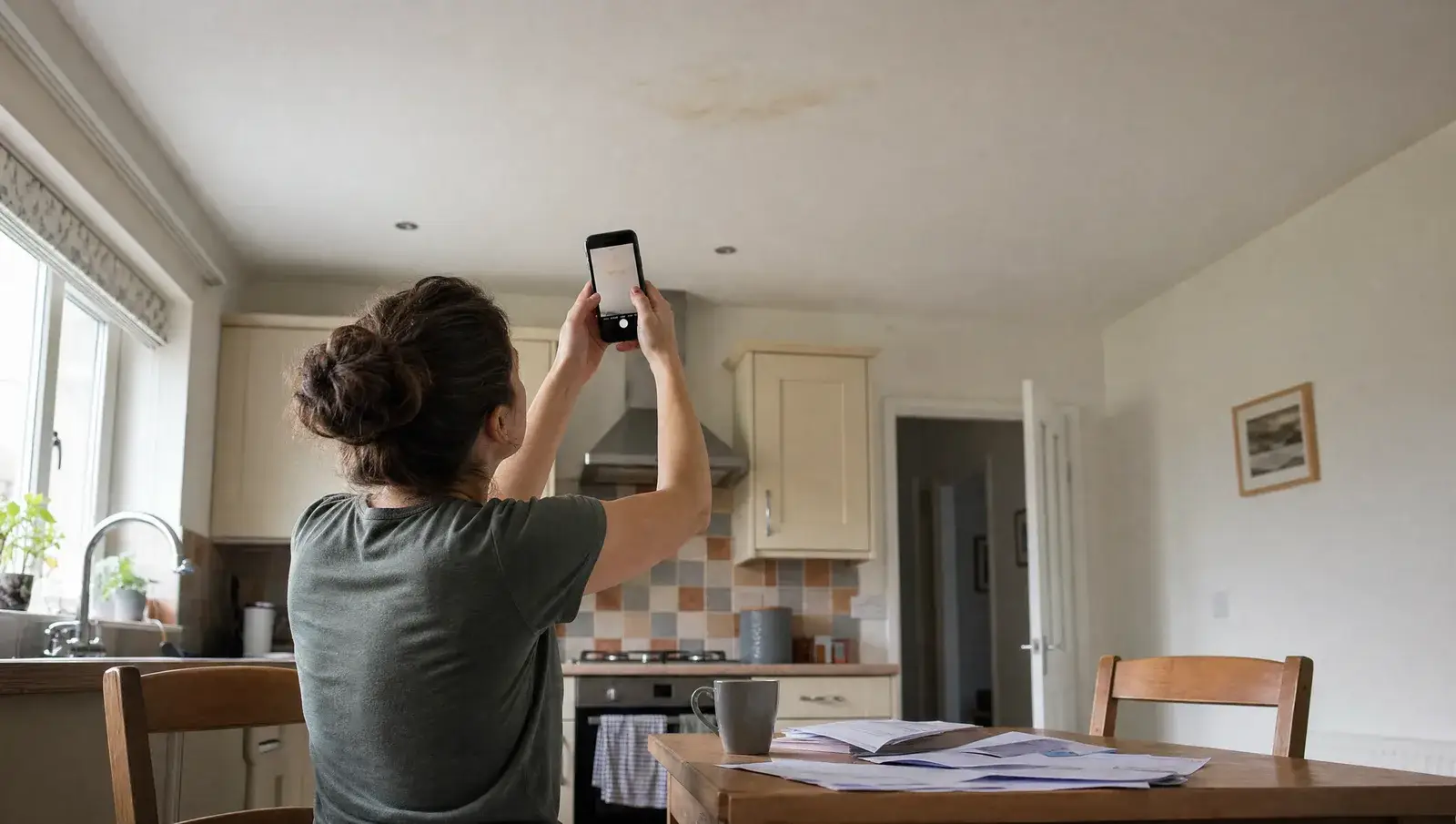
- Photograph everything, dated: the roof damage, the ceiling, the debris on the lawn, before and after the tarp goes on.
- Note the weather. Record the date and time the damage occurred and keep any news coverage of the storm. Met Office data for your area can be checked later if the insurer disputes it.
- Get a roofer's report stating the cause of the damage in plain terms. An independent report saying "tiles displaced by wind" carries real weight against a desk-based rejection.
- Report promptly and answer accurately. Delay and guesswork both give insurers grounds to question the claim.
Why claims get rejected, and what to do about it
The four standard rejection grounds: the damage is attributed to wear and tear; there was no storm on record that day; the damage is judged gradual rather than sudden; or the roof was in poor condition before the event. If you believe the rejection is wrong, challenge it with your roofer's report and weather evidence, use the insurer's formal complaints process, and if that fails escalate to the Financial Ombudsman Service, which is free for consumers. Meanwhile, do not leave the roof open: an unrepaired leak grows regardless of who ends up paying, and our leaking roof guide covers the fix itself.
Need the damage assessed?
Up to three quotes from vetted local roofers, including written reports you can put in front of an insurer. Free, no obligation.