
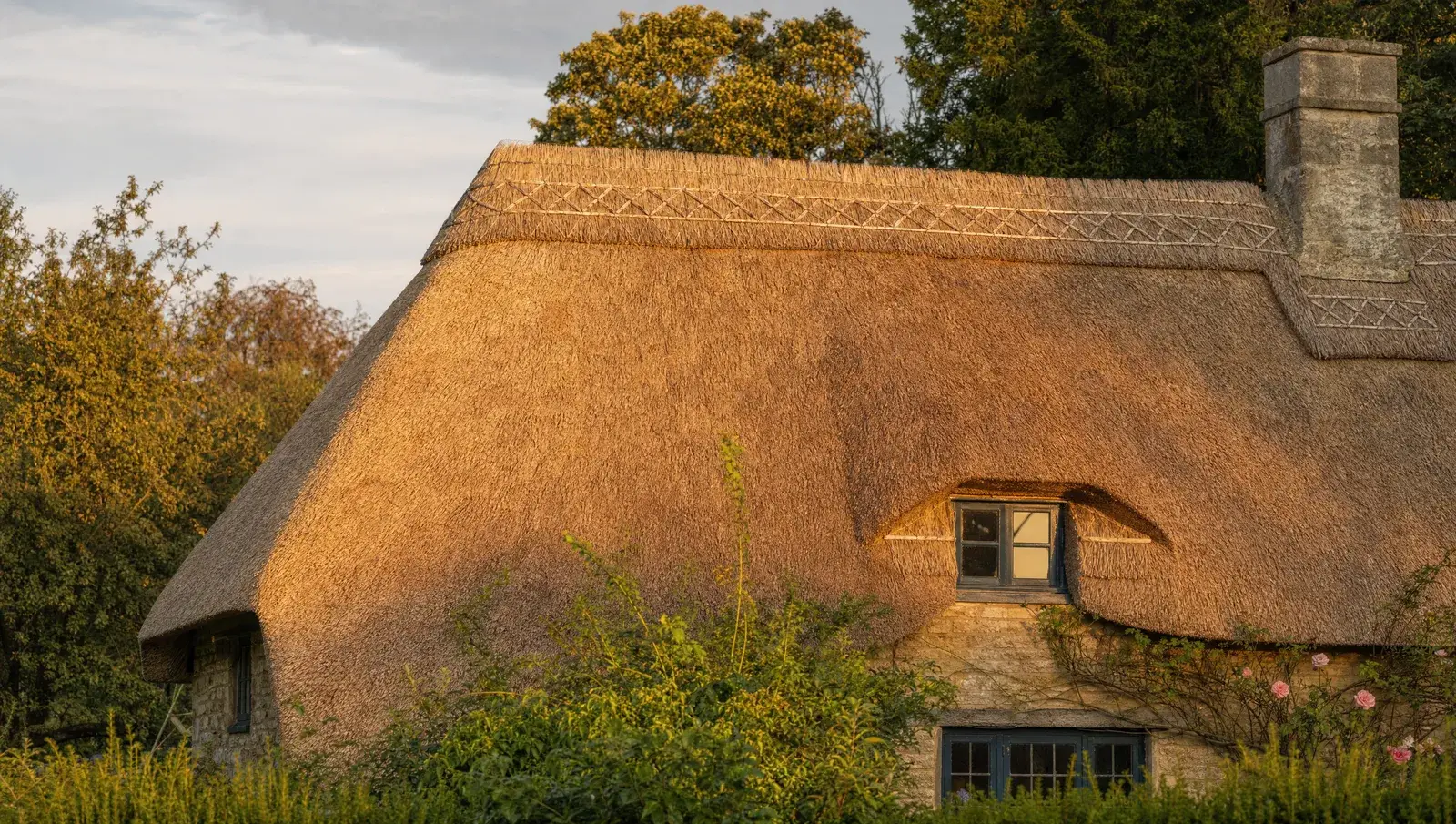
Thatched roofs: the honest guide
What thatch really costs to own: material lifespans, ridge renewal, master thatchers, insurance, fire safety and listed building rules.
Around 60,000 UK homes still wear thatch, and most of them are legally required to keep it: the majority are listed buildings or sit in conservation areas. Owning one is less like maintaining a roof and more like maintaining a garment that is slowly worn away by weather, so the honest guide starts with the maintenance cycle, not the postcard looks.
The three thatching materials
| Material | Main coat lifespan | Character |
|---|---|---|
| Water reed | 25 – 40 years | Crisp, angular, the longest-lasting coat |
| Combed wheat reed | 25 – 35 years | Smooth, rounded, the West Country tradition |
| Longstraw | 15 – 25 years | Shaggy, poured-on look, the historic eastern style |
The material is often not a free choice. Conservation officers frequently insist a listed roof is re-thatched in its historic material and regional style, so a longstraw cottage usually stays longstraw even though water reed lasts longer. On every roof the ridge, whether flush or ornamental block-cut, wears fastest and needs renewing every 10 to 15 years, roughly twice per main coat.
What thatch does well
- Insulation: a 300mm thatch coat insulates remarkably well, cool in summer, warm in winter.
- Character and value: thatch is the whole point of the property; a well-kept roof protects a premium price.
- Sustainability: reed and straw are renewable, low-carbon crops, often locally sourced.
- No gutters: generous eaves throw water clear of the walls the way they have for centuries.
The honest downsides
- A rolling maintenance bill: ridge every 10 to 15 years, wire netting, moss control, and eventually a full re-thatch.
- Fire risk: mostly chimney-related and manageable, but real, and it drives the insurance position.
- Specialist insurance: mainstream policies often decline thatch; specialist cover costs more and comes with conditions.
- A small trade: good master thatchers book up months ahead, sometimes over a year.
- Vermin and birds: netting deals with most of it, but straw roofs in particular attract attention.
Rethatching cost and ridge renewal
We do not publish per-metre thatching rates, because honest ones do not exist: the price depends on the material, how much of the old coat can stay as a base, the roof's shape, the ridge style, access, and the regional tradition being matched. Re-thatching a whole roof is a significant five-figure project on most cottages, and a ridge renewal a serious four-figure one. Treat any website quoting a neat standard rate with suspicion and get itemised quotes from master thatchers instead; our free quote service can start that process.
Fire, insurance and listed status
Most thatch fires start at the chimney, so the discipline is straightforward: sweep at least twice a year, keep the flue lined and sound, burn only dry seasoned wood, and consider a spark arrestor. At re-thatch, a fire-retardant membrane between the timbers and coat is the single best upgrade. Insurers will expect this sort of housekeeping. On consent: most thatched homes are listed, so changes of material, ridge style or any move to tiles need listed building consent, and refusals are the norm. Our planning permission guide covers how consent works.
Thatch vs the alternatives
For most owners there is no alternative: listed status keeps the roof thatched. Where a swap is legally possible, tiles or slate cost less over a lifetime and remove the insurance premium, but they also remove the character that gives the property its value. The sensible comparison is not thatch versus tiles but good thatch maintenance versus neglect, and maintenance wins every time.
Need work on a thatched or period roof?
Tell us about the job and we will route it to vetted specialists. Free, no obligation, takes 60 seconds.