
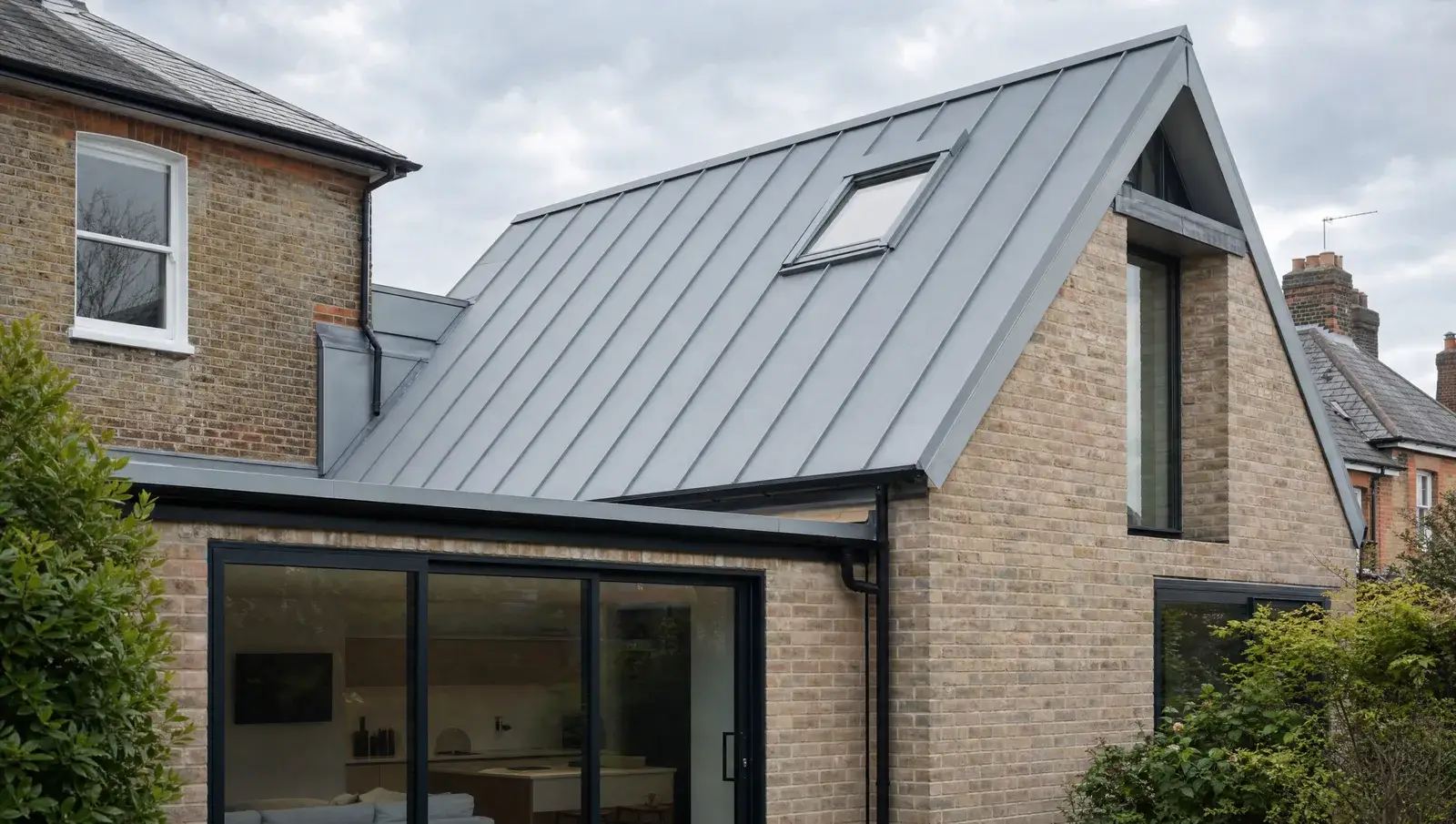
Metal roofs: zinc, copper and steel
Standing seam looks, 60 to 100 year lifespans and a patina that improves with age. What metal roofing really involves, and who it suits.
Metal roofing in the UK usually means standing seam: long metal trays joined by raised, folded seams that run from ridge to eaves. It is the crisp, clean look you see on modern extensions, garden rooms, dormers and self-builds, and increasingly on whole houses. The three metals that matter are zinc, copper and coated steel, and they behave quite differently.
The three metals compared
| Metal | Lifespan | How it weathers |
|---|---|---|
| Zinc | 60 – 100 years | Develops a soft matt grey-blue patina over a few years |
| Copper | 80 – 100+ years | Bright orange, then brown, then green verdigris over decades |
| Coated steel | 40 – 60 years | Holds its factory colour; the budget route to the seam look |
The patina is the point, not a flaw. Zinc and copper form a stable surface layer that protects the metal beneath, which is why these roofs shrug off British weather for the better part of a century with almost no maintenance.
Why people choose metal
- Lifespan: zinc and copper rival natural slate; both will likely outlast the person fitting them.
- Weight: a fraction of the weight of tiles or slate, so it suits lightweight extension and garden room structures without beefed-up timbers.
- Low pitch capability: standing seam works down to very shallow pitches where tiles cannot go, which is why architects reach for it on modern designs.
- Looks: clean lines, no visible fixings, and a finish that improves with age.
- Maintenance: practically none once installed correctly. No moss-prone crevices, no slipped tiles.
The honest downsides
- Price: premium metals typically cost two to four times what a concrete tile roof costs, with copper at the top of that spread.
- Specialist labour: standing seam is a hard-metal trade in its own right. A general roofer improvising with zinc is the fastest route to a failed roof and a void warranty.
- Condensation risk if detailed badly: metal is completely vapour-tight, so ventilation and the build-up beneath the trays must be designed properly.
- Denting: softer metals can dent under careless foot traffic or dropped tools, so later trades need to be managed.
- Planning sensitivity: a zinc roof on a period street can need planning consent; check before you commit.
What a metal roof costs
We deliberately do not publish per-metre rates for zinc and copper, because no two standing seam jobs price the same: the metal gauge, tray widths, pitch, number of penetrations and the substrate build-up all move the figure significantly. As a planning rule of thumb, budget two to four times the cost of covering the same roof in concrete tiles, then get itemised specialist quotes through our free quote service. For mainstream covering prices to benchmark against, the roof cost calculator gives instant 2026 figures.
Which homes metal roofs suit
Metal earns its premium on modern extensions, garden studios, dormers, low-pitch roofs and contemporary self-builds, anywhere the clean seam aesthetic is part of the design and the roof is a visible feature. It is harder to justify on a standard semi-detached re-roof, where good concrete or clay tiles deliver decades of service for a fraction of the outlay; see our pitched roofing service for the mainstream options.
Metal vs the alternatives
Against natural slate, zinc offers a similar lifespan with less weight and a more contemporary look, at broadly comparable premium pricing. Against tiles, metal wins on pitch flexibility and longevity but costs several times more upfront. Against single-ply flat systems on low pitches, standing seam lasts two to three times longer and looks far better, which is why it is often specified where a shallow roof is on show.
Thinking about a metal roof?
Get up to three itemised quotes from vetted standing seam specialists. Free, no obligation, takes 60 seconds.