
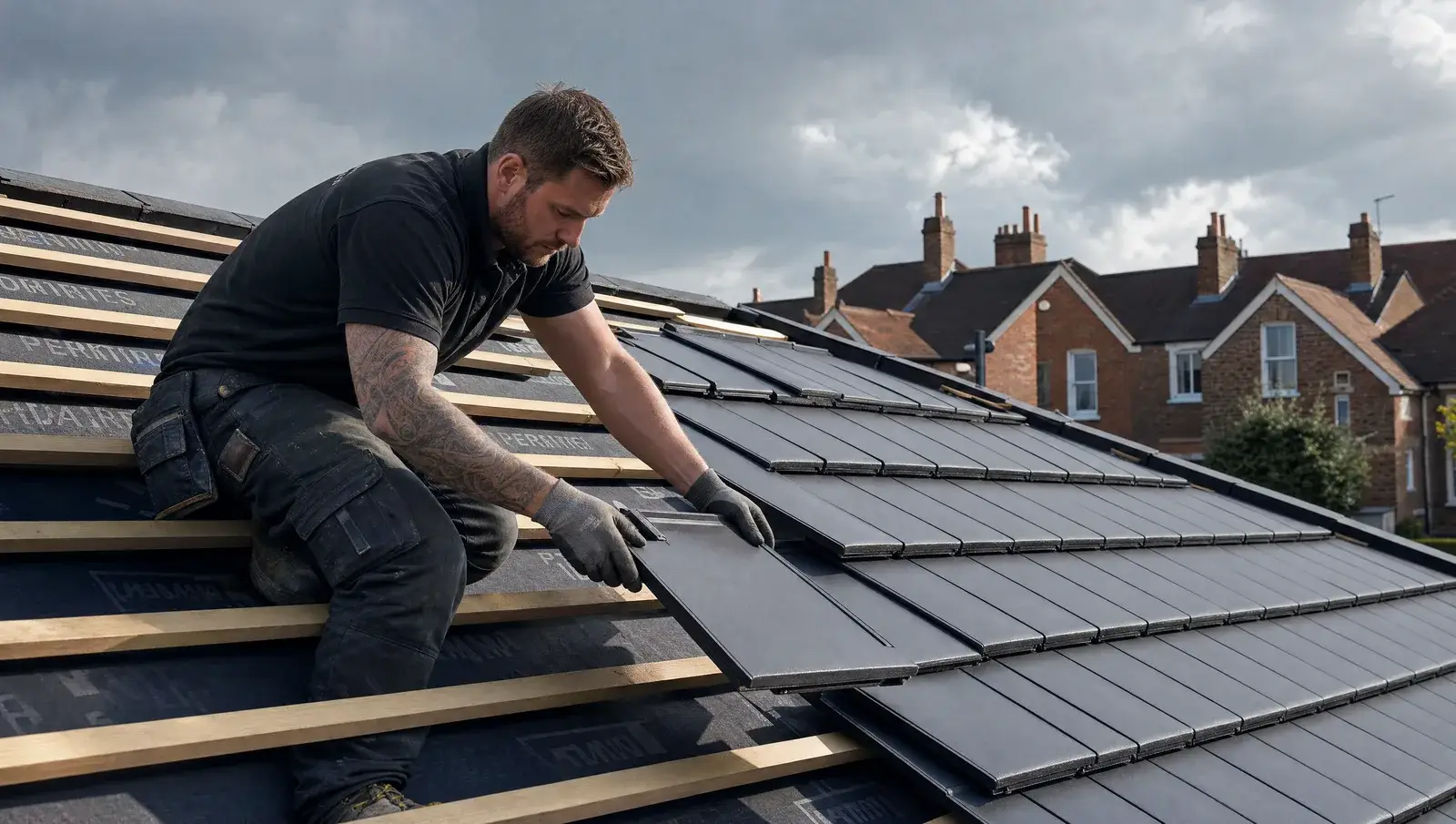
How much does roof tile replacement cost?
Real 2026 prices for replacing slipped, cracked and missing roof tiles, from a single tile to ridge work and full sections. Prices updated July 2026.
A broken tile is one of the cheapest roofing problems to fix and one of the most expensive to ignore: one gap lets water at the membrane and battens beneath, and that is how a £150 fix becomes a £1,000 one. This guide covers what tile replacement actually costs, why the first tile is the expensive one, and when scattered failures are telling you something bigger. For a figure tailored to your own roof, use our roof cost calculator. Replacing the whole roof instead? Use our tiled roof replacement cost calculator.
Roof tile replacement costs (2026)
| Job | Typical cost |
|---|---|
| Single tile replacement (callout job) | £150 – £250 |
| Up to 10 tiles | £200 – £450 |
| Re-bed or replace ridge tiles | £200 – £600 |
| Re-tile a section (per m²) | £110 – £180 |
Tile prices, supply only
The tiles themselves are a small slice of the bill. Typical supply-only prices per tile in 2026:
| Tile type | Price each (supply only) |
|---|---|
| Concrete | £1 – £3 |
| Clay | £2 – £6 |
| Natural slate | £4 – £12 |
For the full rundown of tile types, profiles and lifespans, see our roof tiles material guide.
Why does one tile cost £150 or more?
Because you are not paying for a tile, you are paying for a roofer's morning. A single-tile job still needs travel to site, a ladder or access tower set up safely, and in many firms a second person on the ground, which trade safety guidance expects for work at height. Add the company's minimum callout charge and the maths is fixed before anyone touches the roof. That is also why it usually costs little more to sort five or six tiles in the same visit: once access is set up, the extra tiles are minutes of work. If you have missing or slipped tiles, get every one on the roof checked and fixed in a single callout rather than paying the minimum charge twice.
Matching your existing tiles matters
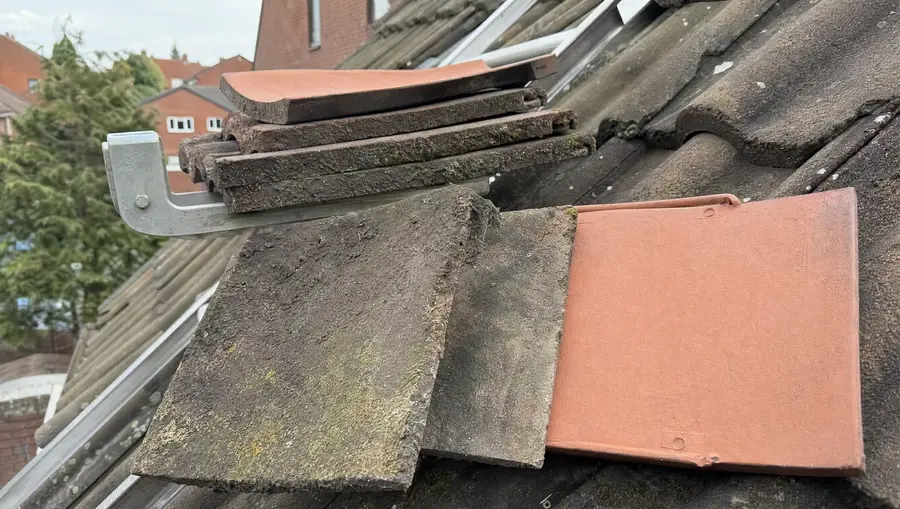
A replacement tile has to match on three counts: profile (the shape, so it interlocks and sheds water correctly), colour, and weathering. A brand-new tile in the right colour will still sit bright against a 30-year-old roof for years. Good roofers deal with this by taking a sample tile to the merchant, or by sourcing weathered reclaimed tiles from a salvage yard, which is often the only route when a profile has been discontinued. Reclaimed matching costs a little more per tile but keeps the roof looking like one roof, which matters when you sell.
When scattered tile failures mean the covering is done
One tile after a storm is weather. Tiles failing in ones and twos across the whole roof, year after year, is age: the nibs, fixings or the tiles themselves are reaching the end of their life, and each repair visit is buying months rather than years. At that point the money you are drip-feeding into callouts is better put towards a re-roof. Compare what you have spent in the last two or three years against the cost of a new roof, and run through the signs you need a new roof before booking the next patch-up. For pricing on other small jobs while the roofer is up there, see the roof repair cost guide.
Slipped, missing or cracked: cost by situation
The tile itself is £1 to £4. What you are paying for is a qualified person getting safely onto your roof, which is why the price barely moves between one tile and five.
| Situation | Typical cost | What you are paying for |
|---|---|---|
| One slipped tile re-bedded | £150 – £250 | Callout, ladder or tower access, one hour on site |
| One missing tile replaced | £150 – £250 | As above, plus a matching tile sourced |
| Up to 10 tiles | £200 – £450 | Same access, more time on the roof |
| Cracked ridge tile re-bedded | £200 – £400 | Mortar work, weather-dependent |
| Storm damage across several areas | £300 – £900 | Longer access, often a tower or scaffold |
| Re-tile a section | £110 – £180 per m² | Battens and membrane checked as the work goes |
If a roofer is already on site for something else, adding a few tiles should cost next to nothing. That is the single best way to save money on tile work: bundle it with the gutter clean or the chimney repoint rather than calling someone out twice.
Storm took several tiles off at once? Check whether your insurance covers it before you pay.
Get real prices for your tile repair
Up to three itemised quotes from vetted local roofers, checked against the fair rates on this page. Free, no obligation.