
EPDM rubber roofing
The one-piece rubber membrane that turned flat roofs from a liability into a 30 to 50 year asset. Costs, honest drawbacks and where it fits. Updated July 2026.
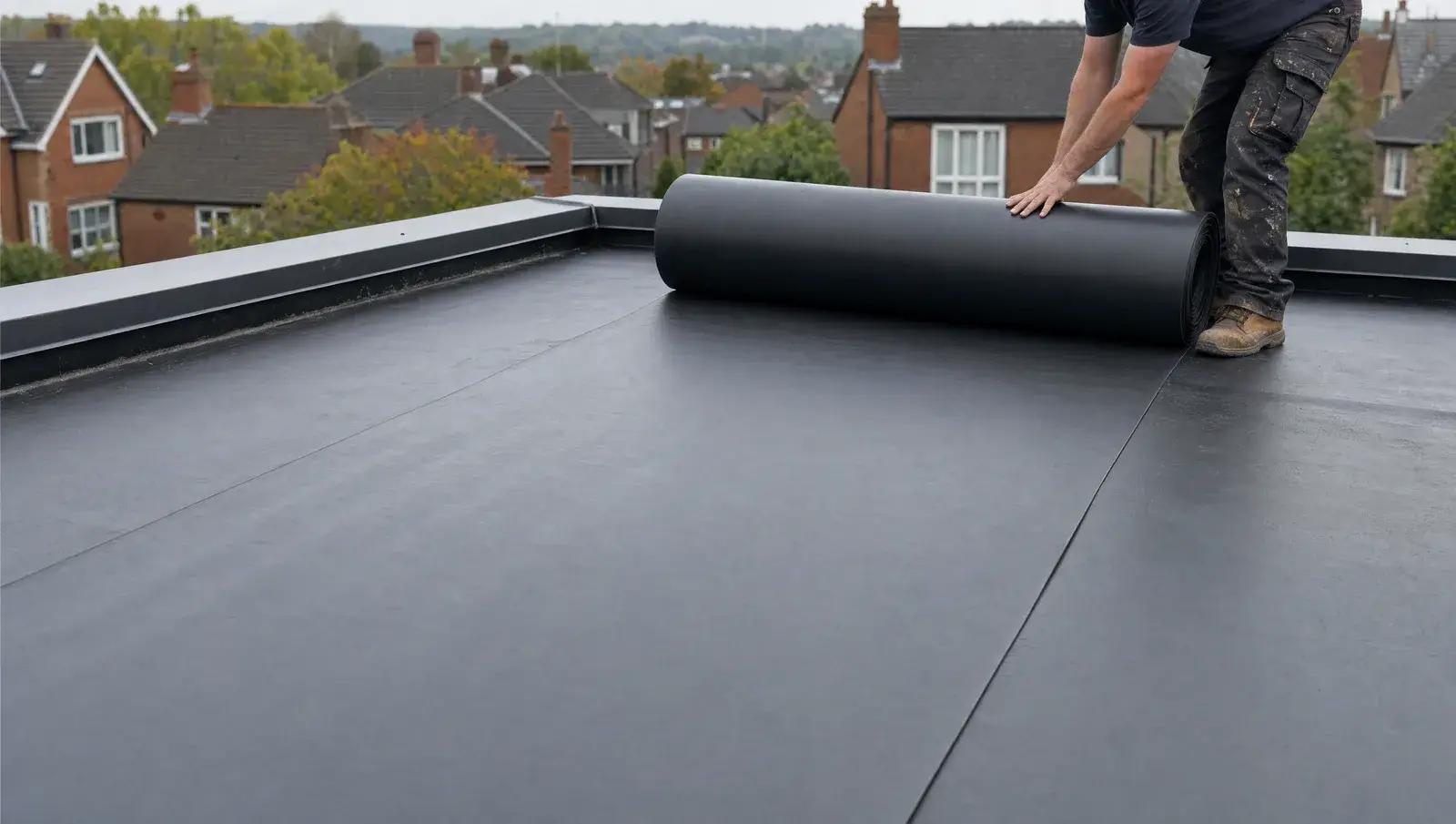
EPDM (ethylene propylene diene monomer, which is why everyone just says rubber) is a synthetic rubber membrane developed for commercial roofing and now the default recommendation for most UK domestic flat roofs. The membrane arrives as one factory-made sheet cut to your roof size, is bonded to the deck with adhesive, and needs no flames, no seams and no curing window.
Why one piece matters
Almost every flat roof leak starts at a joint: a felt lap that lifted, a seam that opened with thermal movement. A domestic EPDM roof typically has no joints at all across the field of the roof, just perimeter details and upstands. The membrane also stretches by several hundred percent before failing, so it flexes with the building through frost, heatwaves and the slow settlement that cracks brittler coverings.
EPDM pros
- Lifespan: 30 to 50 years, with the material itself highly resistant to UV, ozone and freeze-thaw.
- Seam-free: one sheet covers most domestic roofs, removing the classic failure points.
- Flame-free install: cold-applied adhesive, no torch, no hot works risk on your home.
- Flexible: moves with the building instead of cracking.
- Repairable: punctures patch quickly and permanently.
- Value: usually the lowest cost per year of life of any flat roof system.
EPDM cons, honestly
- Punctures: the membrane is tough but not armour. Dropped tools, sharp grit ground in underfoot, and TV aerial installers are the classic culprits. It is not the roof for regular foot traffic.
- Looks: plain matt black, full stop. On a roof you look down on from a bedroom window, some owners find it utilitarian.
- Fiddly details: complex roofs with many upstands, outlets and rooflights need skilled detailing; a poor installer can undo the seamless advantage at the edges.
- Deck matters: like all membranes, it is only as good as the timber deck beneath it.
EPDM roof cost per m² and cost per year
| System | Fitted per m² | Lifespan | Cost per year of life |
|---|---|---|---|
| Felt (3-layer torch-on) | £80 – £110 | 10 – 20 years | roughly £4.75 – £8.00 |
| EPDM rubber | £90 – £130 | 30 – 50 years | roughly £2.20 – £3.00 |
| GRP fibreglass | £110 – £150 | 25 – 40 years | roughly £3.25 – £4.40 |
On the metric that matters, pounds per year of watertight roof, EPDM is usually the winner. Whole-job pricing with decks, insulation and edge trims is in the flat roof cost guide.
Which roofs suit EPDM?
Garage roofs, extension roofs, dormers and any large simple flat roof are EPDM territory: big uncomplicated areas where one seamless sheet does its best work. It is the value pick for a garage and the low-maintenance pick for an extension you never want to think about again. Skip it for terraces and balconies that will be walked on regularly, where GRP fibreglass earns its premium, and see the flat roof comparison for the full three-way verdict.
For what EPDM actually costs fitted, the flat roof cost guide has the per square metre rates and whole-job figures, and the garage roof cost guide covers the sizes most garages fall into.
EPDM roof cost by size
EPDM is priced per square metre, but small roofs carry a minimum charge because the crew, the adhesive and the day are the same whether the roof is 6m² or 16m².
| Roof | Area | Typical fitted cost |
|---|---|---|
| Porch or small dormer | 5 – 8m² | £550 – £900 |
| Single garage | 14 – 16m² | £1,400 – £2,200 |
| Rear extension | 22 – 28m² | £2,300 – £3,500 |
| Large flat roof | 35 – 45m² | £3,600 – £5,200 |
Three things push a quote up the range: replacing a tired deck (£25 to £45 per m²), building a warm deck with insulation where the room below is heated (£40 to £70 per m² on top), and the number of upstands, outlets and trims, because the flat sheet is the easy part and the edges are the skilled part.
Get EPDM prices for your flat roof
Up to three itemised quotes from vetted rubber roofing specialists, checked against the fair rates on this page. Free, no obligation.