
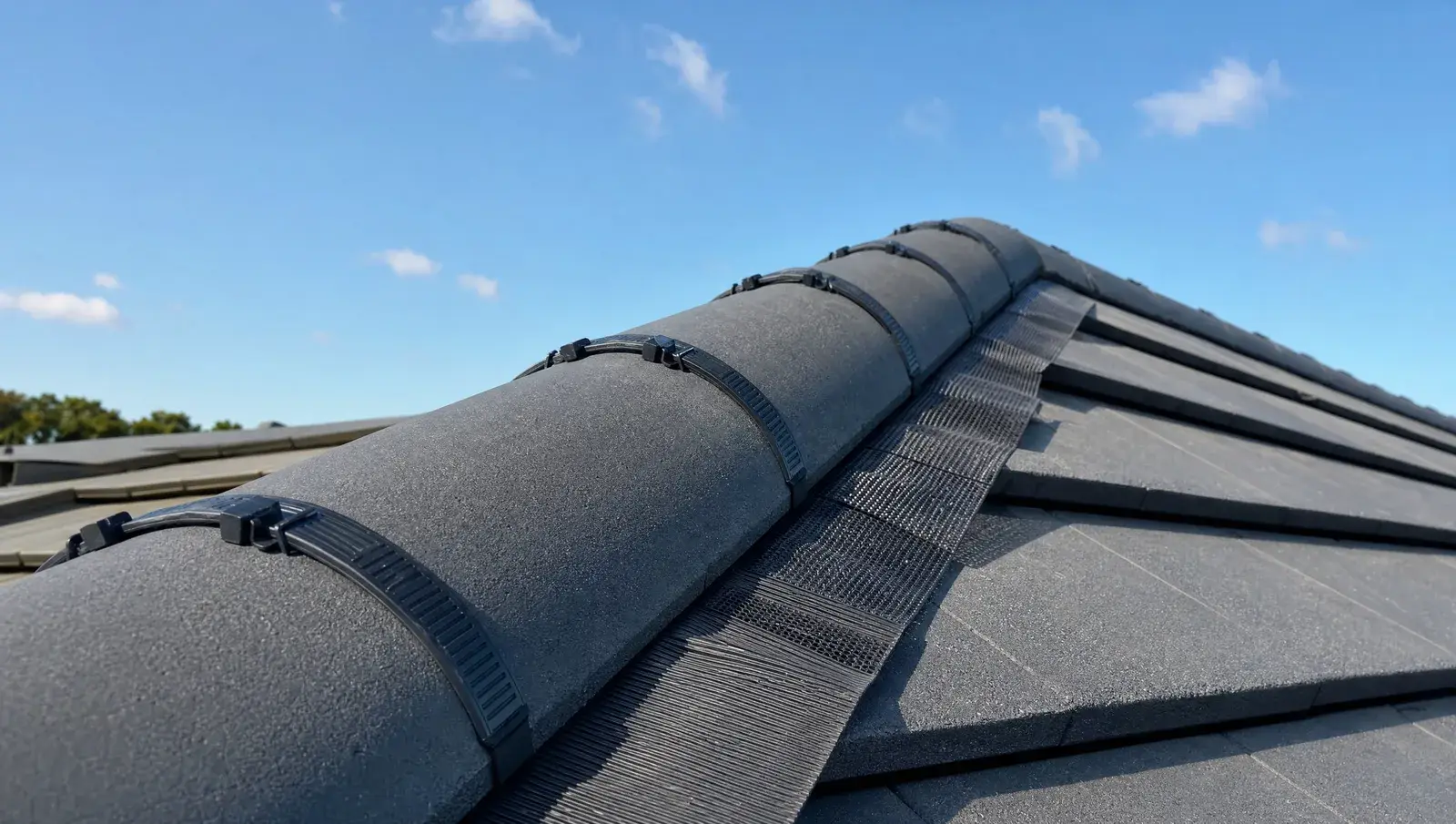
Ridge tiles and dry ridge systems
Angled, half-round and decorative ridges, why mortar bedding keeps failing, and when a mechanically fixed dry ridge is the smarter spend.
The ridge takes more weather than any other part of the roof: maximum wind uplift, full sun, driving rain from both sides. It is also the part holding everything at the top of the slopes in place, which is why a failing ridge line shows up so quickly as slipped tiles and gutter debris.
Types of ridge tile
| Type | Profile | Where it belongs |
|---|---|---|
| Angled | Simple inverted V | Modern concrete-tiled and slate roofs |
| Half-round | Smooth semicircle | The classic all-rounder on tile and slate alike |
| Third-round / hogsback | Shallower curve | Slate roofs and lower pitches |
| Decorative / crested | Ornamental combs and finials | Victorian and Edwardian roofs; match like-for-like |
On period properties the decorative ridge is part of the architecture: replace broken ones like-for-like (reclaimed yards carry most patterns) rather than swapping in plain modern units that flatten the roofline.
Why mortar bedding fails
Mortar is rigid; a roof moves constantly with heat, wind and frost. The bed cracks hairline-fine, water tracks in and freezes, and the cracks grow every winter until mortar chunks land in the gutter and tiles sit loose. A re-point buys a few years; even a full re-bed is a maintenance cycle rather than a fix. That is not a bad roofer's fault, it is the material's nature, and it is why the industry standard changed. If your ridge line already shows gaps or wobbling tiles, start with our cracked ridge tiles guide.
Dry ridge: the modern standard
A dry ridge system fixes each ridge tile mechanically: a screw and clamp into a batten at every joint, over a ventilated weatherproof roll that seals the apex while letting the roof breathe. Since the 2014 update to BS 5534, mortar alone is not an acceptable fixing on new roofing work: ridge and hip tiles must be mechanically fixed. On a re-roof you get dry ridge (or mortar plus hidden mechanical fixings) as standard; on an existing roof, converting is optional but increasingly the default recommendation.
- No mortar to crack: the maintenance cycle simply stops.
- Storm-secure: every tile is screwed down against wind uplift.
- Built-in ventilation: the ridge roll lets the loft breathe, cutting condensation risk.
- Honest downside: higher upfront cost than a re-bed, and a cheap kit badly fitted can look clumsy on a heritage roof.
What ridge work costs
Re-bedding ridge tiles in mortar costs £200 – £600 in 2026, depending on how many tiles are lifted, roof height and access. A dry ridge conversion costs more upfront, typically the price difference of the kit and extra labour on top of similar access costs, but removes every future re-pointing bill, which is why it usually wins on exposed roofs. If access equipment is needed the job cost rises with it; see our roof repair cost guide for the wider picture, or get exact figures via free quotes.
Repair, re-bed or convert?
One or two loose tiles after a storm: repair and re-bed locally. Crumbling mortar along the whole ridge: full re-bed at £200 – £600, or convert to dry ridge if you want to stop paying for the same job every few years. Re-roofing anyway: dry ridge is required practice under BS 5534, so make sure it is itemised in the quote. For the full roof covering context, see our pitched roofing service.
Ridge tiles loose or crumbling?
Get up to three itemised quotes for re-bedding or a dry ridge conversion from vetted local roofers. Free, no obligation.