
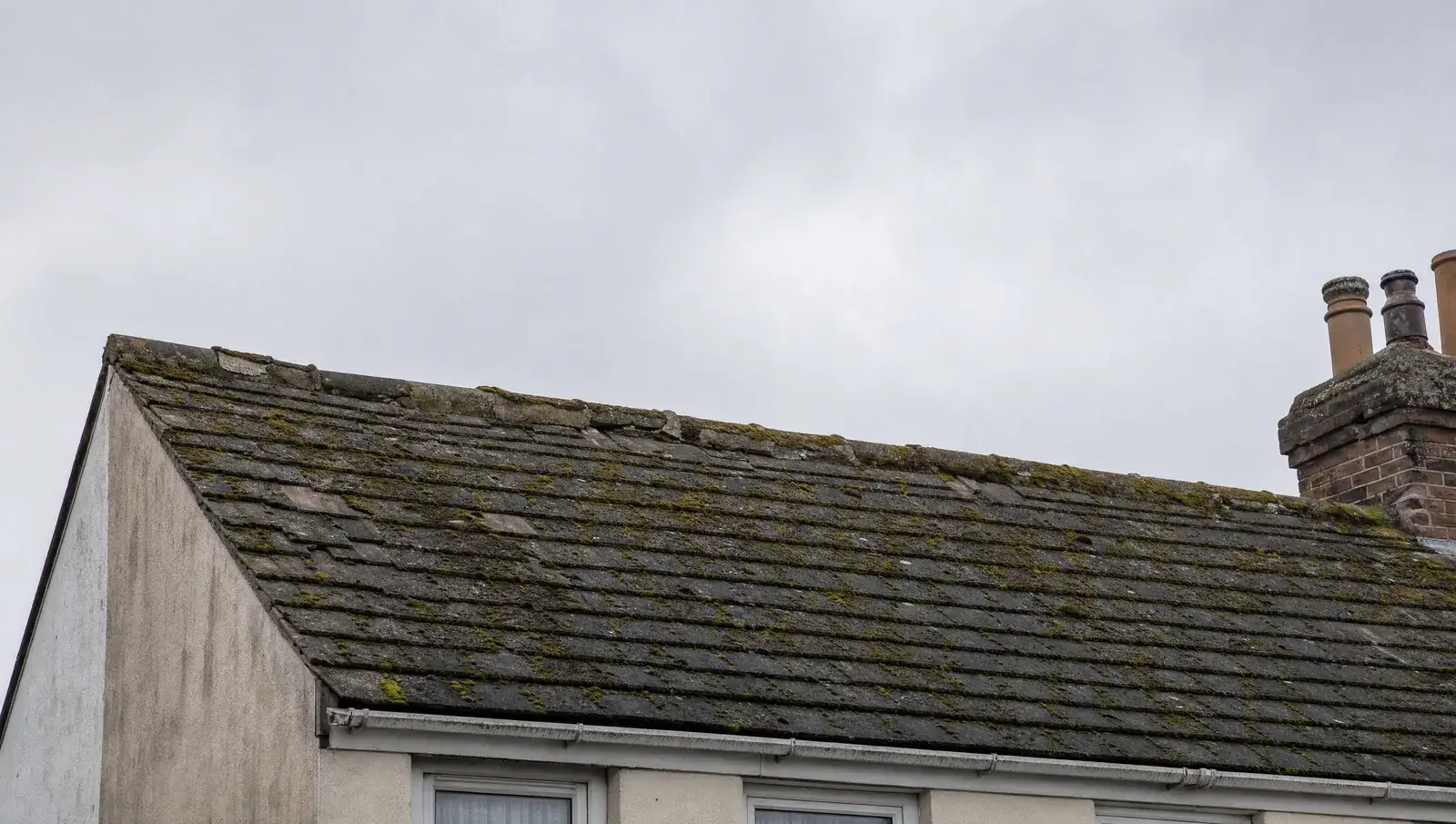
Signs you need a new roof (and signs you don't)
The 10 warnings that genuinely mean replacement, and the 3 scary-looking ones that only need a repair.
Roofs rarely fail overnight. They send warnings for years, and the trick is knowing which warnings matter. Get it wrong one way and a £300 repair becomes a rotten roof structure; get it wrong the other way and you pay five figures for a roof that had a decade left. Here is how to tell the difference.
10 signs you genuinely need a new roof
- Daylight visible in the loft. Go up on a bright day with the light off. Pinpricks and slivers of sky mean the covering and underlay have both failed. Water follows light.
- Widespread slipped or delaminating tiles. A few new gaps every winter, or concrete tiles with surfaces flaking away in layers, means the tiles or their fixings are at the end, not just unlucky.
- A sagging ridge line. Stand across the road and sight along the ridge. A dip or wave suggests the timbers beneath are overloaded or rotten, which is structural, not cosmetic.
- Repairs that keep coming back. If you are calling a roofer to the same roof every year, you are paying for a replacement in instalments and getting none of the benefit.
- Bald, brittle or dusty underlay felt. Visible from the loft. Traditional felt lasts 25 to 40 years; when it tears at a touch, the roof's second line of defence is gone.
- Damp in more than one room. One damp patch is a leak with an address. Damp appearing across several rooms or ceilings means water is getting through the covering generally.
- Granules collecting in the gutters. The gritty surface washing off concrete tiles into your gutters is the tiles literally wearing out.
- Cracked mortar everywhere. Failed pointing on one ridge is maintenance. Crumbling mortar along every ridge, hip and verge on a 50-year-old roof usually arrives with the rest of the roof's problems.
- The neighbours are all re-roofing. Houses built in the same year with the same materials fail on the same schedule. A street full of scaffolding is data.
- A surveyor has flagged it. Mortgage surveyors and RICS reports are conservative but rarely wrong about roofs. A flagged roof will also block or reduce offers when you sell.
3 signs that do NOT mean you need a new roof
- Moss. Moss grows on sound roofs, especially shaded or north-facing ones. Clear it, because it traps moisture and blocks gutters, but it condemns nothing. Anyone using moss to sell you a re-roof is selling, not surveying.
- One slipped tile. That is a £150-ish fix and one of the most common jobs in roofing. See common roof problems for what it involves.
- A single leak. One leak from one identifiable point, a tile, a flashing, a valley, is a repair. Replacement only enters the conversation when leaks are multiple or keep returning.
Not sure? Get evidence, not opinions
Most of the genuine signs can be checked from the ground, the loft or the kerb without anyone climbing on your roof. When the picture is still ambiguous, a proper roof inspection, often with drone photography, shows exactly what state the covering, underlay and timbers are in. That report is also your best defence against being sold a roof you do not need: compare what an inspector finds with our library of roof problems before anyone starts quoting.
If enough of those signs apply, the next question is what it costs. The new roof cost guide breaks it down by house type and material, and the roof cost calculator gives a range for your own home.
Get an honest verdict on your roof
Up to three vetted local roofers, itemised quotes, and no one with an incentive to condemn a roof that only needs a repair.