
Natural slate roofs
The longest-lived roof covering in Britain: Welsh vs Spanish slate, real 2026 costs, reclaimed slate and when synthetic makes sense. Updated July 2026.
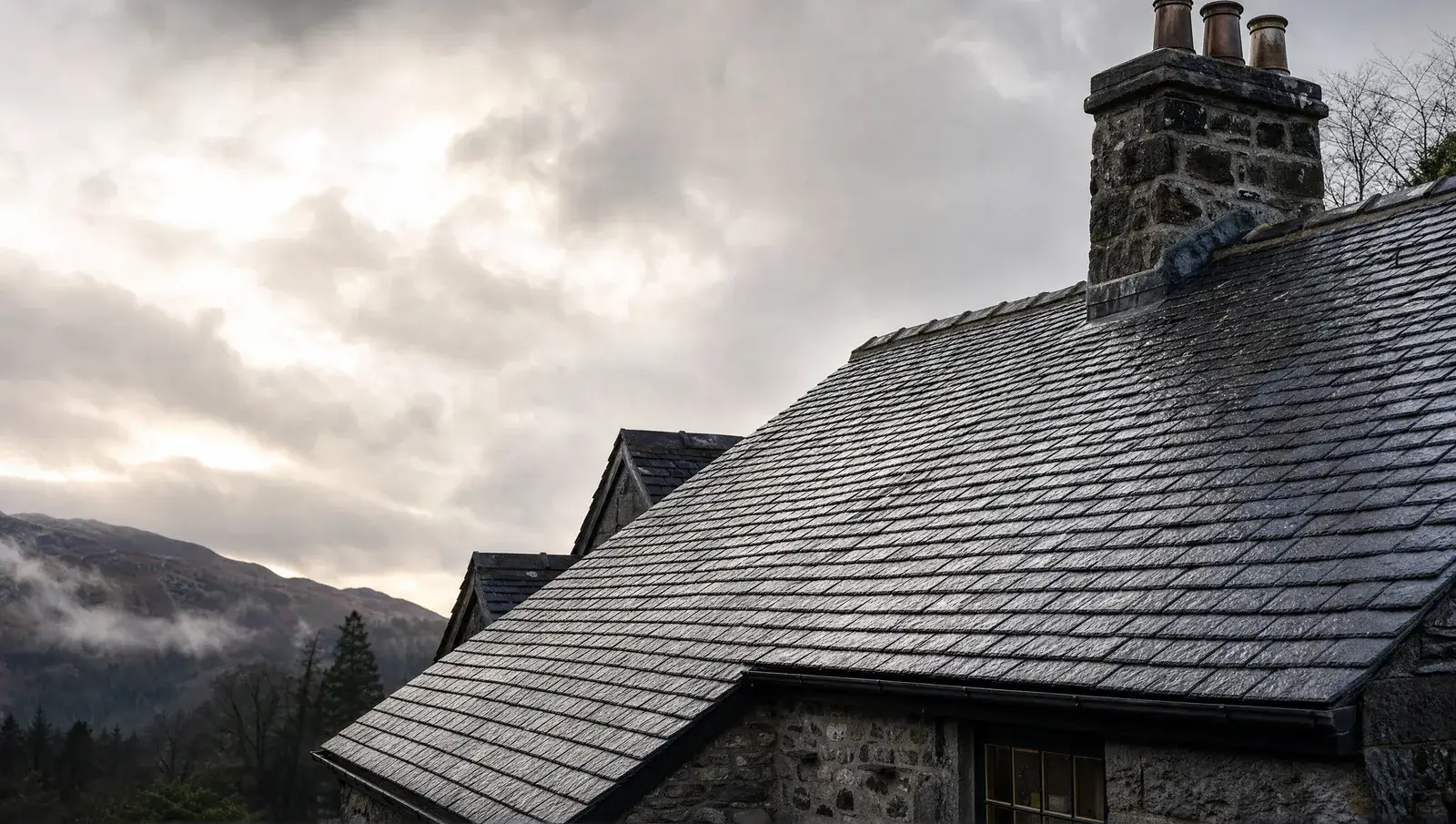
Slate is not manufactured, it is mined: fine-grained metamorphic rock split along its natural cleavage planes into thin, dense, almost completely waterproof sheets. Nothing about it fades, warps or rots. That is why Victorian terraces across the country are still wearing their original slates, usually on their second or third set of nails and battens.
Welsh vs Spanish slate
Welsh slate is the global benchmark: quarried at places like Penrhyn and Ffestiniog for centuries, exceptionally dense, colour-stable heather-blue and dark grey, and proven on British roofs through every winter since the Industrial Revolution. It is also the priciest option, sitting firmly at the top of the £150 to £220 range and above it for premium grades.
Spanish slate supplies most of the UK market today and is the sensible default for most homes. Spain quarries more roofing slate than anywhere on earth, and good Spanish slate graded to BS EN 12326 performs superbly. The caveat is grading: cheap ungraded imports can carry pyrite inclusions that rust-stain the roof or delaminate early. Both origins are good when properly graded; the risk is the bargain pallet, not the country. Ask your roofer for the grading certificate, and if they cannot produce one, walk.
Slate at a glance
| Natural slate | |
|---|---|
| Cost, supplied & fitted | £150 – £220/m² |
| Cost per slate (supply-only) | £4 – £12 |
| Lifespan | 80 – 120 years |
| Cost per year of life | roughly £1.50 – £2.75 per m² |
| Weight | around 25 – 30 kg/m², lighter than concrete |
Compare that cost-per-year figure with concrete at £110 to £150/m² over 40 to 60 years and slate stops looking expensive. The premium buys a roof your grandchildren will not need to replace. Full whole-roof pricing is in the new roof cost guide.
The honest downsides
- Upfront cost. The highest per-square-metre price of any mainstream covering, and slating is skilled work, so labour costs more too.
- Fragility underfoot. Slates crack if walked on carelessly; maintenance needs a roofer who knows slate, not just anyone with a ladder.
- Pitch limits. Slate needs a reasonable pitch (typically 20 degrees plus, depending on slate size and exposure); it is not an option for shallow roofs.
- Nail fatigue. The classic slate roof failure is not the slate but the fixings: century-old nails rust through and slates start slipping one by one. The cure is a strip and re-lay, reusing the original slates.
Reclaimed slate and conservation work
Because slate outlives buildings, there is a healthy salvage market, and in conservation areas reclaimed slate is often the required spec: it matches the weathering of every neighbouring roof in a way new slate cannot. A good roofer sound-tests each reclaimed slate before laying it. A clean ring means sound stone; a dull thud means delamination has started and the slate goes on the reject pile. Matched reclaimed Welsh slate commands a real premium, so budget accordingly on listed and conservation properties.
Which roofs suit slate?
Slate belongs on period properties that originally wore it, on homes in slate-roofed streets where anything else looks wrong, and on any roof whose owner is playing the long game. It rewards quality installation more than any other covering, so use a roofer with genuine slating experience; our pitched roofing service connects you with vetted specialists who do this work week in, week out.
Get slate prices for your roof
Up to three itemised quotes from vetted slate-experienced roofers, checked against the fair rates on this page. Free, no obligation.