
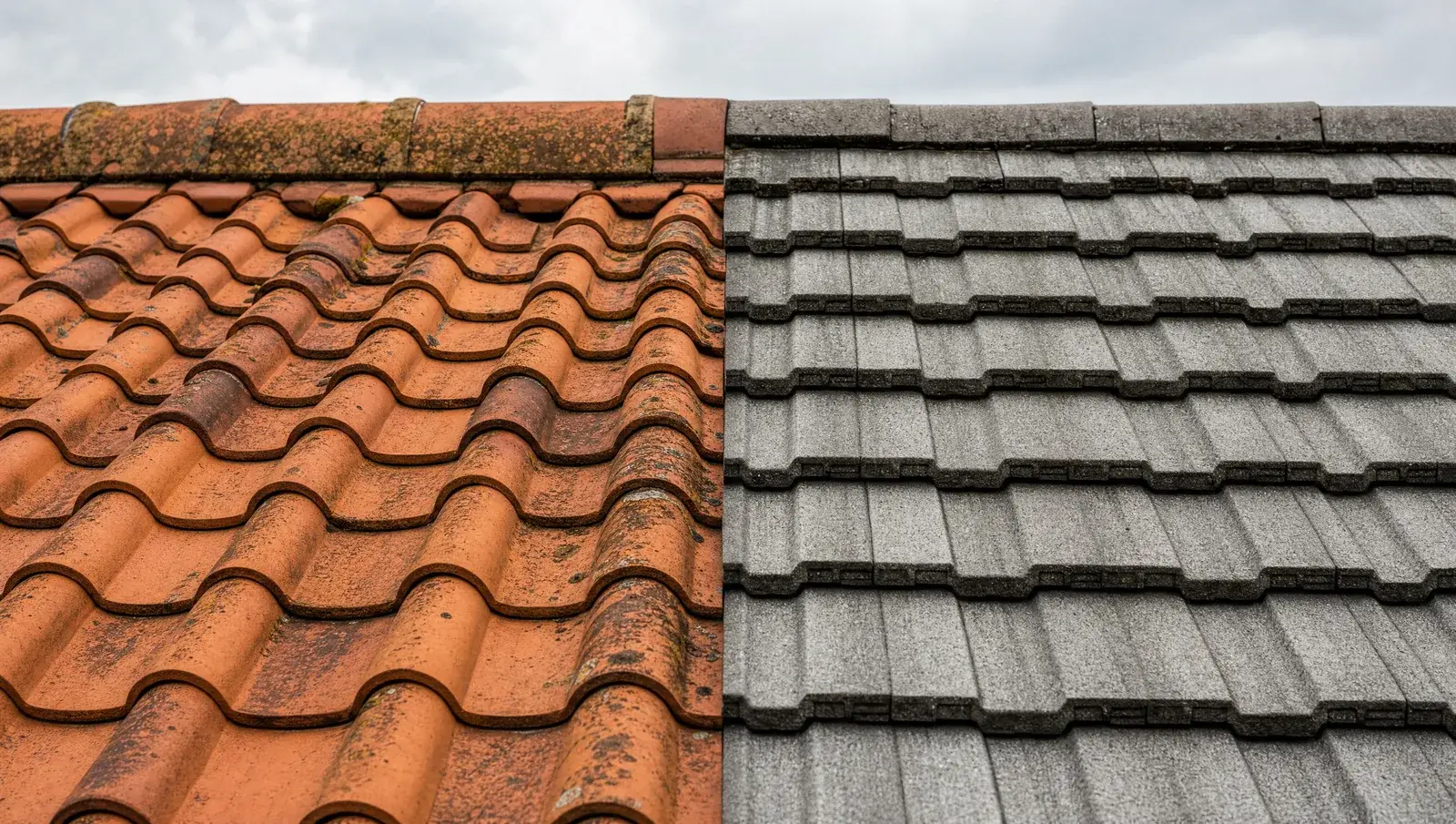
Clay vs concrete roof tiles
The honest comparison: cost, lifespan, weight and how each one looks after 30 years on a British roof. Updated July 2026.
This is the most common material decision on a UK re-roof, and the two tiles are less similar than they look on the merchant's rack. The difference comes down to how each one is made. Clay tiles are moulded from natural clay and kiln-fired, so the colour runs through the entire tile. Concrete tiles are cast from sand, cement and water, then coated with a pigmented finish on the surface only. That single manufacturing difference drives almost everything below. To see what the choice does to your own bill, compare tile prices in our roof cost calculator.
Clay vs concrete: the comparison table
| Clay tiles | Concrete tiles | |
|---|---|---|
| Cost, supplied & fitted | £130 – £180/m² | £110 – £150/m² |
| Cost per tile (supply-only) | £2 – £6 | £1 – £3 |
| Lifespan | 60 – 90 years | 40 – 60 years |
| Colourfastness | Fired through, never fades | Surface coating fades over 15 – 25 years |
| Weight | Lighter | Heavier, check the structure |
| Best for | Period homes, long-term owners | Budget re-roofs, modern estates |
Where clay wins
- Colour for life. The terracotta you buy is the terracotta you keep. Clay weathers into a patina rather than fading, which is why 100-year-old clay roofs still look right.
- Lifespan. 60 to 90 years is normal, and reclaimed clay tiles from demolished buildings routinely go around again.
- Weight. Clay is meaningfully lighter than concrete, kinder to older rafters and cheaper to strengthen for.
- Planning. In conservation areas and on period streets, clay is often the only tile the planners will accept.
Where concrete wins
- Price. £1 to £3 per tile against clay's £2 to £6, and 15 to 25% less per fitted square metre. On a big detached roof that gap is thousands of pounds.
- Strength on day one. Concrete tiles are hard to crack underfoot and shrug off hail and clumsy ladder work.
- Availability. Every merchant in the country stocks interlocking concrete in volume, so supply never delays a job.
The two honest downsides of concrete
It fades. The colour is a surface coating, and UV strips it back over 15 to 25 years. The roof does not fail, but it slowly turns towards pale cement grey, which is why estates built in the 1990s all wear the same washed-out colour today.
It is heavy. Concrete can add 10 to 20 kg per square metre over the clay or slate it often replaces. On a pre-war roof that extra load needs a structural check before anyone orders materials; skipping it is a classic cause of sagging rafters. Any decent roofer will flag this unprompted, which is a useful vetting test in itself.
The verdict
Choose concrete if the budget is the deciding factor, the house is modern, and a 40-plus-year roof is all you need. It is a perfectly good roof at the best price. Choose clay if you are staying put, the property is older or handsome enough to deserve it, or you simply refuse to watch your roof fade. For how these prices fit into a whole project, see the new roof cost guide, and when you are ready to compare installers, our roof replacement service connects you with vetted local roofers. For the wider field including slate and synthetic options, start with the complete roof tile guide.
Tile choice is only part of the bill. The roof tile cost guide covers what replacement tiling costs per square metre, and the roof cost calculator puts clay and concrete side by side for your own roof size and region.
Price both tiles for your roof
Up to three itemised quotes from vetted local roofers, priced in clay and concrete so you can compare properly. Free, no obligation.