
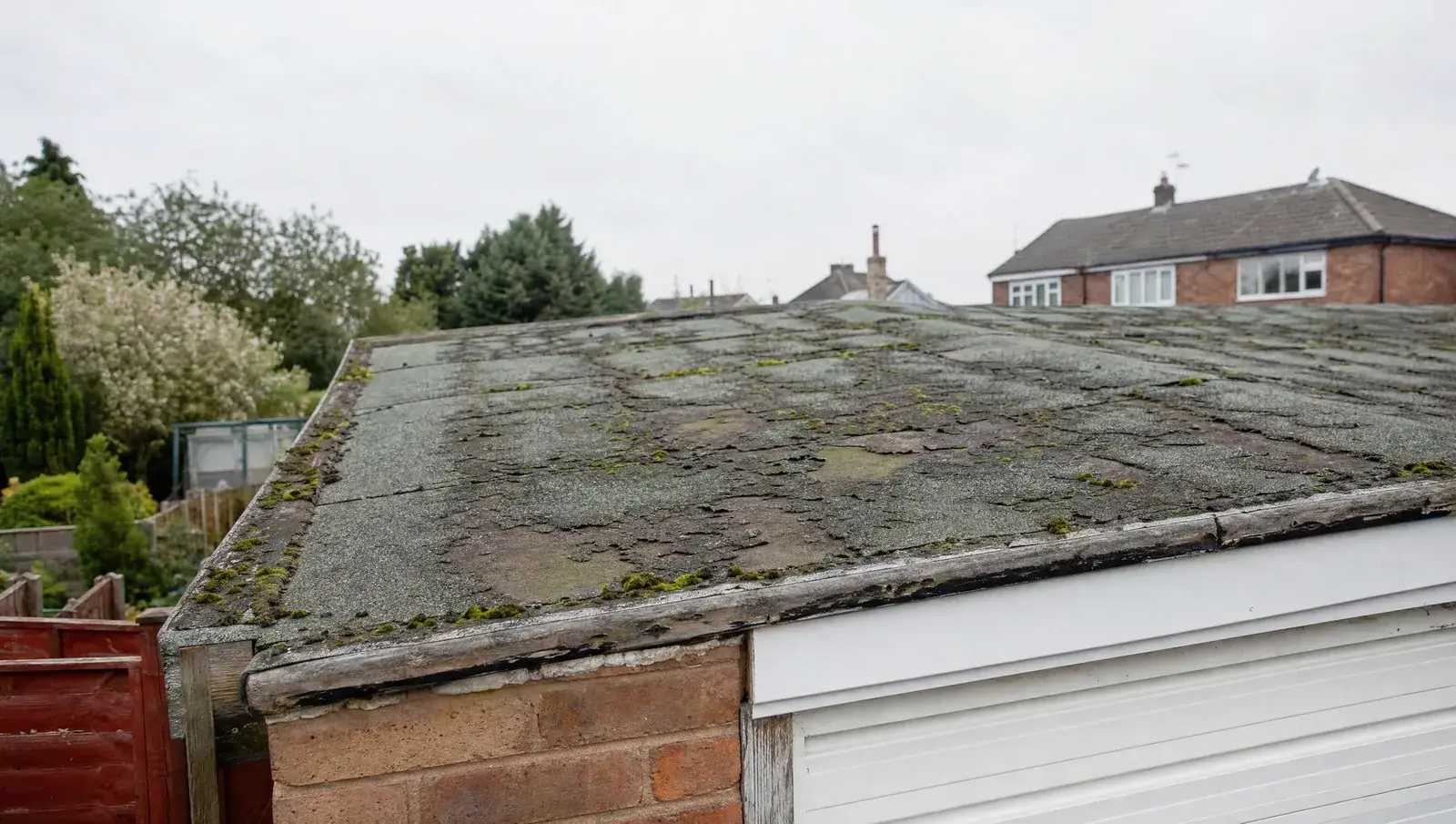
Is your felt roof on the way out?
The five signs a felt roof is failing, what actually causes it, and whether to patch it, re-felt it or upgrade to rubber. Costs updated July 2026.
Felt is the cheapest flat roof covering and the shortest lived, so most garages, extensions and porches will see a felt roof fail at some point. The good news: it rarely fails without warning. Here is what to look for, and what each sign is telling you. Already past patching? Price it in our flat roof replacement cost calculator.
The five signs a felt roof is failing
- Blistering: raised bubbles where trapped moisture or air expands in the sun. Isolated blisters can be patched; widespread blistering means moisture is through the covering.
- Alligator cracking: a web of fine cracks across the surface, named after the skin pattern it makes. It means the bitumen has oxidised and gone brittle. This does not repair well.
- Bald mineral patches: the green or grey mineral surface has worn away, exposing the black bitumen beneath to UV. Bald felt ages fast.
- A soft, spongy deck: if the roof gives underfoot or under hand pressure, water has reached the timber boards below. This is the most serious sign on the list.
- Moss in the seams: moss needs sustained moisture to grow, so a mossy lap joint is telling you that joint no longer sheds water properly.
Why felt roofs fail
Ranked by how often we see each one: age and UV come first, because bitumen simply dries out and cracks after years of sun. Trapped moisture is next, blistering the covering from beneath, often because the felt was laid on a damp deck. Then thermal movement, which opens lap joints as the roof expands and contracts daily; ponding water, which sits on low spots and works into every weakness; and finally foot traffic and impact, from ladders, aerial fitters and dropped branches.
What to do right now
If water is already coming through, move anything valuable out from under the roof and get a temporary patch or tarp on quickly; a flat roof repair visit can make it watertight while you decide on the proper fix. If the roof is failing but dry inside, you have time to plan, so avoid walking on it (a brittle roof cracks underfoot) and get it looked at before winter rather than after.
Repair, re-felt or upgrade?
Repair makes sense for one-off damage on a roof that is otherwise sound: a single split, one blister, a lifted lap. Re-felting is the right call when the surface shows widespread cracking or blistering, because the covering itself has failed and patches just chase the leak around. Upgrading to EPDM rubber deserves a serious look whenever you are stripping the roof anyway: a single seamless sheet with no joints to fail, and usually the cheapest option per year of life even where the upfront cost is higher. Our EPDM guide compares the two properly, and the felt roof cost guide has the full 2026 price breakdown for each route.
How to make the next roof last longer
- Keep gutters and outlets clear so water never ponds on the roof.
- Sweep off leaves and moss once or twice a year; do not jet wash felt.
- Use walkway boards if the roof needs regular access.
- Have laps and flashings checked after big storms, while problems are still cheap.
Once felt has failed there are two questions left: patch or replace, and what either should cost. The leaking roof repair cost guide covers the patch, and the flat roof cost guide covers the replacement.
Get your felt roof looked at
Up to three itemised quotes from vetted local flat roofers, whether it needs a patch or a full re-cover. Free, no obligation.