
Standing water on a flat roof: when it matters
The 48-hour rule tells you whether that puddle is normal drainage or a defect eating your roof. Here is how to read it.
What you're seeing
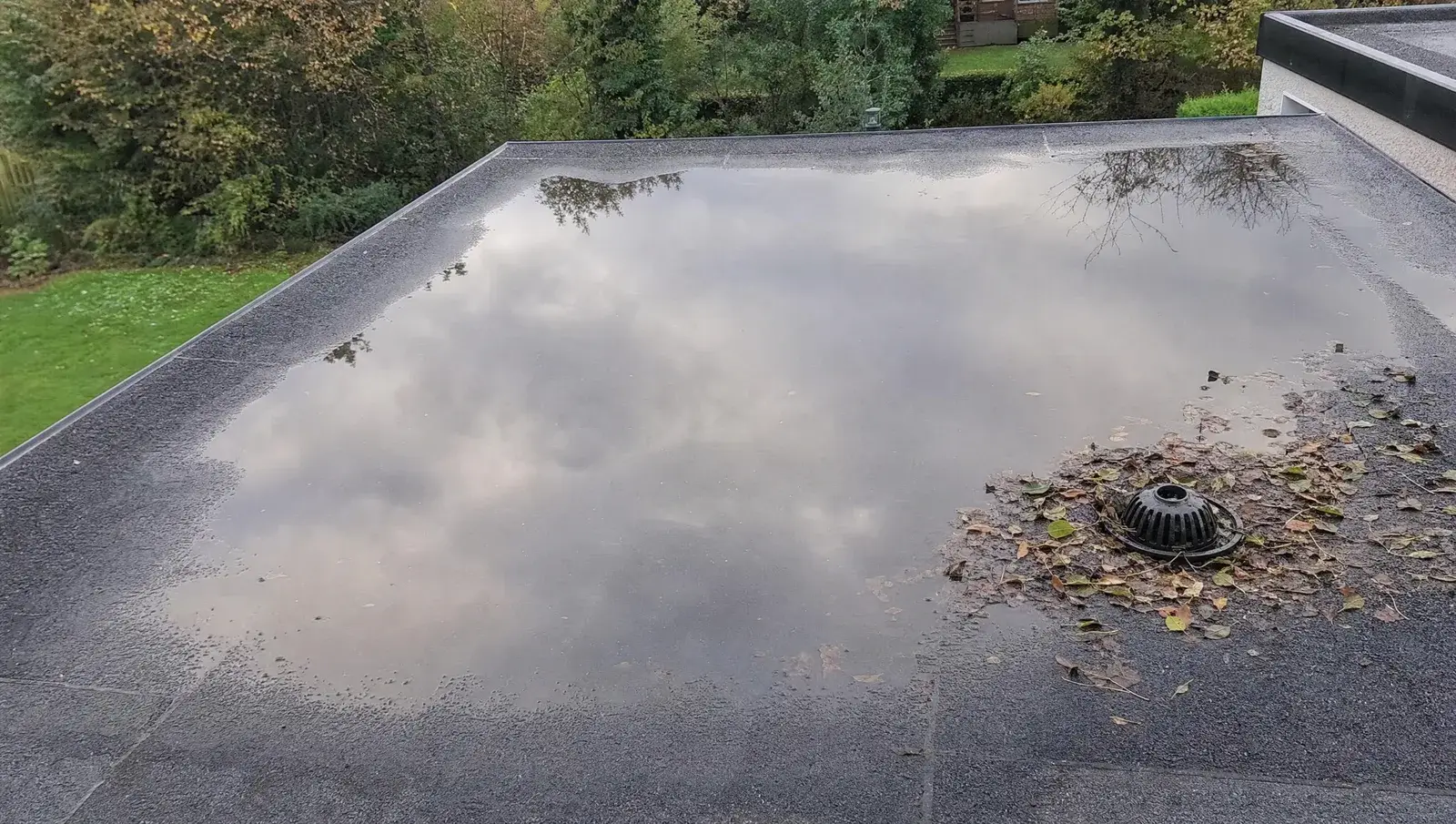
A mirror-flat puddle in the same spot after every rain, often with a tide mark of silt and leaves showing its regular edge, sometimes with moss or algae greening the patch. The tide mark is the giveaway: a ring of dirt means the water has been pooling there repeatedly, not just today.
The 48-hour rule
Every flat roof holds some water immediately after rain; none of them are actually flat, and the fall takes time to drain the surface. The industry rule of thumb is simple: if water is still standing 48 hours after the rain stopped, the roof has a ponding problem. Less than that, in patches that dry by the next day, is normal behaviour and not worth spending money on.
Why ponding matters
- Concentrated ageing. The pond keeps one patch permanently wet, freezing in winter and baking in summer. Felt suffers most, blistering and cracking years ahead of the rest of the roof; see our guide to failing felt roofs.
- Joints under permanent test. Every seam, blister and repair under the pond has water pressing on it around the clock, so any weakness becomes a leak sooner.
- Weight. Water is heavy, and a deep pond adds a real load to a timber deck, which deepens the deflection that caused the pond: a slow feedback loop.
What causes it
- Blocked outlets and gutters. Leaves, silt and moss over the outlet back water up across the roof. The most common cause and by far the cheapest to fix.
- Deck deflection. The structure has sagged between joists or at a weak point, creating a low spot with no route to the drain. Common on older timber decks and under previously ponded areas.
- Poor falls. The roof was built too flat, or successive re-covers levelled out what fall there was. Building practice calls for a designed fall so water actually reaches the outlet.
What to do now
Clear the outlets, gutters and any leaf guards, then watch the roof through the next rain: a surprising share of ponding disappears with the blockage. Photograph the pond at its fullest and again 48 hours after rain, which gives you (and any roofer quoting) an honest record of the problem. Do not drill holes in the covering to "let it drain", and treat paint-on miracle coatings with suspicion: nothing you brush on changes the level of the roof.
The proper fix and what it costs
If clearing the outlets does not cure it, the fix depends on cause. Localised deck deflection can sometimes be addressed during a flat roof repair, but corrected falls are really a replacement-time job: firring pieces (tapered timber battens) or tapered insulation rebuild the slope so water drains, and the tapered insulation route upgrades the roof's thermal performance in the same move. Flat roof replacement runs £80 to £150 per m² in 2026, with a typical single garage at £1,400 to £3,000 and a 25m² extension roof at £2,300 to £4,000, per the flat roof cost guide. If the covering is already leaking or blistered around the pond, price the replacement rather than another patch.
Prevention
Clear the outlets every autumn and after nearby trees drop, glance over the roof after heavy rain a couple of times a year, and deal with blisters and soft spots while they are repair-sized. When replacement time comes, insist the quote states the falls being built in; a flat roof that drains is the cheapest flat roof you will ever own.
Fixing ponding properly usually means re-laying falls rather than patching, so it is worth knowing what a full flat roof costs before you accept a cheap repair. The flat roof cost guide has the 2026 rates.
Get the ponding sorted properly
Up to three quotes from vetted local flat roofing specialists, from outlet clearing to corrected falls. Free, no obligation.