
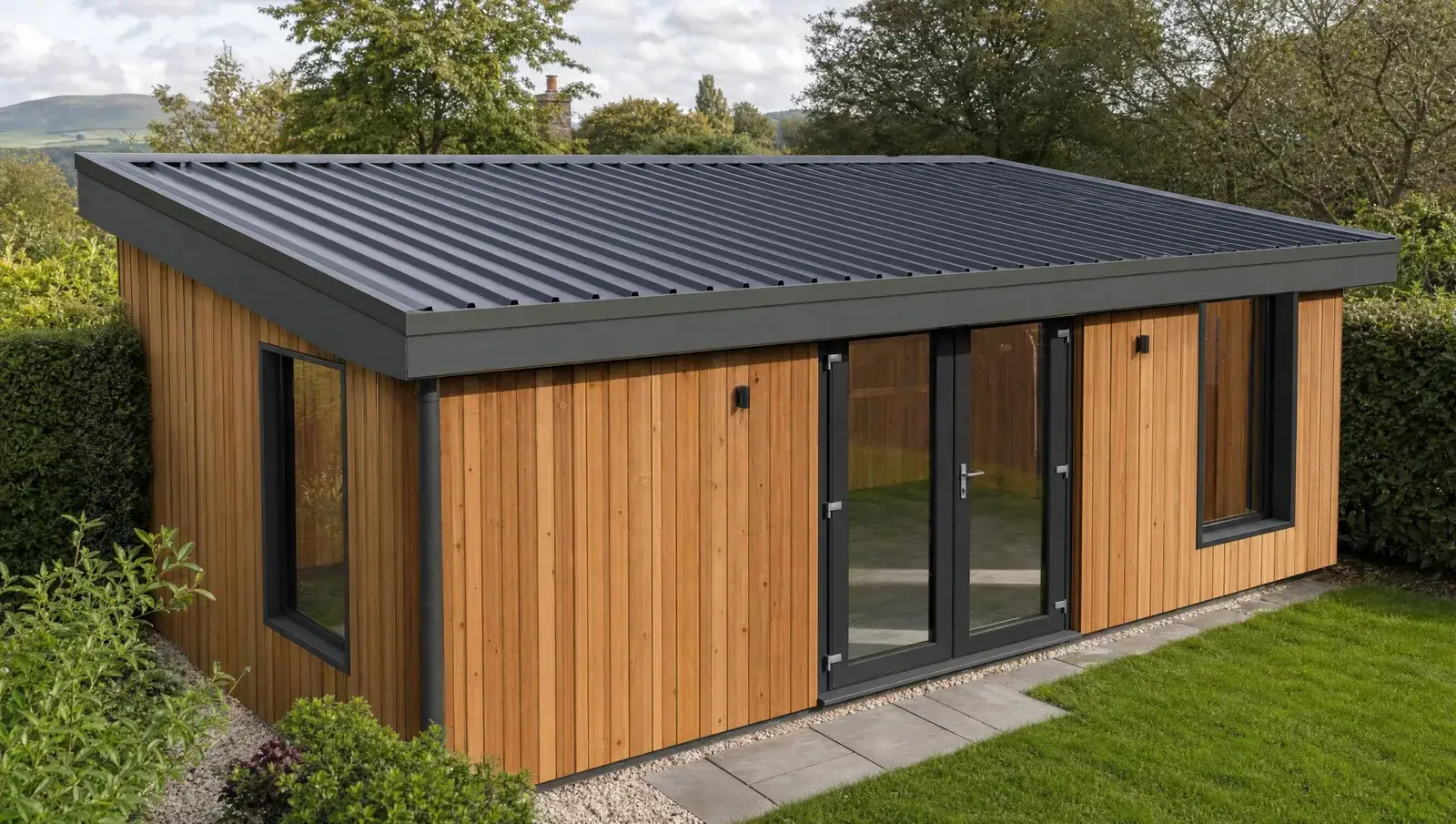
Corrugated roofing: from farm to garden office
Box-profile steel, polycarbonate and bitumen sheets compared, where each one suits, and the asbestos warning every older garage owner needs.
Corrugated sheeting earns its keep where speed, span and cost matter more than kerb appeal: garages, workshops, garden offices, stables, lean-tos and agricultural buildings. The corrugations are structural, letting thin sheets span between purlins without sagging, which is why a whole garage roof can go on in a morning.
The modern options
| Sheet type | Lifespan | Best for |
|---|---|---|
| Box-profile coated steel | 30 – 40 years | Garages, workshops, garden offices, agricultural |
| Bitumen sheets (e.g. Onduline) | 15 – 20 years | Sheds, summerhouses, budget DIY jobs |
| Polycarbonate | 10 – 20 years | Rooflights, carports, lean-tos needing daylight |
| Fibre cement (modern, asbestos-free) | 30 – 50 years | Agricultural and industrial re-sheets |
Box-profile steel, with its crisp rectangular ribs, has largely replaced the old wavy corrugated iron on new buildings. Plastisol and polyester coatings in anthracite, juniper green and slate grey mean a steel roof on a garden office now looks deliberate rather than agricultural.
Why corrugated sheets work
- Speed and simplicity: large sheets, screwed to timber purlins, few trades involved.
- Cost: the cheapest way to weatherproof an outbuilding per square metre.
- Light weight: ideal for timber-framed garden buildings that could never carry tiles.
- Low pitch: profiled sheets work down to around 10 degrees, and some systems lower.
- Anti-condensation options: felt-backed steel sheets control drips in unheated buildings.
The honest downsides
- Looks: even good box-profile is utilitarian; it rarely belongs on a house.
- Noise: single-skin metal drums in heavy rain unless insulated beneath.
- Condensation: uninsulated metal sheets drip in cold weather without a backing membrane.
- Fixings are the weak point: most leaks come from over-tightened or perished screw washers, not the sheets.
- Polycarbonate ages: cheaper grades yellow and go brittle in UV within a decade.
What corrugated roofing costs
Sheet materials are the cheap end of roofing: even fitted, a corrugated steel roof typically comes in well below a felt flat roof (felt runs £80 – £110 per m² supplied and fitted) and at a small fraction of any tiled covering. The final figure depends on sheet grade, insulation and access, so use our garage roof cost guide for typical job totals, or get itemised local prices through free quotes. For a full garage roof replacement in any material, see our garage roof service.
The asbestos-cement legacy
Hundreds of thousands of UK garages, sheds and farm buildings still carry grey corrugated asbestos-cement sheets fitted between the 1940s and the 1980s. Left alone and intact they are usually low risk, but drilling, breaking or pressure-washing them releases fibres, and disposal is regulated. If your corrugated roof is grey, brittle and pre-2000, read our asbestos roof guide before touching it.
Corrugated vs the alternatives
On a garage or workshop, the realistic alternatives are a flat roof in EPDM (£90 – £130 per m²) or GRP fibreglass (£110 – £150 per m²). Corrugated steel undercuts both on price and goes on faster, but the flat systems give a cleaner look and a walkable surface. On anything attached to the house, or visible from the street, tiles or a quality flat system usually justify their premium.
Re-roofing a garage or outbuilding?
Get up to three itemised quotes from vetted local roofers, in any material. Free, no obligation.