
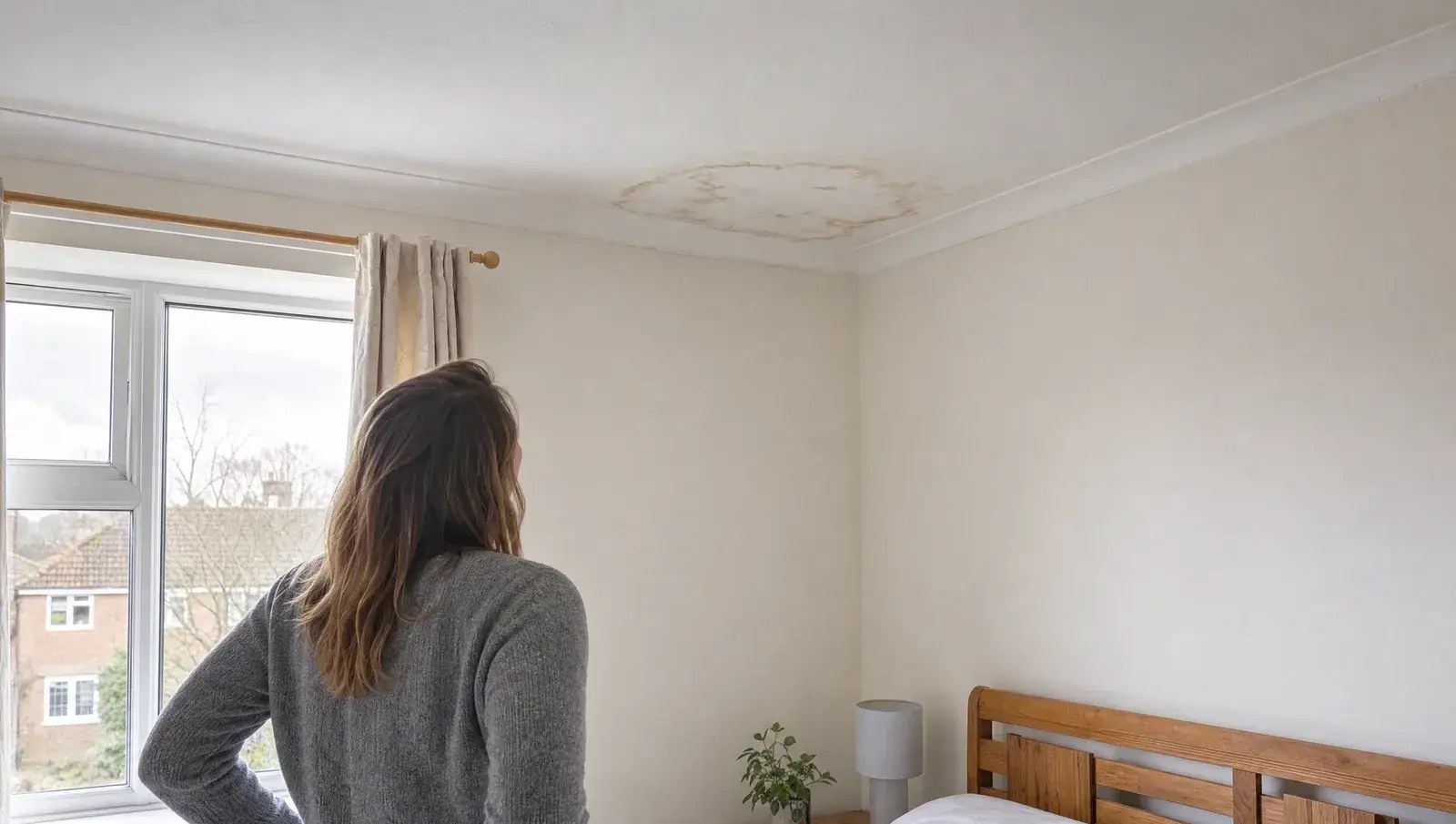
Damp patch on the ceiling? Here's what it means
Five causes account for almost every ceiling stain. Here is how to tell which one you have, and what the fix costs.
What you're seeing
Ceiling damp shows up as a yellow-brown ring or tide mark, a grey shadow that darkens over days, flaking or bubbling paint, or in the worst case a soft bulge in the plasterboard. Rings with a darker outline are the classic sign of water that has arrived, spread and dried repeatedly, which means the source is intermittent, and intermittent almost always means weather.
The five likely causes, ranked
- A roof leak. A slipped tile, cracked slate or perished felt letting rain through. The patch typically sits within a metre or two of the entry point, though water can track along timbers first. See our leaking roof action guide.
- Blocked or overflowing gutters. Water sheets over the gutter edge, soaks the wall head and shows up at the ceiling edge, almost always on an outside wall. Very common in autumn and after a run of storms.
- Condensation. Warm indoor air condensing on cold surfaces, usually at ceiling corners on outside walls, in bathrooms, or below a poorly ventilated loft. See condensation in the loft.
- Plumbing above. A weeping pipe joint, bath seal, shower tray or tank. The giveaway is a patch that grows regardless of weather.
- Failed flashing. Lead or mortar around chimneys and roof junctions. Suspect it when the stain sits near the chimney breast or where an extension meets the house.
How to tell which one you have
- Grows during or straight after rain: roof, gutters or flashing. Wind-driven rain from one direction points to flashing or a specific slope.
- Grows steadily whatever the weather: plumbing. Check for a bathroom, tank or pipe run above the stain and feel whether the patch is warm (heating pipe) or cold.
- Worse on winter mornings, often with black mould speckle: condensation, not a leak. Water from a leak stains brown; condensation grows mould.
- At the ceiling edge on an outside wall: look at the gutters first. Stand outside in heavy rain for two minutes; overflowing gutters announce themselves.
If the loft is above the stain, take a torch up during daylight and look for daylight through the covering, wet timber or drips on the membrane. Ten minutes in the loft often settles the diagnosis for free.
What to do now
Mark the edge of the patch in pencil and date it, then photograph it. That tells you within a week whether it is live or historic. If it is growing, bulging or dripping, treat it as an active leak and follow the leaking roof steps. If water is near a light fitting, switch that circuit off at the consumer unit.
The proper fix and what it costs
Fix the source before touching the decoration. Most roof leak repairs come in at £150 to £600 in 2026, per the leaking roof repair cost guide. Gutter repairs run £80 to £250 and a professional clean £80 to £200, per the guttering cost guide. Once the ceiling has fully dried, which can take a few weeks, seal the stain with a stain-block primer and repaint; skip the primer and the brown mark bleeds straight back through.
Stopping it coming back
Clear the gutters every autumn, glance over the roof from ground level after big storms, and keep bathroom extractor fans running long enough to clear the steam. If the cause was condensation, improving loft ventilation is the lasting cure; our loft condensation guide walks through the options in order of effectiveness.
Find the source, fix it once
Up to three quotes from vetted local roofers who will diagnose the cause, not just quote for a patch. Free, no obligation.