
Emergency roofer callout charges: what you'll pay
Real 2026 callout fees, hourly rates and make-safe costs, plus how to spot the storm chasers who exploit emergencies. Prices updated July 2026.
Emergency pricing feels opaque because you are buying speed, not just labour, and because you are ringing round at the worst possible moment. The table below shows what fair looks like in 2026 so you can commit fast without getting stung. If water is coming in right now, the stop-the-leak steps are worth two minutes before you ring anyone. If the roof is past a patch, price the full job in our roof cost calculator.
Emergency roofer charges (2026)
| Charge | Typical cost |
|---|---|
| Callout fee (daytime) | £80 – £150 |
| Callout fee (out of hours / weekend) | £100 – £250 |
| Emergency labour per hour | £60 – £120 |
| Tarp / make-safe over damage | £150 – £400 |
| Temporary batten and membrane patch | £150 – £350 |
Many firms roll the first hour of labour into the callout fee. Always ask what the fee includes before they set off, and get the numbers by text or email so there is a record.
What an emergency visit actually does
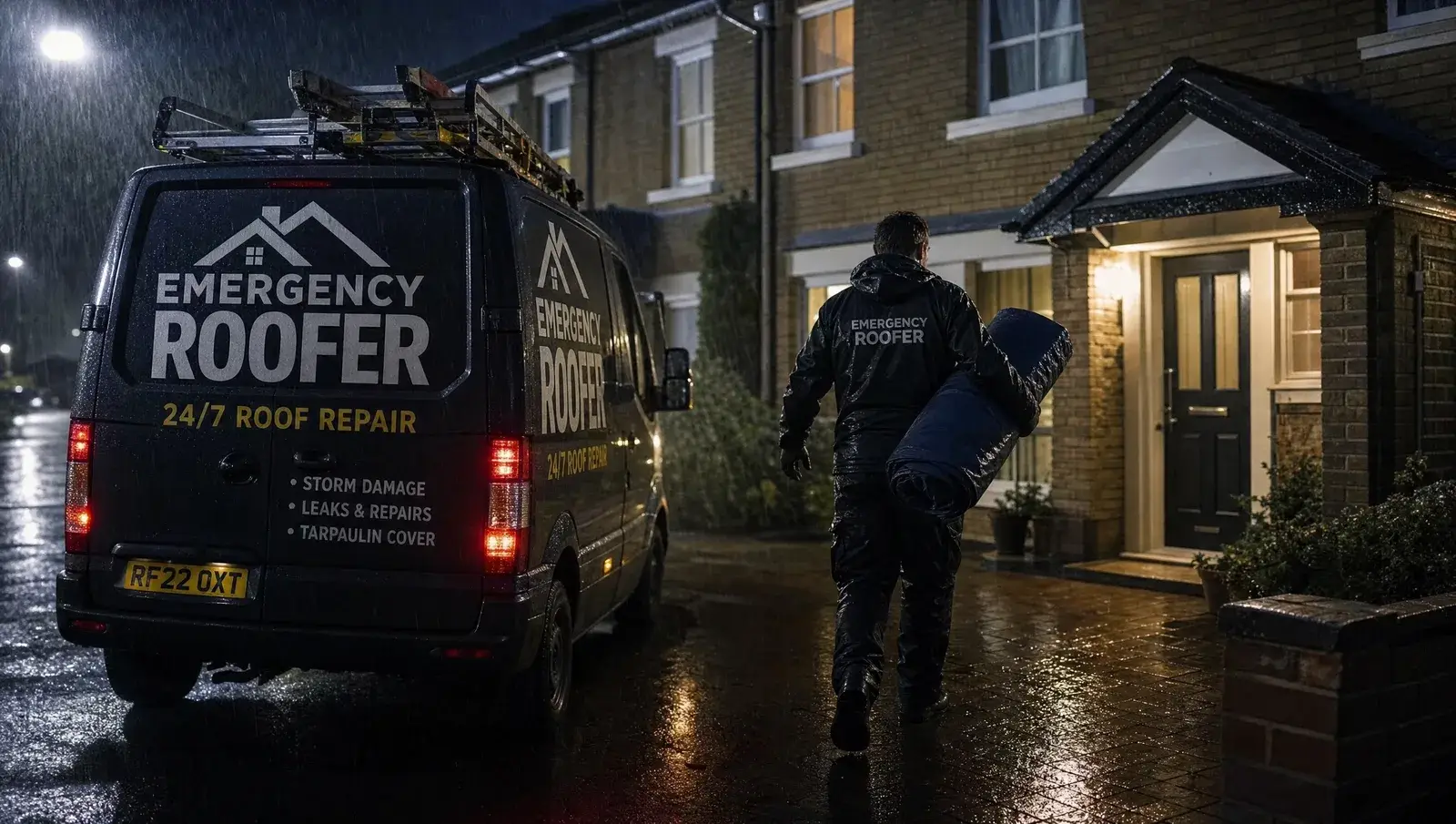
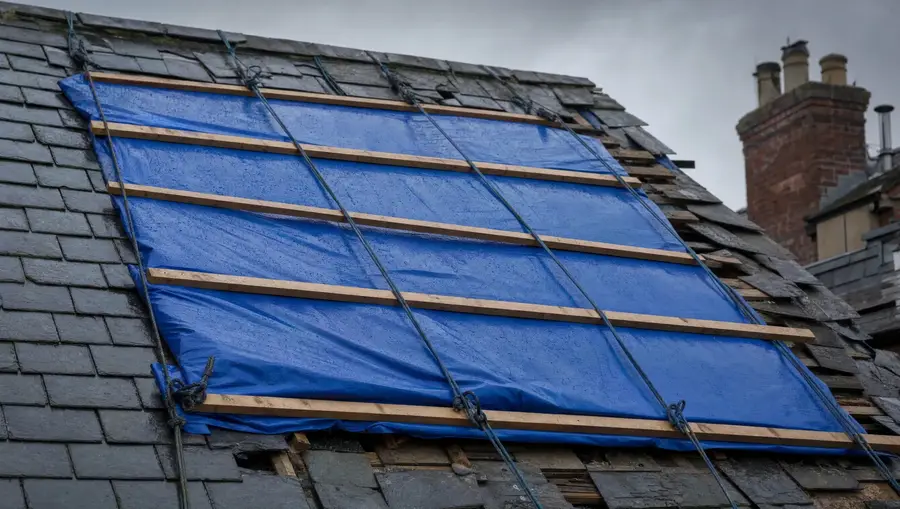
An emergency visit is a make-safe, not a repair. The roofer stops the water with a tarp or temporary patch, secures anything loose, and makes the area safe. The permanent repair is quoted separately and done in dry daylight, when the roofer can see the full extent of the damage and fix it properly. That two-step sequence is the correct professional approach, not an upsell: nobody can carry out a lasting repair on a wet roof in the dark. Once you are safe and dry, the leaking roof repair cost guide and the wider roof repair cost guide show what the follow-up work should cost.
What counts as a genuine emergency
- Active water coming through a ceiling, especially near light fittings or electrics.
- Structural movement: a sagging or shifted roof section after a storm or impact.
- Storm-loosened tiles or slates over public areas, paths, pavements or a neighbour's drive, where falling debris could injure someone.
A damp patch that is not growing, or a slipped tile in dry weather, is urgent but not an emergency. Booking a normal-hours visit saves the out-of-hours premium and gets you a better repair.
Will insurance cover it?
On a valid storm claim, make-safe costs are usually recoverable, and most policies expect you to act quickly to prevent further damage. Keep the invoice, photograph everything before and after the make-safe work, and notify your insurer as soon as practical. The insurance and roof leaks guide walks through the claims process step by step.
What to do while you wait
- Contain the water indoors: buckets under drips, towels along the edges, and pierce a bulging ceiling bubble with a screwdriver over a bucket to release the water in a controlled way.
- Kill the electrics to affected fittings: if water is anywhere near lights or sockets, switch off those circuits at the consumer unit.
- Never climb on the roof: a wet roof at night is how emergencies become tragedies. Move cars and people away from anything that might fall and leave the rest to the professional.
More on handling the leak itself in our leaking roof guide. When the emergency has passed, get free quotes for the permanent repair from vetted local roofers.
Need a roofer fast?
Vetted local roofers who prioritise genuine emergencies, with charges checked against the fair rates on this page. Free, no obligation.