
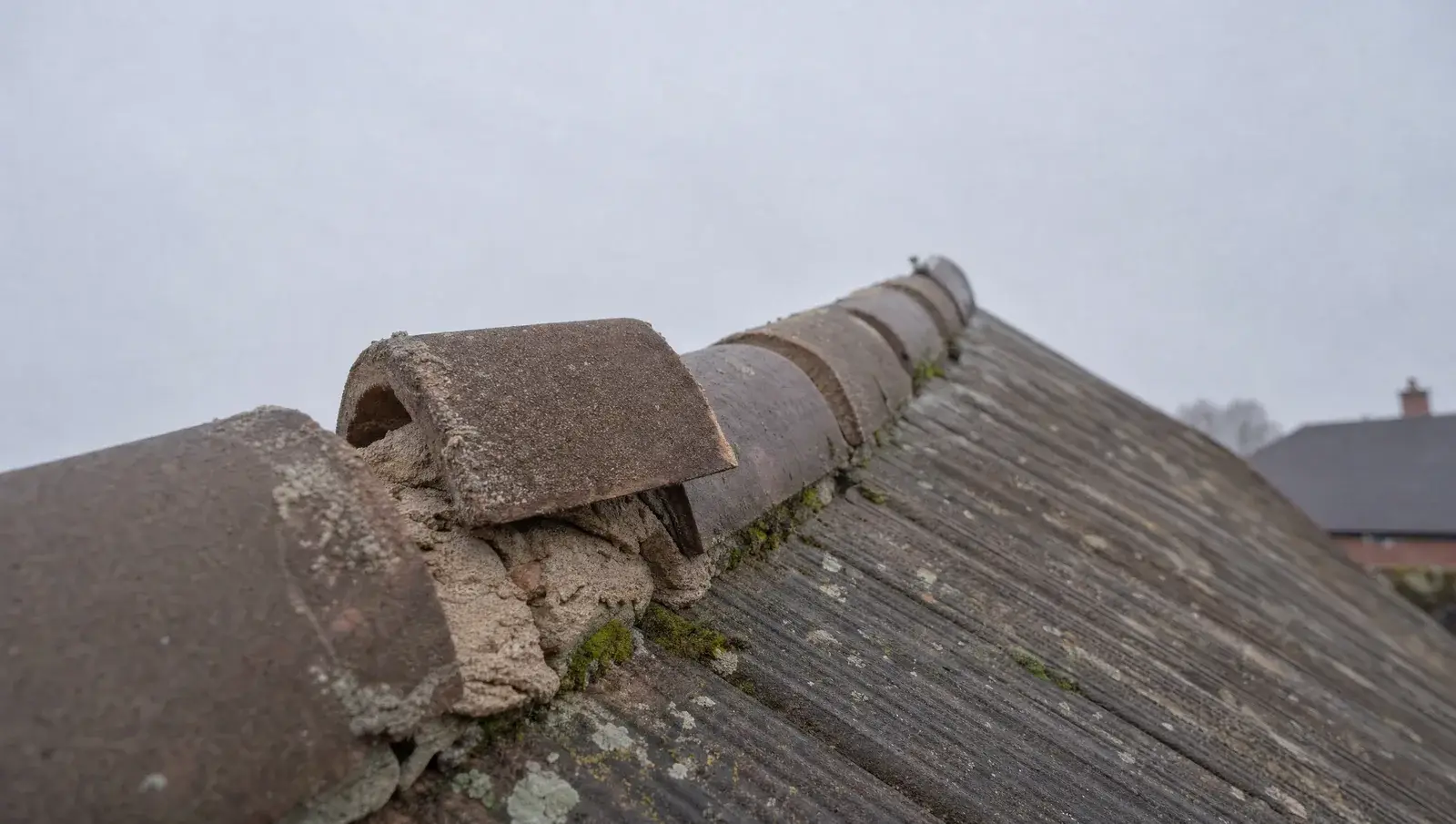
Cracked ridge tiles and crumbling mortar
Mortar on a ridge line always fails eventually. Why it happens, the re-bed vs dry ridge decision, and fair 2026 prices for the fix.
The ridge is the highest, most exposed line on your roof, and on most UK homes those tiles are held on with nothing more than sand and cement. When the mortar goes, the tiles follow. Here is why it happens and what the modern fix looks like.
Why ridge mortar always fails
Two forces do the damage. Thermal movement comes first: the roof expands and contracts every day as temperatures swing, while rigid mortar cannot flex with it, so hairline cracks open along the joints. Then frost finishes the job: water sits in those hairline cracks, freezes, expands and wedges them wider every winter, until chunks of bedding fall into the gutter and tiles start to rock. Add wind lifting at the most exposed point of the roof, and a bedded ridge has a natural service life the rest of the roof does not share. Spotting the symptoms early matters: mortar debris in gutters, visible gaps under ridge tiles, and a tile sitting proud or askew against the ridge line.
What to do right now
If a ridge tile is visibly loose or displaced, treat it as urgent: ridge tiles are heavy and fall from the highest point of the house. Keep people, cars and bins away from the drop zone below it and get a roofer out promptly, particularly with wind forecast. If the mortar is cracked but every tile still sits tight, you have time to plan the proper repair in dry weather, and a cheap look through binoculars from the street will tell you which situation you are in.
Re-bed or go dry ridge?
Re-bedding lifts the ridge tiles and sets them back on fresh mortar. It restores the roof to exactly what it was, keeps the traditional look, and is often the pragmatic choice for a short run or where the rest of the roof is nearing replacement anyway. Its weakness is built in: new mortar fails the same way the old mortar did. A dry ridge system replaces mortar entirely, fixing every ridge tile mechanically with screws and clamps over a ventilated roll. Nothing to crack, movement absorbed by design, ridge-line ventilation thrown in, and effectively no maintenance. The industry has already voted: BS 5534, the British Standard for slating and tiling, requires ridge tiles on new work to be mechanically fixed, so mortar alone no longer meets the standard on a re-roof. Both routes sit in the £200 to £600 ridge-work band for typical repairs, detailed in the roof repair cost guide; cracked or missing tiles themselves are covered in our ridge tile guide, and a full pitched roofing job should include the ridge decision by default.
Prevention
- Scan the ridge line from the ground each spring and after storms; binoculars are enough.
- Check gutters for mortar crumbs when cleaning them, the earliest warning sign there is.
- Fix small gaps in dry weather before frost season turns them into loose tiles.
- Choose dry ridge when re-roofing; it removes this entire problem for the life of the roof.
Get the ridge made safe and fixed
Up to three itemised quotes from vetted local roofers for re-bedding or dry ridge conversion. Free, no obligation.