
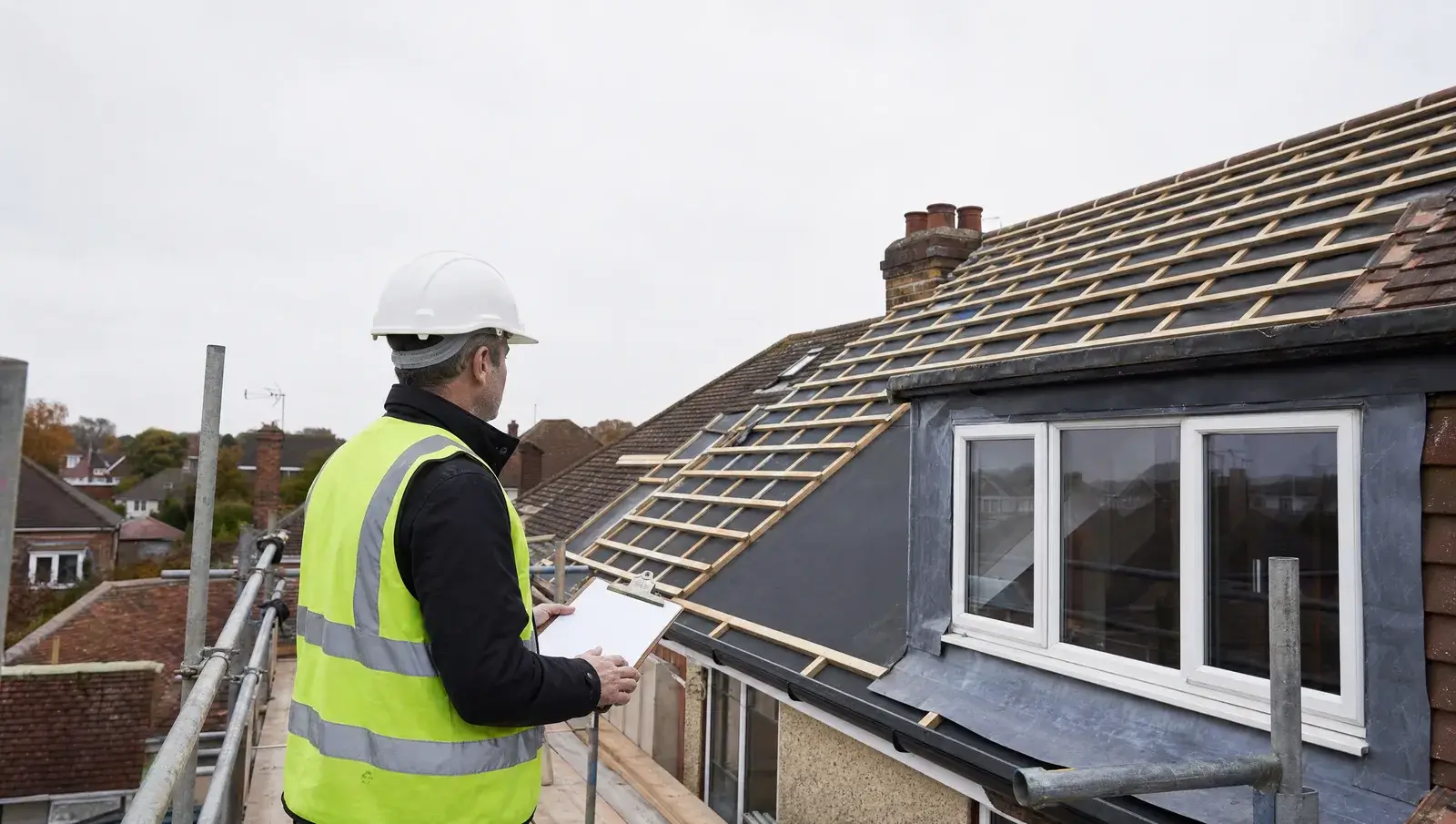
Building regulations for roof work
When the regs apply, how sign-off actually works, and why the piece of paper matters more than most homeowners realise.
Building regulations are not the same thing as planning permission. Planning controls what your home looks like; building regulations control how the work is done, covering structure, insulation, ventilation and fire safety. A like-for-like re-roof rarely needs planning permission, but it almost always needs building regulations compliance.
When do building regulations apply to a roof?
Three common triggers catch most domestic roof work:
- Replacing more than 25% of the roof area. This is the big one. Strip and re-cover more than a quarter of any roof slope or flat roof and the whole job becomes a "material alteration". That means the roof must be brought up to current thermal standards where reasonably practicable, not just re-covered as it was. Every full roof replacement crosses this line.
- Structural changes. Altering rafters or trusses, changing to a significantly heavier covering (concrete tiles onto a roof built for slate, for example), or raising the ridge all need structural sign-off.
- New openings. Cutting in roof windows or skylights affects the structure and the thermal envelope, so both aspects need approval.
Patching a leak, swapping a handful of slipped tiles or renewing flashings sits below the threshold. No approval needed.
The thermal upgrade rule, in plain English
Part L of the Building Regulations sets energy efficiency standards. When your re-roof triggers it, the roof usually has to be insulated to a target U-value of around 0.16 W/m²K for pitched roofs (insulation at ceiling level) and around 0.18 W/m²K for flat roofs. In practice that means topping up loft insulation during a pitched re-roof, and on a flat roof it often means adding insulation above the deck, converting a cold roof to a warm roof. It adds cost, which is one reason a compliant quote can look dearer than a cowboy's. Budget properly with our new roof cost guide.
Two routes to sign-off
| Route | How it works | Best for |
|---|---|---|
| Competent person scheme | A registered roofer (for example through CompetentRoofer) self-certifies the work and the scheme posts you the completion certificate. No council involvement, no separate fee. | Standard re-roofs by a registered contractor. The easiest route by far. |
| Building control application | You or the roofer notify the local authority or an approved inspector, pay a fee, and an officer inspects the work before issuing the certificate. | Structural alterations, unregistered contractors, or complex jobs. |
Ask any roofer quoting you one simple question: "Who is handling building regs sign-off, and will I get a completion certificate?" A good firm answers instantly. A blank look is a warning.
Why the completion certificate matters when you sell
Buyers' solicitors routinely ask for evidence that notifiable work was signed off. If your re-roof has no certificate, the sale can stall while you arrange indemnity insurance, negotiate a price reduction, or apply to the council for regularisation of the work after the event. A certificate that cost you nothing at the time saves all of that. File it with your deeds and guarantee paperwork the day it arrives.
Pre-job checklist
- Confirm whether the job crosses the 25% threshold (a full re-roof always does).
- Ask which sign-off route the roofer will use, and get it in writing on the quote.
- Check the quote includes the thermal upgrade if one is required.
- For structural changes or new openings, confirm who is notifying building control.
- Chase the completion certificate within a few weeks of the job finishing.
The two jobs that most often trip the regulations are a conservatory roof replacement and a full re-roof, and both guides cover what sign-off adds to the bill.
Get quotes from roofers who handle the paperwork
Up to three itemised quotes from vetted local roofers who sort building regs sign-off as part of the job. Free, no obligation.