
Roofing felt, explained
Underlay beneath your tiles or the covering on your flat roof? "Roofing felt" means two different things, and this guide covers both. Updated July 2026.
Half the confusion around felt comes from that double meaning. The stuff sagging beneath your loft tiles and the black bitumen surface on your garage roof are different materials doing different jobs. Here is what each one is, when it is used, and what it costs.
Meaning one: underlay beneath tiles and slates
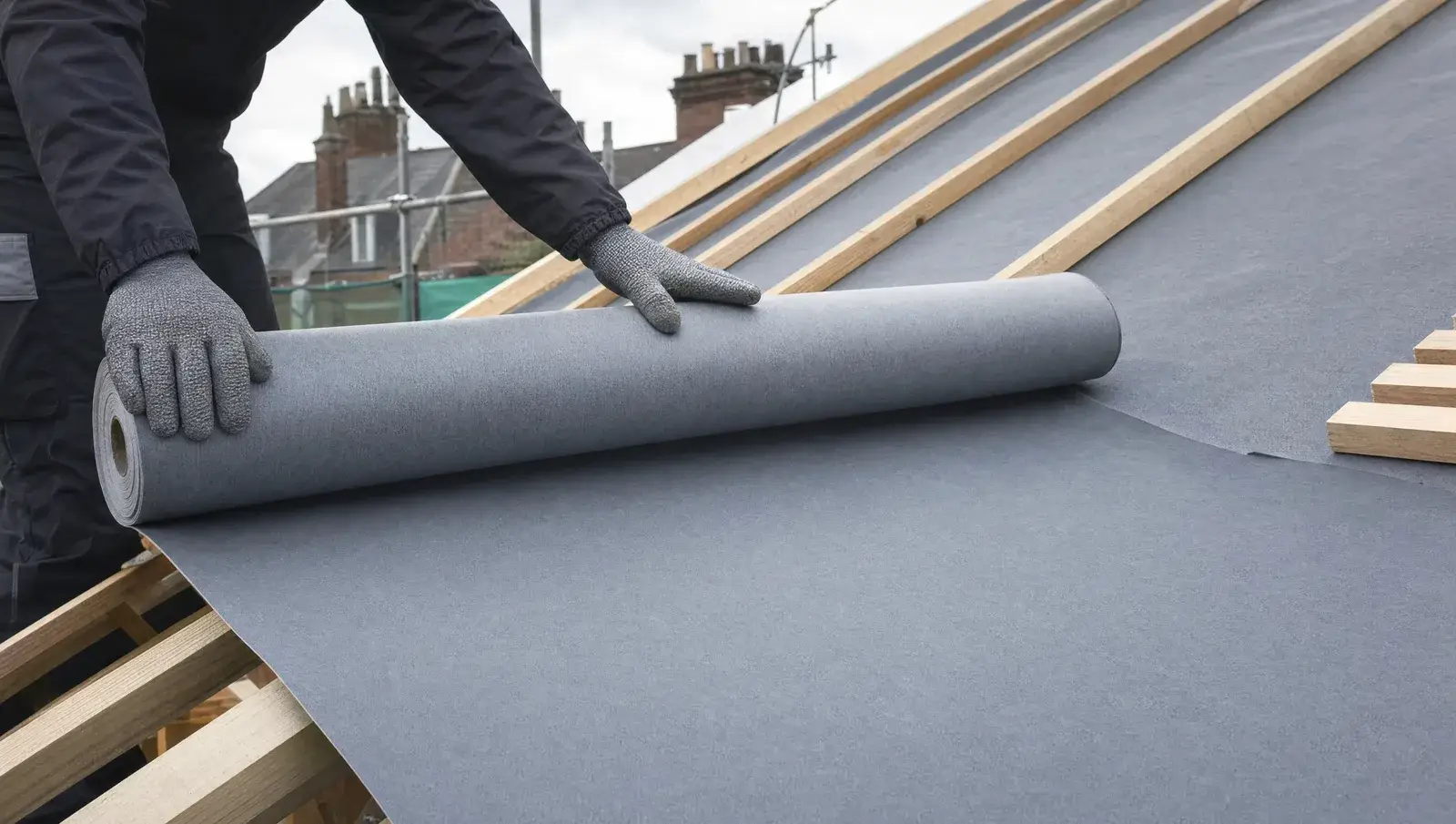
On every pitched roof, a continuous sheet runs across the rafters beneath the battens and tiles. It is a second line of defence: wind-driven rain or snow that gets past the tiles hits the underlay and drains to the gutter instead of into the loft.
1F bitumen felt did this job for most of the 20th century. It is cheap and effective when new, but it goes brittle with age and tears along the eaves, which is why lofts in older houses often show ragged, crumbling felt between the rafters.
Breathable membrane is the modern standard and what almost every re-roof specifies today. It keeps water out while letting water vapour escape from the loft, which dramatically cuts condensation risk in insulated modern homes. If your loft drips on cold mornings, the underlay is part of the story; see condensation in the loft.
You cannot meaningfully patch failed underlay from inside, because it sits under everything else. Once 1F felt fails at the eaves, the fix is stripping and re-felting, normally as part of a re-roof.
Meaning two: torch-on felt for flat roofs
Torch-on felt (built-up felt, or "torch-down") is a flat roof covering in its own right: bitumen membranes bonded to the deck and to each other with a gas torch. A proper job uses three layers, a vapour control layer, a reinforcing underlayer and a mineral-finished cap sheet, fused into a single waterproof build-up.
| Felt type | Job | Typical use |
|---|---|---|
| 1F underlay felt | Secondary barrier under tiles | Older pitched roofs |
| Breathable membrane | Secondary barrier, vapour-open | All modern pitched re-roofs |
| 3-layer torch-on felt | Primary waterproof covering | Flat roofs: garages, extensions, dormers |
| Mineral shed felt | Light waterproof covering | Sheds and garden buildings, DIY |
Fitted, torch-on felt costs £80 to £110/m² in 2026 and lasts 10 to 20 years, the cheapest flat roof upfront and the shortest-lived. Full pricing including boards and edge details is in the felt roof cost guide, and the honest three-way fight with rubber and fibreglass is settled in the flat roof comparison.
Shed felt: the DIY exception
Traditional green mineral shed felt is the one felt job a competent DIYer should happily tackle: it is nailed on cold, needs no torch, and a shed roof costs little enough that a mistake teaches rather than ruins. Buy the heaviest grade the budget allows, overlap generously, and it will see out a decade of British weather.
Is felt failing on your roof?
On flat roofs, the tell-tales are blisters, cracked or bald patches where the mineral surface has worn away, ponding water and damp patches on the ceiling below. Felt at the 15-year mark is living on borrowed time, and money spent patching it is usually better put towards a longer-lived system. Our guide to a failing felt roof walks through repair-or-replace, and vetted local flat roofers can price both routes.
If you are pricing a felt roof rather than specifying one, the felt roof cost guide has the 2026 figures, and the flat roof cost guide compares felt against EPDM and GRP on cost per year of life.
Felt roof due for renewal?
Up to three itemised quotes from vetted local flat roofers, priced in felt, rubber and fibreglass so you can compare. Free, no obligation.