
Commercial and industrial roofing
Vetted contractors for industrial units, offices, schools and retail: new roofs, refurbishment and planned maintenance.
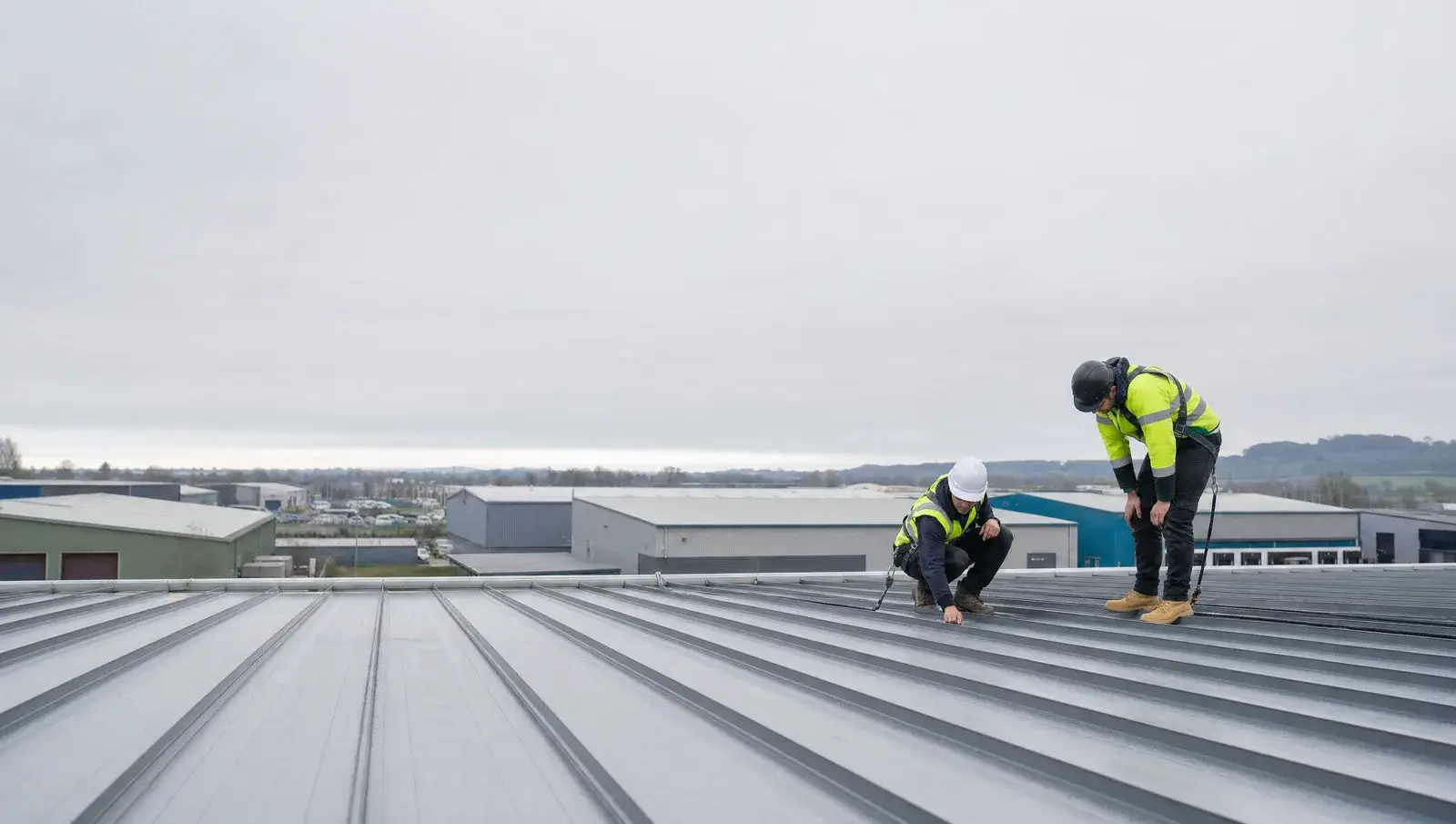
Commercial roofing contractors install, refurbish and maintain the roofs on business premises, where the priorities are different from a house: bigger areas, stricter health and safety, insurance and warranty conditions, and the hard requirement that the business underneath keeps trading while the work happens. The trade-offs are different too, which is why commercial work is specified from a survey rather than a price list.
Buildings we cover
- Industrial units and warehouses: metal profile and built-up roofs, rooflight replacement, gutter refurbishment and cut-edge corrosion treatment.
- Offices: flat roof refurbishment and replacement, often phased to keep floors below occupied and dry.
- Schools and public buildings: works planned around term dates, with safeguarding checks and flame-free systems where required.
- Retail and leisure: out-of-hours working, protected access routes and minimal disruption to trading.
Commercial roofing systems
- Single-ply membranes: the modern default for large flat roofs. Fast to lay over big areas, flame-free options available, and clean detailing around plant and outlets. See our flat roofing service for the systems in detail.
- Built-up felt: the traditional multi-layer system, still widely used on smaller flat roofs and repairs to older stock.
- Metal profile sheeting: the standard covering on industrial units, replaced or over-clad, with matching flashings, rooflights and gutters.
- Liquid-applied systems: cold-applied waterproofing that excels on complex details and overlays, often the most economical way to extend the life of a tired but sound roof.
Which system is right depends on the deck, the roof's use, the required design life and whether the building can tolerate hot works. A good contractor will survey first and specify second, not the other way round.
Planned maintenance: the cheapest roofing you will ever buy
Most large commercial roof failures start small: a blocked outlet, a split lap, a loose flashing. On a big roof nobody looks at, those small faults run for months and turn into soaked insulation, stained ceilings and stock damage. A planned maintenance agreement, typically inspections twice a year plus gutter clearance and minor repairs, costs a fraction of one serious leak and produces the documented history that insurers and warranty providers expect. Our roof inspection service covers condition surveys and drone reports for exactly this purpose.
What commercial roofing costs
There is no honest per-metre menu for commercial work, and you should be wary of anyone who quotes one sight unseen. Roof area, system, insulation spec, edge protection, access equipment and phasing around your operations all move the price, so projects are surveyed and quoted individually. The practical route: tell us about the building and compare itemised quotes from vetted commercial contractors.
Get your commercial roof surveyed and priced
Itemised quotes from vetted commercial roofing contractors, planned around your business staying open. Free, no obligation.