
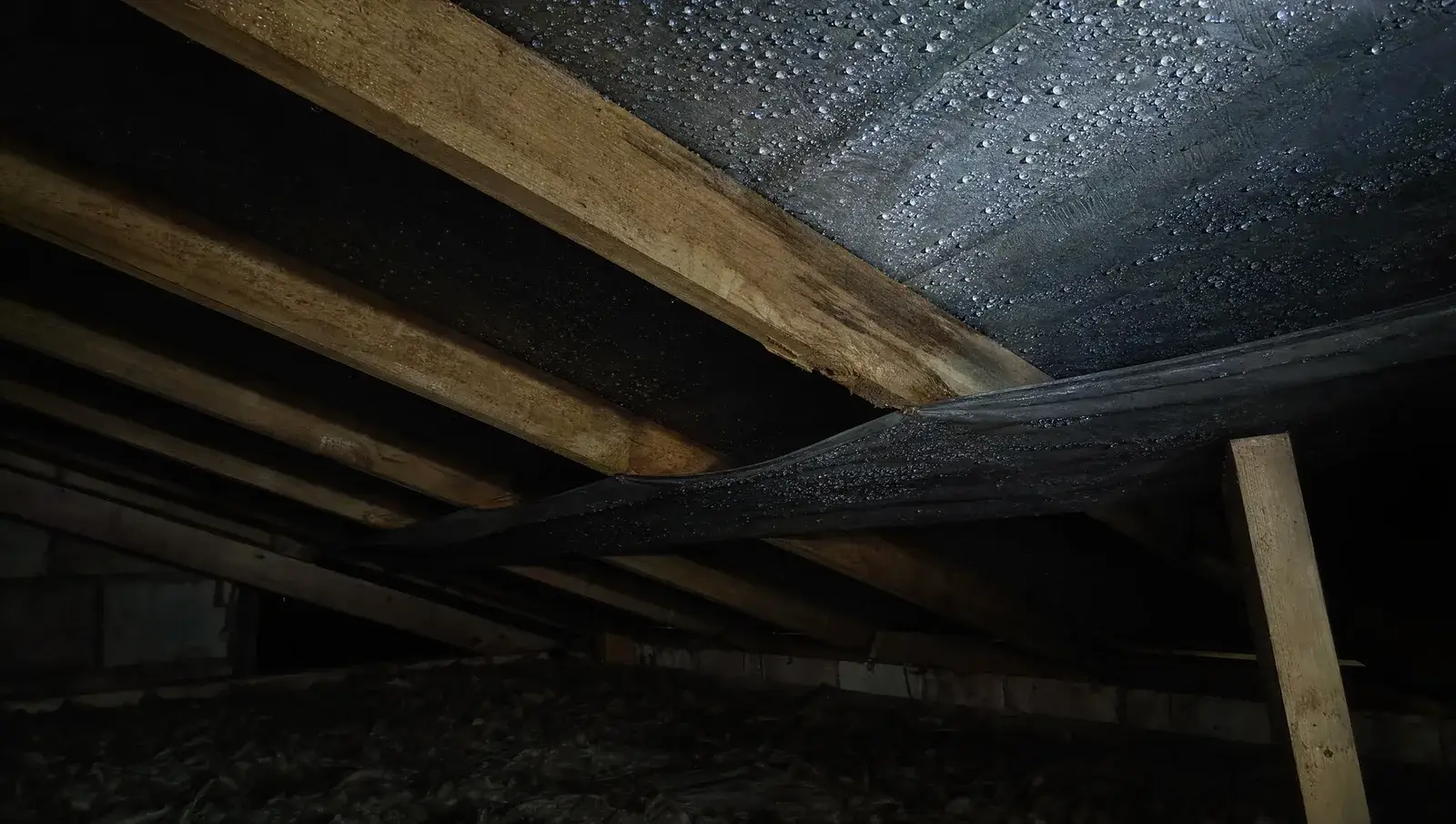
Condensation in the loft, explained
Wet membrane, damp insulation, drips on cold mornings: usually not a leak. Here is what is really happening and how to cure it.
Condensation in a conservatory instead? A solid insulated roof is the usual fix.
What you're seeing
Droplets beading on the underside of the felt or membrane, damp or matted insulation, mould speckle on stored boxes, dark staining around timber joints, and sometimes frost glittering on nail tips on the coldest mornings. It is worst from November to March, worst of all on cold clear nights, and often dries up completely by afternoon.
Is it condensation or a leak?
Condensation is spread evenly across cold surfaces and tracks the temperature, not the weather. A leak is localised, comes from one point, and appears during or after rain. If the loft is wet on a dry frosty morning, it is condensation. If a single run of felt is soaked after a downpour, start at our damp patch guide and work back to the entry point.
Why it happens
Every household pumps litres of water vapour into the air daily through cooking, showers, drying clothes and breathing. Warm air carries that moisture up through ceiling gaps, loft hatches and downlight holes into the loft. In winter the roof surface above is cold, the air hits it, and the moisture condenses, exactly like a cold beer glass on a warm day. Modern living makes it worse: better-sealed houses, more insulation (colder loft above it), and tumble driers or bathroom fans discharging straight into the loft space.
The cures, ranked by effectiveness
- Cross-ventilation. The fix that actually works. Air must flow in at the eaves and out at the ridge or the opposite eaves: vented soffits, over-fascia vents, tile vents or ridge vents. Most older UK houses were built with enough incidental airflow, then lost it to new insulation, replacement soffits with no vents, or membrane upgrades.
- Stop dumping moist air into the loft. Bathroom extractors and tumble drier ducts that terminate inside the loft are a condensation machine. Duct them through the roof or soffit to outside.
- Keep the eaves clear. Insulation pushed hard into the eaves blocks the airflow path at exactly the point air should enter. Rafter trays hold the channel open while keeping insulation depth.
- Seal the big air leaks. Draught-strip and insulate the loft hatch, and seal obvious gaps around pipes and cables through the ceiling.
- Vapour barriers. Worth doing properly in loft conversions and new ceilings, where a vapour control layer on the warm side stops moisture reaching the cold structure. Rarely practical to retrofit across an ordinary loft floor.
What it costs to put right
If your soffits are due for replacement anyway, specify vented soffits and the ventilation problem is solved as part of the job: full fascia and soffit replacement runs £1,200 to £2,800 on a typical semi in 2026, or £60 to £120 per metre, per the fascias and soffits cost guide. If the soffits are sound, a roofer can fit tile vents or over-fascia vents as a smaller standalone job, and rerouting an extractor duct is smaller still.
Prevention
Keep lids on pans, run extractor fans during and after showers, dry clothes outdoors or with a vented drier, and glance over the loft each December: five minutes with a torch tells you whether the winter is staying ahead of your ventilation. Persistent dripping, rotting timber or soaked insulation two winters running means the airflow needs professional attention; a roof inspection will confirm what is missing and where.
Condensation and a leak look identical from below, which is why a damp patch on the ceiling is worth diagnosing properly before anyone goes up on the roof.
Cure the condensation for good
Up to three quotes from vetted local roofers for vented soffits, tile vents and proper loft airflow. Free, no obligation.