
Roofing scams and how to avoid them
The 8 cons still working on UK homeowners in 2026: how each one runs, the tell that gives it away, and what to do.
Storm chaser knocked after bad weather? Check what your insurance actually covers before you agree to anything.
Rogue roofing traders cost UK homeowners millions every year, and the playbook barely changes because it keeps working. Scammers pick roofing deliberately: the work is high-value, invisible from the ground, and urgent-sounding. Here are the eight cons doing the rounds in 2026, and the tell for each. Before you sign anything, check a quote against our roof replacement cost calculator.
The 8 roofing cons to know
- Storm chasers. After bad weather, vans sweep affected streets knocking on doors offering urgent repairs, inflated prices, rushed work, gone by the weekend. The tell: they found you, not the other way round. What to do: take a card, close the door, and read our storm damage guide for the proper route, including insurance.
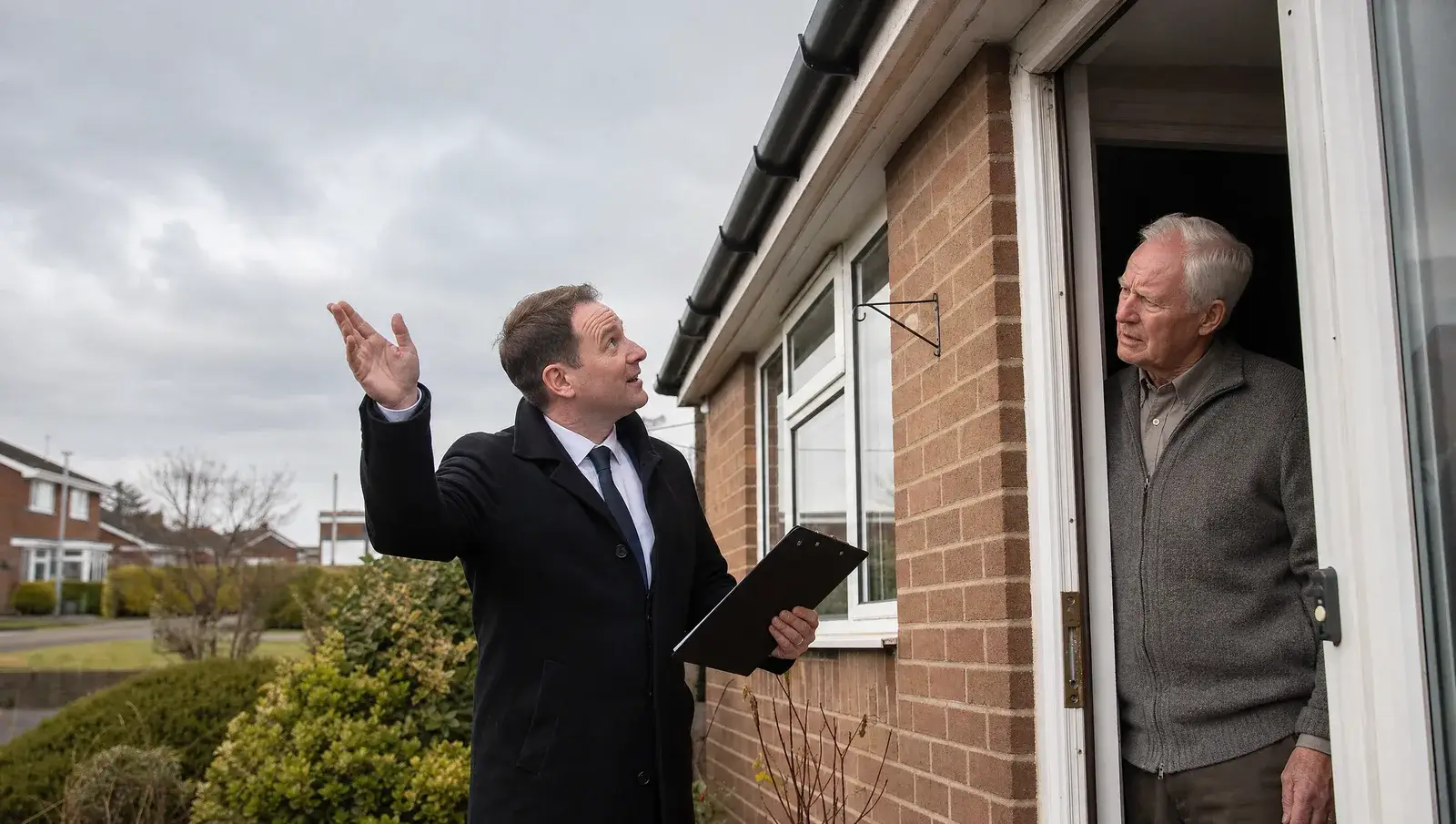
- "We noticed it from the road." A passer-by spots a slipped tile or "loose ridge" invisible to you, and can luckily fix it today. The tell: real roofers driving between jobs do not stop to hand out free surveys. What to do: if you are worried, get an independent inspection and compare quotes.
- Ladder theatre. The caller pops up "just to check" and comes down with photos of horrifying damage, sometimes damage they just created, sometimes another house's roof entirely. The tell: you cannot verify anything they show you. What to do: never let a cold-caller on the roof. No exceptions.
- The vanishing deposit. A big job needs "half up front for materials", in cash, and the roofer is never seen again. The tell: cash, urgency, and a round number. What to do: pay small deposits at most, by card or transfer to a business account, staged against completed work.
- The quote switch. Work starts at one price, then "unexpected problems" appear once the roof is open and the price doubles, with your roof held hostage mid-job. The tell: a vague one-line quote with no itemisation and no contingency terms. What to do: insist on a written itemised quote up front; our guide to reading roofing quotes shows what it must contain.
- Miracle coatings. A tired roof gets sprayed with a "sealant system" costing thousands that adds no structural life, can block ventilation, and hides the roof's real condition from the next surveyor. The tell: a paint-based answer to a structural question. What to do: a roof at the end needs repair or replacement, priced honestly in our cost guides.
- No-paperwork cowboys. No written quote, no invoice, no guarantee, no fixed address, cash only. When the work fails, there is no one to pursue. The tell: everything is verbal and the van has a mobile number but no company name. What to do: paperwork before ladders, every time.
- Fake trade badges. Vans and websites wearing TrustMark, Checkatrade or NFRC logos the business has never held. The tell: the membership cannot be found on the body's own website. What to do: verify every badge at source; it takes two minutes.
Your three-layer defence
- Know fair prices. Scams live in the gap between what work costs and what you think it might. Ten minutes in our 2026 cost guides closes that gap: you cannot be charged £4,000 for a £400 repair once you know the £400 figure.
- Vet before you hire. Insurance seen, Companies House checked, references taken. The full routine is in how to choose a roofer.
- Slow everything down. Every con needs urgency to survive. A genuine roof problem is almost never a same-day decision, and a genuine roofer will still be in business next week.
Already been caught?
Stop further payments, keep every document and message, photograph the roof, and report it to Action Fraud and Trading Standards. Tell your bank fast: card payments and recent transfers can sometimes be clawed back. Then get a legitimate local roofer to make the work safe, we can match you with vetted roofers who will document what they find.
The simplest defence against an inflated price is knowing the honest one. Run your job through the roof cost calculator before you ring anyone, and read what a proper roofing quote should contain so a vague one-line price stands out for what it is.
Quotes from roofers we've already vetted
Insurance checked, records verified, references taken, reviews confirmed. Up to three itemised quotes, free, no doorstep required.