
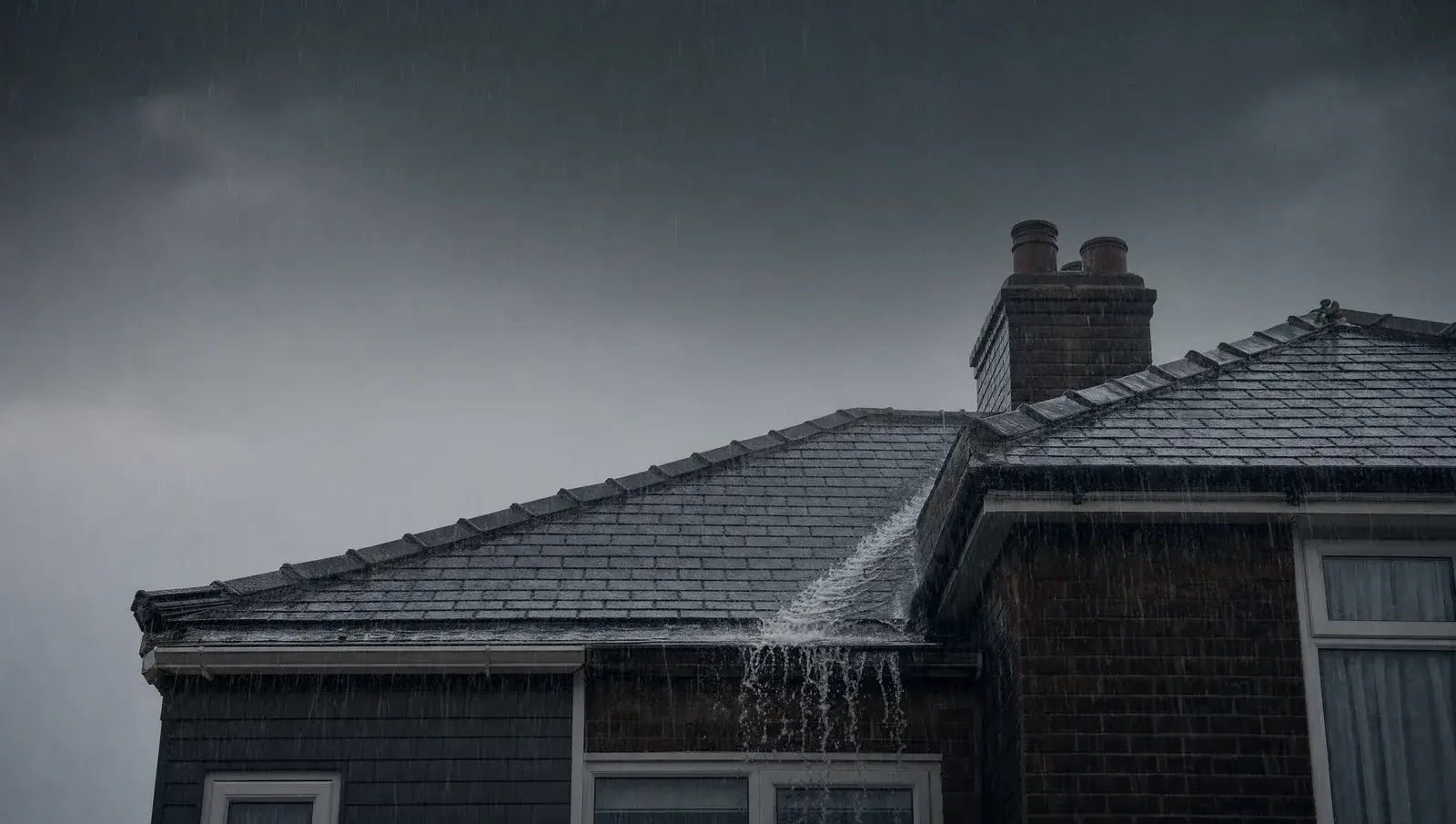
Why your roof only leaks in heavy rain
A roof that stays dry for weeks then leaks in a downpour is not holed, it has a pressure point. Here are the five usual suspects and what fixing each costs in 2026.
Storm damage rather than wear and tear? See when home insurance pays for a roof leak.
An everyday hole leaks in every rain. A heavy-rain-only leak needs volume or wind pressure to fail, which actually narrows the search considerably. These are the five causes we see most, in order.
The five usual causes, ranked
- 1. Wind-driven rain past the flashings. Storm winds push rain sideways and upwards, past lead flashings around chimneys, dormers and abutments that shrug off vertical rain. Ageing or lifted leadwork is the single most common culprit.
- 2. Blocked or overwhelmed gutters. A gutter full of moss and leaves overflows backwards in a downpour, soaking the fascia and pushing water under the bottom course of tiles. Cheapest fix on this list.
- 3. Cracked mortar at the ridge or verge. Hairline cracks in bedding mortar admit nothing in drizzle, but pressured, wind-blown rain finds every one of them.
- 4. Debris damming a valley. Leaves and moss in a roof valley act like a weir: light rain trickles through, heavy rain backs up over the valley edges and under the tiles either side.
- 5. Hairline gaps at flashing edges. Sealant and mortar fillets at the top edge of flashings fail slowly; a heavy soaking is what finally drives water behind them.
Let the rain do the diagnosis
The type of rain that triggers the leak is a genuine clue, so note it down before ringing anyone. Leak appears only in wind-driven rain from one direction: flashings or mortar joints on that side of the roof. Leak appears in any sustained downpour, wind or not: gutters or a dammed valley, because both are volume problems. Leak appears hours after rain starts: water is travelling along timbers or felt before it drops, so the entry point may be well away from the wet patch on the ceiling. A constant drip in all weather is a different problem, covered on our leaking roof page.
What to do right now
Contain the water, protect what is under it, and pierce a small drainage hole in any bulging ceiling bubble over a bucket so it drains in one place rather than bringing the plasterboard down. Photograph everything with times and dates: it helps the roofer trace the route and supports any insurance conversation later. Then clear the gutters, or have them cleared, before paying for anything else; a surprising share of heavy-rain leaks end right there.
What fixing a heavy rain leak costs
Once the source is confirmed, most of these repairs sit in the £150 to £600 band: re-dressing or replacing a section of flashing, repointing ridge or verge mortar, clearing and re-lining a valley. Gutter clearing comes in below that. The full breakdown by repair type is in the leaking roof repair cost guide.
Stopping it happening again
- Clear gutters and downpipes every autumn, and after nearby trees drop.
- Have valleys swept clear of moss and leaves at the same time.
- Get flashings and mortar checked after named storms, from the ground with binoculars or by a roofer.
- Fix small mortar cracks in dry weather, before the weather finds them for you.
If the only sign so far is a damp patch on the ceiling, that page covers how to tell a leak from condensation. For what the fix costs, see the leaking roof repair cost guide.
Find the leak before the next storm does
Up to three itemised quotes from vetted local roofers who trace the source, not just the symptom. Free, no obligation.