
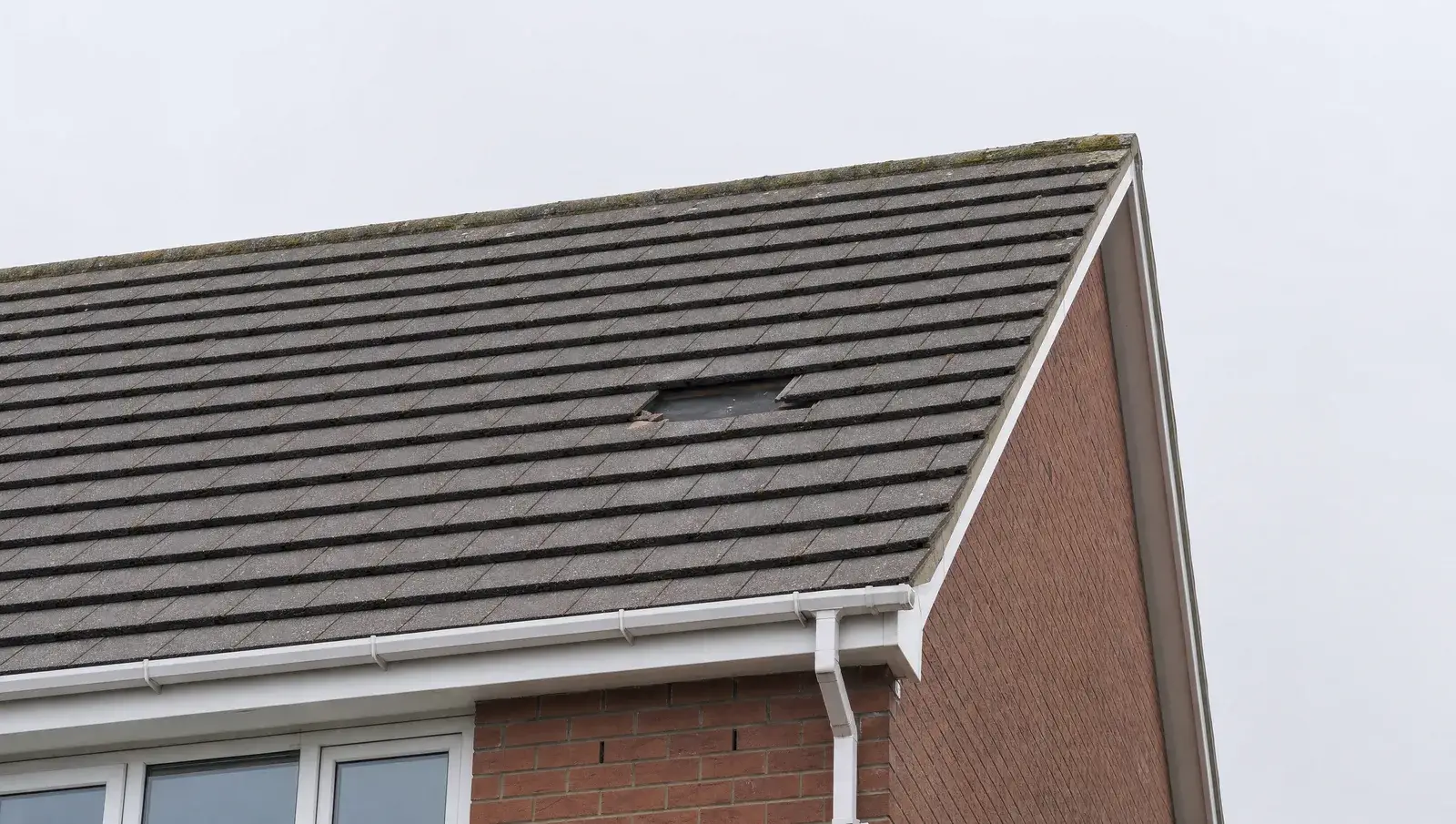
Missing or slipped tiles: fix them before the rain does
One gap in the tiles puts your roof's last line of defence on the clock. Here is why it matters and what the fix costs.
Whole roof shedding tiles, not just one? Compare that against a full re-roof before you keep paying for patches.
What you're seeing
A dark rectangle where a tile should be, a tile sitting visibly lower or askew against the straight lines of its course, or fragments of tile in the garden and gutters after wind. From ground level with binoculars or a phone zoom you can usually see whether the gap shows dark felt (backup still in place) or daylight through to the battens (worse). If whole sections are going, price a full replacement in our roof cost calculator.
Why one tile matters
Under the tiles is a layer of felt or membrane. When a tile goes, that layer becomes the only thing between your loft and the weather, and it was never meant for the front line. On older roofs the felt is bitumen-based, brittle with age, and ultraviolet light breaks it down quickly once exposed: months of sun can do what decades under the tiles could not. Meanwhile wind now has an edge to work on, rocking and lifting the neighbouring tiles whose fixings are the same age as the one that failed. That is how one gap becomes three, then a leak, then a stained ceiling.
Why tiles slip in the first place
- Corroded or snapped fixings. The most common cause. Nails and nibs age in batches, which is why one slip is often the first of several.
- Storms. Wind gets under the tile edge and works it loose; a single gust can strip a weakened course. See storm damage.
- Foot traffic. Aerial installers, window cleaners and previous repairs crack tiles that let go later.
- Failed battens. Rot in the timber the tiles hang on, usually secondary to a longstanding leak.
What to do now
Photograph the roof from the ground, with the date visible in your camera roll, especially if a named storm has just been through: that record is the difference between an insurance claim that pays and one that stalls. Pick up broken tile from paths and drives. Do not climb up; the tile is not going anywhere faster than you could fall. Then book a roofer for a normal-hours visit; this is rarely an emergency callout unless water is already coming in, in which case follow the leaking roof steps.
Slipped and missing tile repair cost
A roofer will replace the missing tiles, re-fix any loose neighbours, and check the surrounding courses and felt while up there. Expect £150 to £400 for a handful of tiles in 2026; a single-tile visit rarely comes in under £150 because access and the callout minimum dominate the price, not the tile. The full breakdown, including matching old tiles, is in the roof tile replacement cost guide.
Prevention
Scan the roofline from the street after every big blow; it takes thirty seconds and catches problems while they are still cheap. If tiles are slipping in ones and twos every year, the fixings across that slope are reaching end of life together, and it is worth pricing a re-fix or partial re-roof rather than paying a callout each time. A roof inspection will tell you honestly which side of that line your roof is on.
For what replacing them should cost, the roof tile cost guide has the 2026 rates, and the roof cost calculator covers the point where enough slipped tiles stops being a repair job.
Get those tiles fixed this week
Up to three quotes from vetted local roofers for tile replacement and re-fixing. Free, no obligation.