
How long does a roof last?
Real UK lifespans for every common roof covering, the parts that fail first, and what quietly knocks decades off a roof.
Not sure what shape yours is in? A roof inspection answers it in an hour.
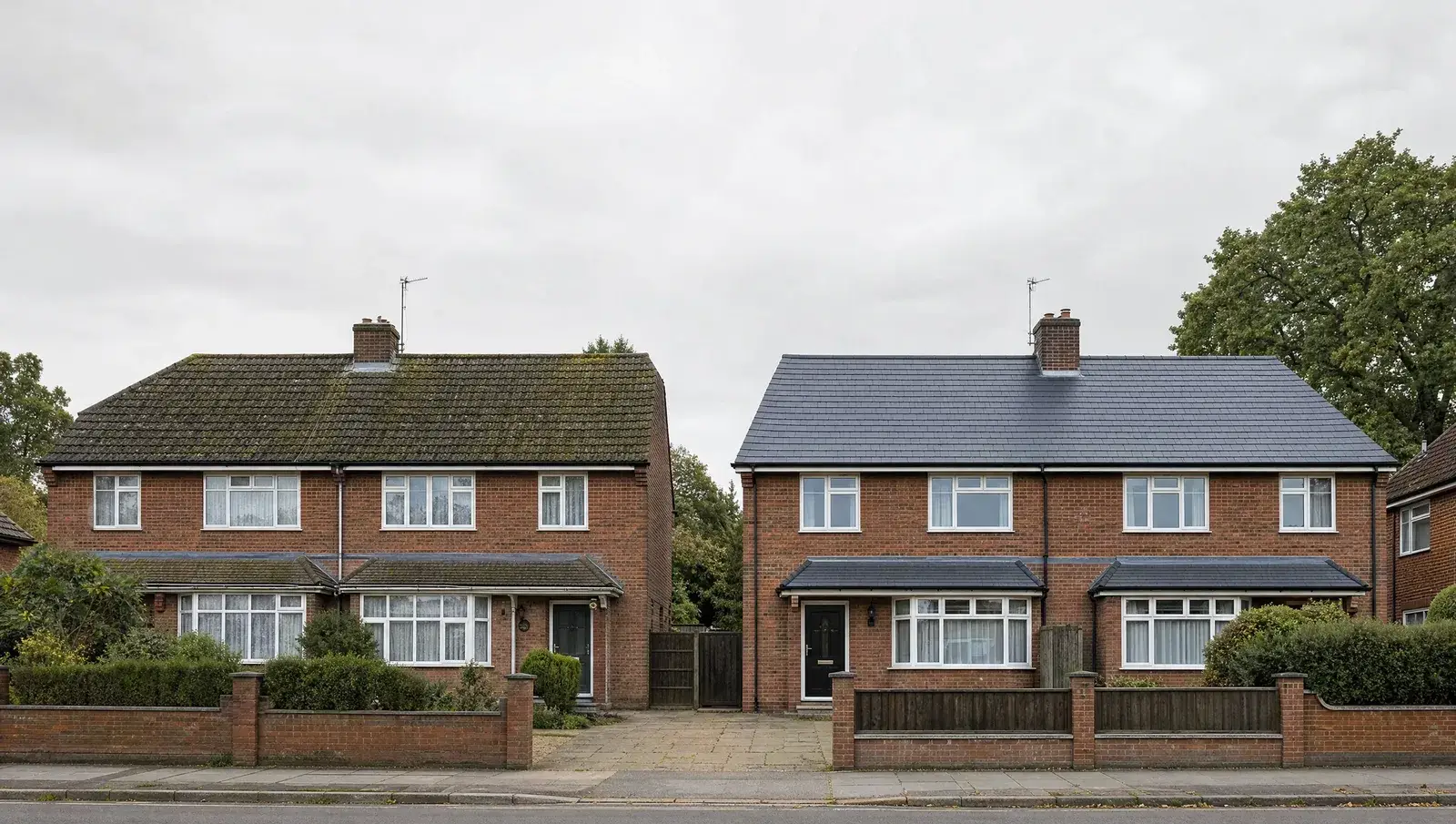
"How long does a roof last?" really means two questions: how long does the covering last, and how long does everything underneath it last? Most roofs are condemned not because the tiles wore out but because the felt beneath them turned to dust. Here are the honest numbers for both.
Roof lifespan by material (UK)
| Roof covering | Expected lifespan |
|---|---|
| Natural slate | 80 – 120 years |
| Clay tiles | 60 – 90 years |
| Concrete tiles | 40 – 60 years |
| Synthetic slate | 40 – 60 years |
| EPDM rubber (flat) | 30 – 50 years |
| GRP fibreglass (flat) | 25 – 40 years |
| Felt (flat) | 10 – 20 years |
The pattern is simple: natural materials outlast manufactured ones, and pitched roofs outlast flat ones. Compare every option side by side in our roofing materials guides.
The parts that fail before the tiles do
A slate roof can be 30 years into a 100-year life and still need major work, because the supporting cast wears out on its own schedule:
| Component | Expected lifespan |
|---|---|
| Traditional underlay felt | 25 – 40 years |
| Breathable membrane | 30 – 50 years |
| Mortar ridges & verges | 20 – 30 years |
| uPVC guttering | 20 – 30 years |
This is why "the tiles look fine" is not the same as "the roof is fine". When a Victorian slate roof is stripped and re-covered, the slates often go straight back on: it was the felt, battens and mortar that failed.
What shortens a roof's lifespan
- Coastal exposure: salt-laden wind corrodes nails and fixings and erodes mortar. Roofs within a mile or two of the sea age noticeably faster.
- Heavy tree cover: overhanging branches keep the roof damp and shaded, feed moss, and fill gutters with debris that backs water up under the tiles.
- Poor loft ventilation: condensation rots battens and rafters from the inside. The covering looks perfect while the structure quietly fails beneath it.
- No maintenance: one slipped tile left for two winters lets water at the felt and timbers, turning a £150 fix into structural work.
How to make your roof last longer
- Clear gutters every autumn and check them after big storms.
- Fix slipped or cracked tiles within weeks, not years.
- Repoint ridge and verge mortar as soon as it starts cracking, roughly every 20 to 30 years.
- Keep loft ventilation paths clear, especially after adding insulation.
- Get the roof looked at every few years, or after any storm that takes tiles off neighbouring houses.
How do I know when my roof is at the end?
Age alone does not condemn a roof; condition does. Widespread slipped or delaminating tiles, daylight in the loft, a sagging ridge and damp in more than one room are the genuine triggers, and moss on its own is not. Our guide to the signs you need a new roof separates the real warnings from the cosmetic ones, and the new roof cost guide shows what replacement actually costs in 2026 if yours is there.
Not sure how much life is left in yours?
Get up to three honest assessments and itemised quotes from vetted local roofers. Free, no obligation.