
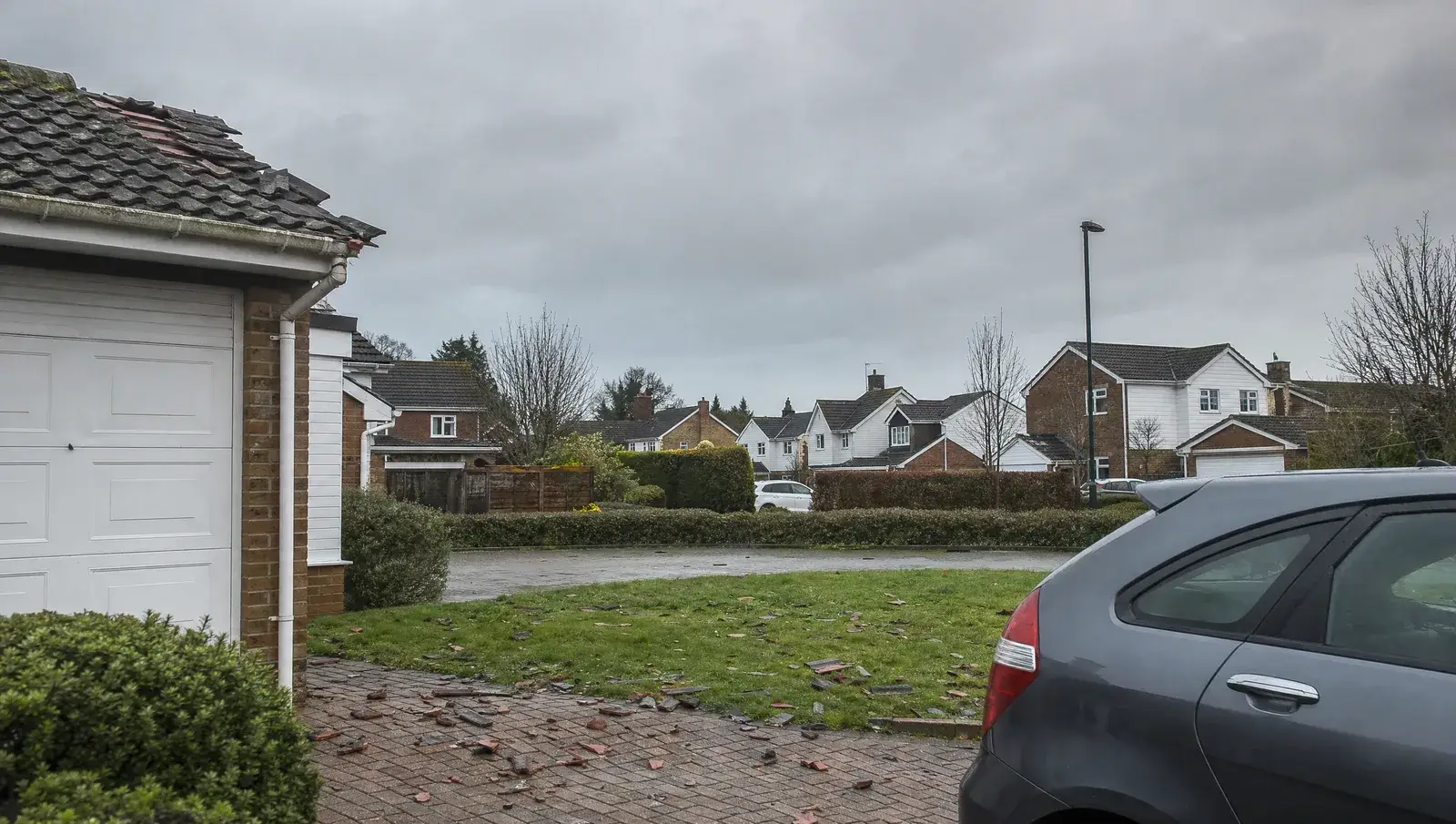
Storm damaged roof? Take these steps
Safety, evidence, make-safe, insurer, in that order. Get the sequence right and the claim usually follows.
Before you pay for the repair, check what buildings insurance covers on storm damage.
The five steps, in order
- Safety first. Treat the ground below the damage as a drop zone and keep family, pets and cars out of it; loose tiles keep coming down after the wind eases. Do not go up a ladder in the aftermath, and leave anything tangled with cables to the professionals.
- Photograph everything before tidying. The roof from several angles, every fallen tile where it landed, damage to fences, cars and neighbouring property, and any water coming in. Date-stamped photos of the scene as the storm left it are the backbone of the claim. Tidy first and you have destroyed your own evidence.
- Arrange the make-safe. A roofer tarps the opening and secures anything loose so the next band of rain does not multiply the damage. Expect a callout of £80 to £150 in normal hours, £100 to £250 evenings and weekends, plus £60 to £120 per hour on site, per the emergency callout charges guide. Our emergency roof repairs page covers who to call.
- Notify your insurer. Ring the claims line or log it online the same day if you can. Most policies allow emergency make-safe work without prior approval, but confirm it on the call and follow their process for the permanent repair. Our insurance and roof leaks guide walks through how storm claims are assessed.
- Keep every invoice. The make-safe bill, materials, even the tarpaulin if you bought one: reasonable emergency costs are normally recoverable as part of a valid storm claim, but only if you can evidence them.
Will insurance actually pay?
Storm damage is one of the core perils on every buildings policy, and insurers check recorded wind speeds and rainfall for your postcode against the date you report. Where claims fail is condition: if the loss adjuster decides the roof was already at the end of its life and the storm merely finished the job, expect a fight over wear and tear. This is exactly why prompt reporting, dated photos and a roofer's written description of the damage matter, and why tiles found weeks later are harder to claim for than tiles reported the next morning.
After the make-safe: the permanent repair
A tarp buys weeks, not seasons. Once the insurer has the claim, get the permanent repair quoted by a roofer you chose, not one imposed by a door-knock: replacing storm-lost tiles is usually straightforward, and if the storm exposed wider weakness (fixings failing in batches, brittle felt), it is worth pricing the honest fix rather than re-tarping every winter. Start at missing or slipped tiles for what individual tile repairs involve and cost.
Before the next storm
Most "storm damage" is pre-existing weakness that the wind found first: slipped tiles not re-fixed, ridge mortar past its best, aerials and flashings working loose. A pre-winter glance from ground level, gutters cleared each autumn, and small repairs done while they are small give the next storm much less to grab hold of.
Storm damage? Get it made safe
Up to three quotes from vetted local roofers for make-safe and permanent storm repairs. Free, no obligation.