
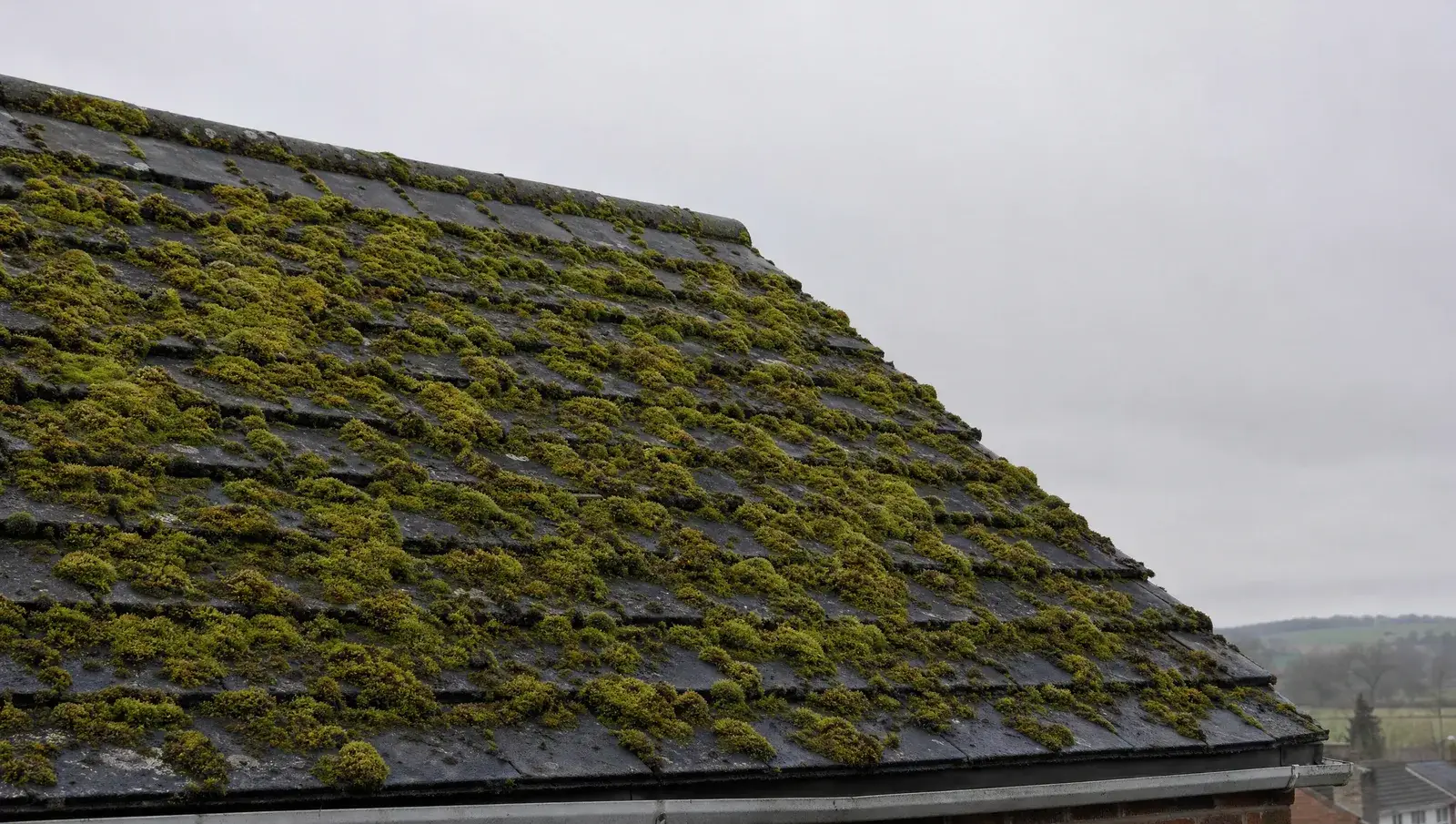
Moss on the roof: harmless or a problem?
The honest answer: rarely urgent, never purely cosmetic. Here is when it matters and what removal should cost.
Getting it cleaned properly costs less than you think: roof cleaning and moss removal prices.
What you're seeing
Green cushions along the tile edges and in the gaps between courses, usually thickest on the north-facing slope and under overhanging trees. You may also find clumps of moss in the gutters or on the ground after heavy rain and frost, which is the roof shedding what the weather has loosened.
Does moss actually damage a roof?
Not overnight, and anyone knocking your door claiming it is an emergency is selling, not surveying (see our roofing scams guide). But it is not just cosmetic either. Over years, moss causes four real problems:
- Moisture retention. Moss works like a wet sponge held against the tile surface, keeping it damp long after the rain stops. Damp tiles weather faster than dry ones.
- Blocked gutters and downpipes. Every storm flushes loose moss into the gutters. Blocked gutters overflow into the wall head, which is how a cosmetic issue becomes a damp patch on the ceiling.
- Frost spalling. Water held against porous concrete tiles freezes and expands in winter, flaking the surface off older tiles a little more each year.
- Lifted and slipped tiles. Thick growth in the overlaps can hold tiles proud of each other, letting wind-driven rain in and, in heavy cases, contributing to slipped tiles.
Why your roof and not next door's
Moss wants shade, moisture and a rough surface. North-facing slopes, roofs shaded by trees, and older porous concrete tiles tick all three boxes. Smooth clay tiles and slate in full sun stay largely clean without any help. So a green roof says more about aspect and material than about neglect.
What to do now
If growth is light, put it on the maintenance list rather than the panic list: clear the gutters this autumn and check again next year. If the moss is in thick cushions, the gutters keep blocking, or you are finding moss and tile fragments on the ground, book a proper clean, and use the visit to get the roof's overall condition checked while someone is up there.
The proper fix and what it costs
A reputable firm removes moss by hand scraping, brushing the tiles down, clearing the gutters, then applying a biocide to kill the spores and slow regrowth. Expect £400 to £1,000 on a typical semi in 2026; the full breakdown, including what changes the price, is in the roof cleaning cost guide, and the service itself is covered on our roof cleaning and moss removal page.
Keeping it off
Nothing stops moss permanently on a shaded roof, but a scrape and biocide typically holds it back for a few years. Copper ridge strips or wire slow regrowth on the slopes below them as rainwater carries copper salts down the roof. Cutting back overhanging branches helps more than any chemical. Plan on periodic maintenance, not a one-off cure, and combine it with a gutter clean for the cheapest visit per job done.
Get your roof cleaned properly
Up to three quotes from vetted local roofers who scrape and treat, never jet wash. Free, no obligation.