
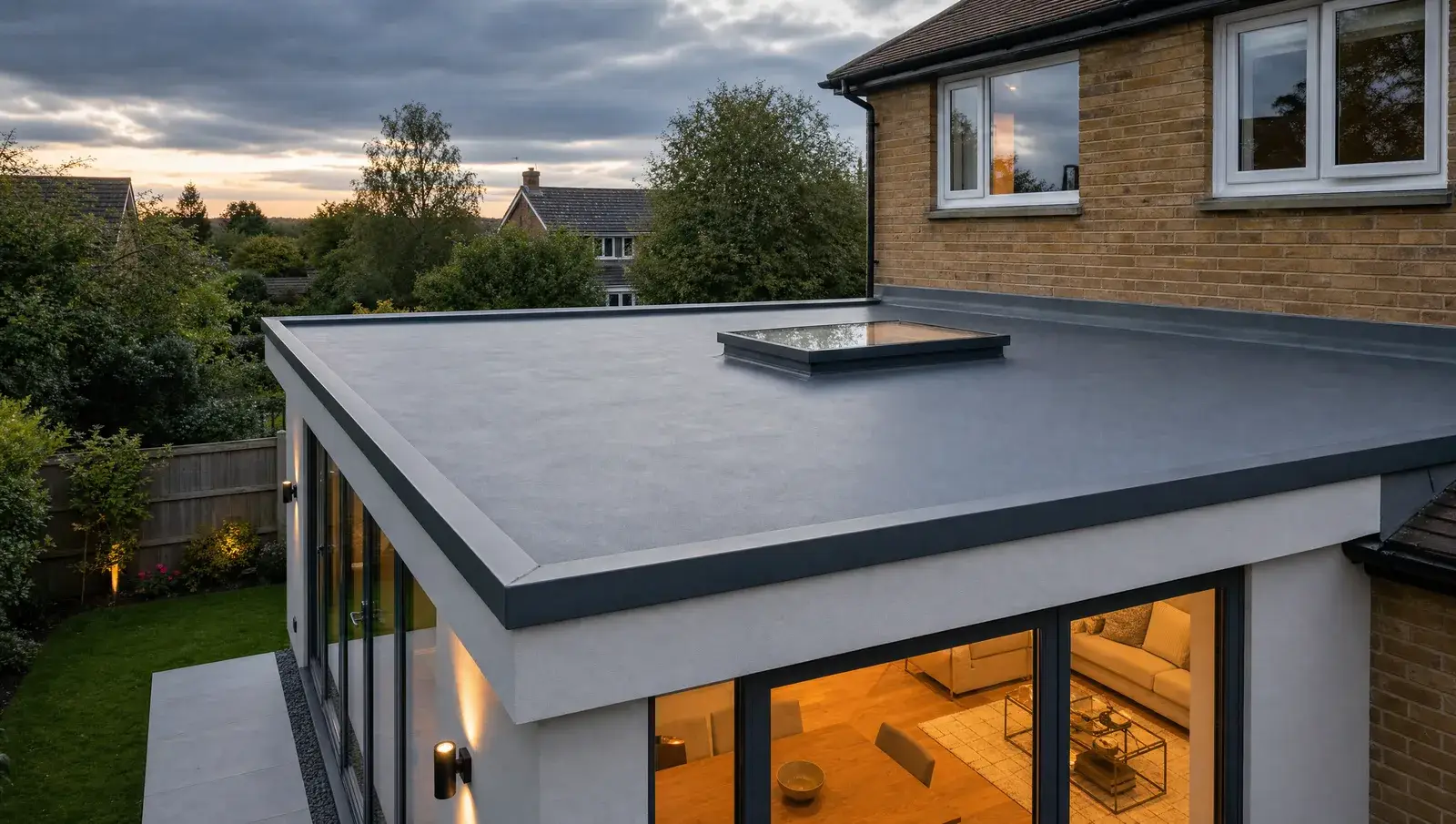
How much does a flat roof cost in the UK?
Real 2026 prices per square metre for felt, EPDM rubber and GRP fibreglass, plus typical garage and extension totals. Prices updated July 2026.
Replacing a conservatory roof is a different job at different money: see conservatory roof replacement costs.
Flat roofs are priced per square metre, so the two questions that set your bill are how big the roof is and what you put on it. This guide covers the three materials that dominate UK domestic flat roofing, what whole jobs actually cost, and the extras that catch people out. For a figure tailored to your own roof, use the roof cost calculator.
Flat roof cost per m² by material (2026)
| Material | Supplied & fitted per m² | Lifespan |
|---|---|---|
| Felt (torch-on) | £80 – £110 | 10 – 20 years |
| EPDM rubber | £90 – £130 | 30 – 50 years |
| GRP fibreglass | £110 – £150 | 25 – 40 years |
Judge on cost per year of life, not the day-one price. Felt is the cheapest to lay but the first to fail; EPDM costs a little more and can last two to three times as long, which is why it usually wins the value calculation. Our flat roof material comparison puts all three side by side on cost, lifespan, looks and repairability.
What whole jobs cost
| Job | Felt | EPDM | GRP |
|---|---|---|---|
| Single garage (approx 18m²) | £1,400 – £2,000 | £1,600 – £2,600 | £1,900 – £3,000 |
| Extension roof (approx 25m²) | – | £2,300 – £3,500 | £2,800 – £4,000 |
| Small dormer | £600 – £1,200 | ||
Garages are the classic entry-level flat roof job; if yours is the one that needs doing, the garage roof cost guide goes deeper on that job specifically, including asbestos removal and pitched conversions.
Extras that change the bill
- Warm-roof insulation upgrade: adds £40 to £60 per m², and is often required by building regulations when you replace the covering wholesale. It also fixes the condensation problems cold roofs suffer; see warm vs cold roofs for how the build-ups differ.
- Replacing rotten decking: adds £20 to £35 per m². You rarely know how much is needed until the old covering comes off, so agree the per-m² rate in the quote before work starts.
- New rooflight kerb: £300 to £600, best done while the roof is open rather than retrofitted later.
Felt, EPDM or GRP: which should you pick?
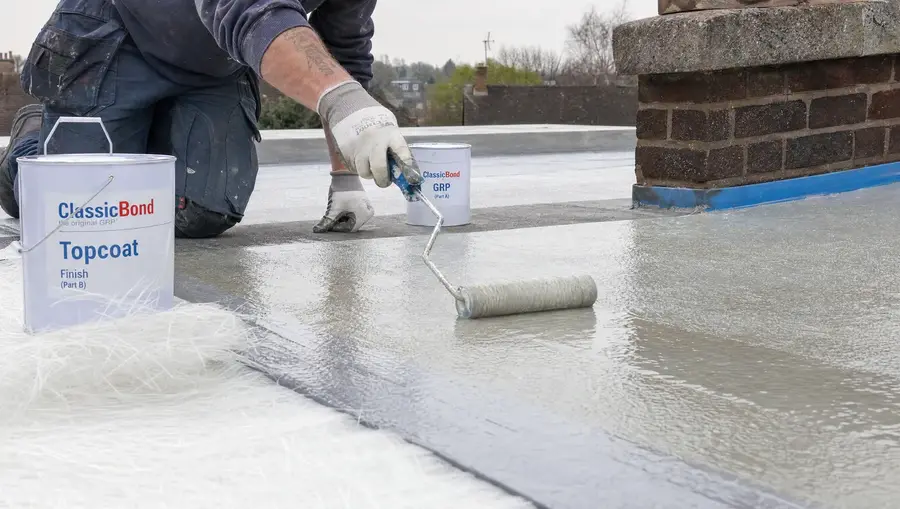
If the roof is a plain rectangle you will rarely step on, and budget is tight, felt still does a job. If you want the best value over the roof's life, EPDM's long lifespan usually makes it the cheapest per year despite the higher day rate. If the roof has upstands, complex details or regular foot traffic, GRP's hard seamless shell is worth the premium. The deep dives on EPDM rubber and GRP fibreglass cover installation, guarantees and failure modes for each.
Flat roof repair or full replacement?
Patch it if the covering is sound and the problem is one split, one lifted seam, or one failed detail around a pipe or upstand. Replace it if the covering has gone brittle, if there is more than one leak, or if water has been getting in long enough to soak the insulation. A patch over wet insulation buys you months and costs you the whole roof again later.
A full flat roof replacement takes the old covering back to the deck, replaces any rotten boards, then lays the new system with fresh upstands, trims and outlets. Reusing tired trims or a failed outlet on a new roof is the most common reason a replacement leaks in its first winter.
Get real prices for your flat roof
Up to three itemised quotes from vetted local roofers, checked against the fair rates on this page. Free, no obligation.