
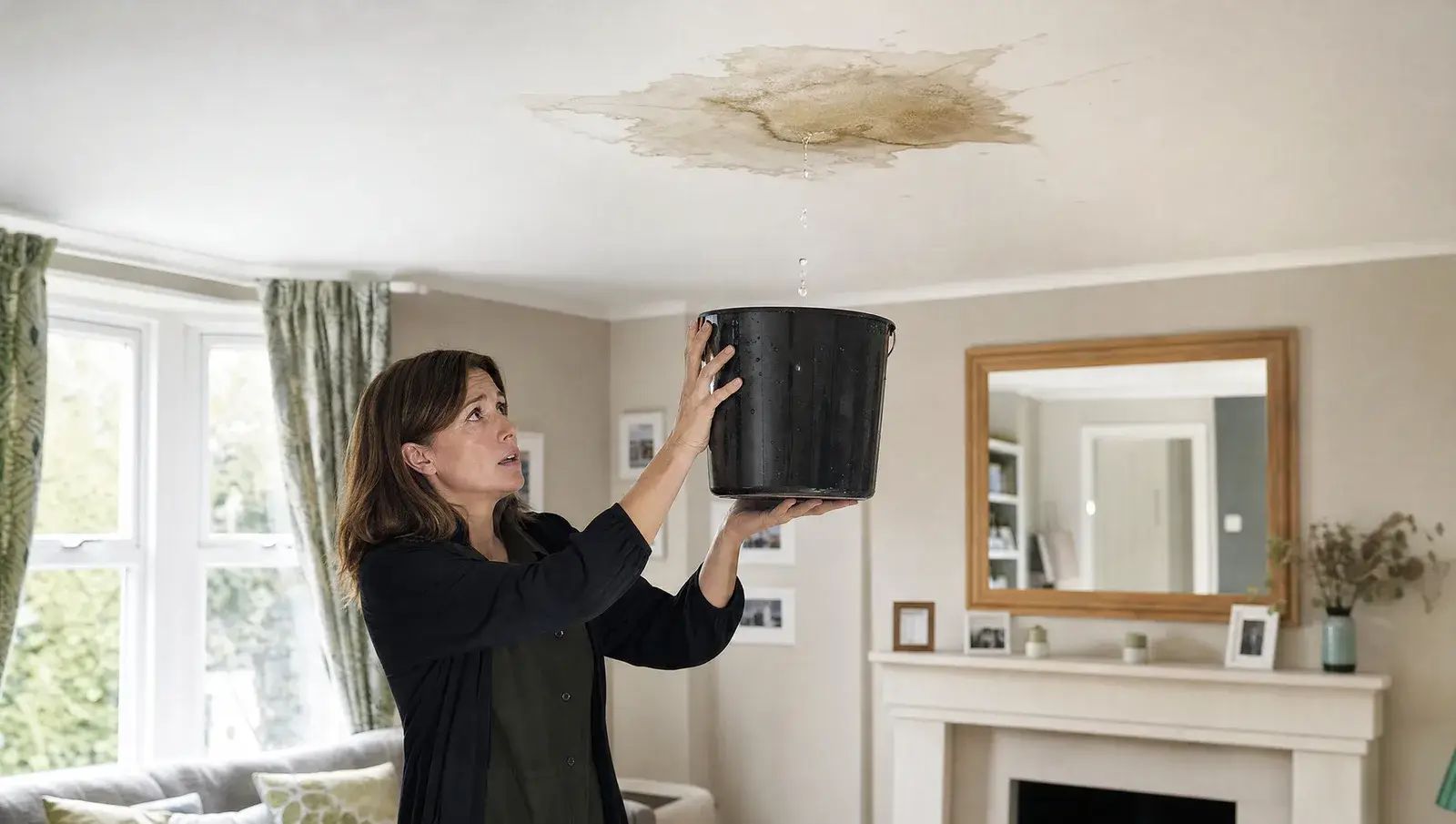
How much does it cost to fix a leaking roof?
Real 2026 prices for emergency tarping, tile, flashing and valley leaks, plus what to do before the roofer arrives. Prices updated July 2026.
A leak is really two jobs: finding where the water gets in, then fixing it. The fix is often quick and cheap; the finding is where the skill and the money go. This guide covers fair July 2026 prices for both, what to do while you wait, and when your insurer should be picking up the bill. If water is coming in right now, our emergency roof repairs page covers who to call and how fast they can realistically get to you.
Leaking roof repair costs (2026)
| Repair | Typical cost (2026) |
|---|---|
| Emergency tarp / make-safe | £150 – £400 |
| Slipped or broken tile causing leak | £150 – £400 |
| Flashing leak (chimney or abutment) | £200 – £500 |
| Valley leak | £350 – £800 |
| Flat roof leak patch | £100 – £300 |
| Chimney-related leak (repointing/flaunching) | £200 – £900 |
These are the same underlying repairs covered in our roof repair cost guide; what a leak adds is urgency, and sometimes a make-safe visit before the permanent fix. Out-of-hours pricing is a subject of its own: see emergency callout charges for what a fair night or weekend rate looks like.
Why finding the leak is the real job
Water almost never drips straight down from the hole it entered. It runs along rafters, membrane and the top of ceilings, sometimes for several metres, before it finds a joint to drip through. The entry point is rarely directly above the stain, which is why an experienced roofer traces the water uphill from the wet patch rather than just patching the tile nearest the drip. Pay for the diagnosis: a £200 repair in the right place beats three £150 repairs in the wrong ones.
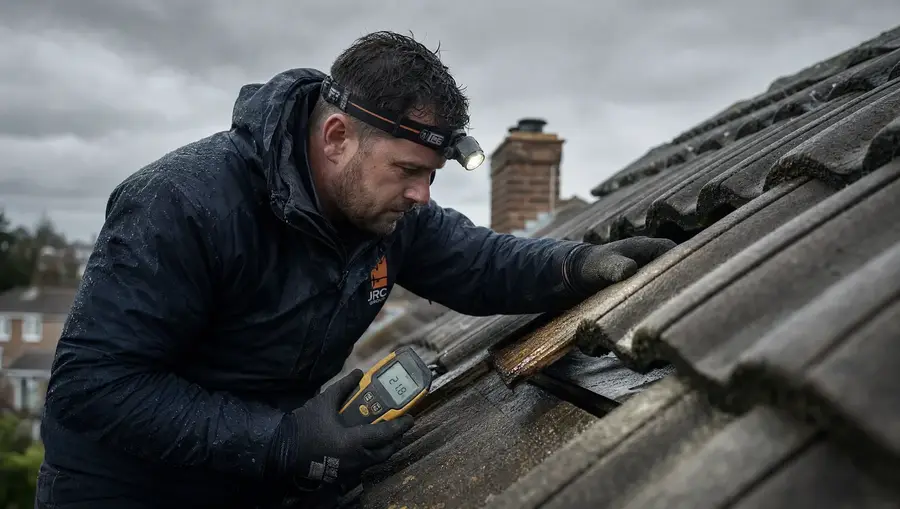
What to do right now, before the roofer arrives
- Contain the water: buckets under drips, towels on the floor, and if a ceiling bubble forms, pierce it with a screwdriver over a bucket so it drains in a controlled way rather than bringing the plasterboard down.
- Move valuables and electronics out of the room, and switch off any circuit the water could be reaching.
- Photograph everything: the drip, the stain, the room, the weather. Time-stamped photos are the backbone of any insurance claim.
- Do NOT go on the roof. Wet roofs are lethally slippery and nothing up there is worth a fall. Full step-by-step in our leaking roof problem guide.
Will insurance pay?
Usually only if the leak came from a sudden event, and storm damage is the classic example. Wear and tear, gradual deterioration and failed maintenance are standard exclusions on UK buildings policies, and that is how most leaks actually start. Check your policy wording before committing to a claim, because a rejected claim can still affect future premiums. Our guide to insurance and roof leaks walks through the claims process, loss adjusters and what evidence wins.
Leaks that only appear in heavy rain
Some roofs stay bone dry for months, then leak in one specific storm. That pattern usually points to wind-driven rain forcing water past a defence that copes in normal weather, or a gutter or valley that only overflows at full capacity. These are the hardest leaks to trace and the most likely to be misdiagnosed, so read why roofs leak only in heavy rain before paying for a second repair to the same stain.
Get a roofer on that leak
Up to three itemised quotes from vetted local roofers, checked against the fair rates on this page. Free, no obligation.