
Roof tiles: the complete UK guide
Concrete, clay, slate and synthetic tiles compared on cost, lifespan, weight and looks, plus profiles, coverage rates and matching advice. Updated July 2026.
Four materials cover almost every pitched roof in Britain, and they behave very differently on price, weight and lifespan. This guide compares them all, explains the three tile profiles you will be offered, and covers the two questions roofers hear most: how many tiles do I need, and how do I match the ones already up there?
Roof tile types compared (2026)
| Material | Supplied & fitted per m² | Supply-only per tile | Lifespan |
|---|---|---|---|
| Concrete tiles | £110 – £150 | £1 – £3 | 40 – 60 years |
| Synthetic slate | £120 – £160 | varies by system | 40 – 60 years |
| Clay tiles | £130 – £180 | £2 – £6 | 60 – 90 years |
| Natural slate | £150 – £220 | £4 – £12 | 80 – 120 years |
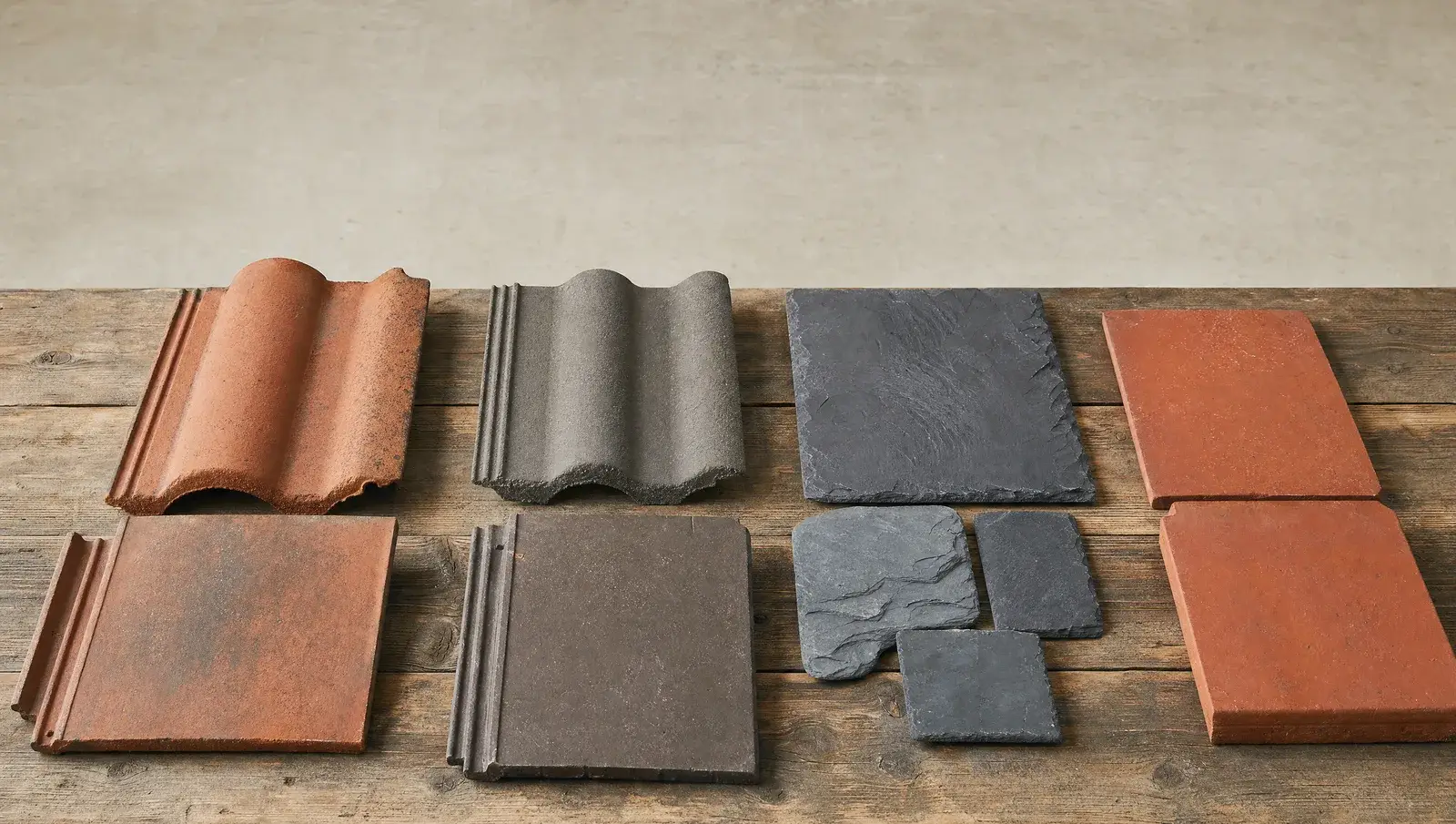
Concrete dominates post-war housing because it is cheap, strong and available everywhere; its trade-offs are weight and colour that fades over decades. Clay is the traditional choice: the colour is fired all the way through, so a clay roof looks as good at 60 as it did at 6. Natural slate is the premium option and routinely outlives the buildings it covers. Synthetic slate mimics the look at lower cost and a third of the weight, which makes it useful where rafters cannot carry the real thing. The full clay-versus-concrete argument gets its own page: clay vs concrete tiles.
Tile profiles: plain, pantile and interlocking
Plain tiles are small flat rectangles, roughly 265 x 165 mm, laid in a double lap so every point on the roof has two layers of tile over it. They give the classic fine-grained look of period cottages and cost more to lay because there are so many of them.
Pantiles carry the S-shaped roll that defines roofscapes across East Anglia, Yorkshire and Scotland's east coast. Each tile hooks over its neighbour, so they lay single lap and cover ground faster than plain tiles.
Interlocking tiles are the modern workhorse: large-format concrete or clay units with moulded channels that lock into each other. Fewer tiles, faster fixing, lower labour bills, which is why most new estates wear them.
How many tiles per square metre?
| Tile format | Tiles per m² (approx.) |
|---|---|
| Plain tiles | around 60 |
| Pantiles | 15 – 17 |
| Large interlocking tiles | as few as 10 |
Coverage varies with the exact tile and the batten gauge, so treat these as ordering estimates and add 5 to 10% for cuts, breakages and a box of spares in the garage. Those spares matter: tile ranges get discontinued, and a handful of originals makes future repairs invisible.
Matching old roof tiles
Replacing a few slipped or cracked tiles is cheap, £1 to £12 per tile in materials, but the hard part is the match. New tiles sit brighter and cleaner than 30-year-old weathered ones. Three ways round it: source reclaimed tiles from salvage yards, which already carry authentic weathering; ask the roofer to blend new tiles across the roof face rather than patching one obvious rectangle; or accept the contrast on a rear elevation where nobody looks. For repair pricing in detail, see the roof tile replacement cost guide.
Which tile suits your roof?
On a tight budget with a standard modern house, interlocking concrete is the rational pick. On a period property, or anywhere you plan to stay for decades, clay or slate wins on cost per year of life and kerb appeal, and planners may insist on it in conservation areas. Re-roofing entirely? All four materials are priced in context in the new roof cost guide.
Get tile prices for your roof
Up to three itemised quotes from vetted local roofers, with your choice of tile priced properly. Free, no obligation.