
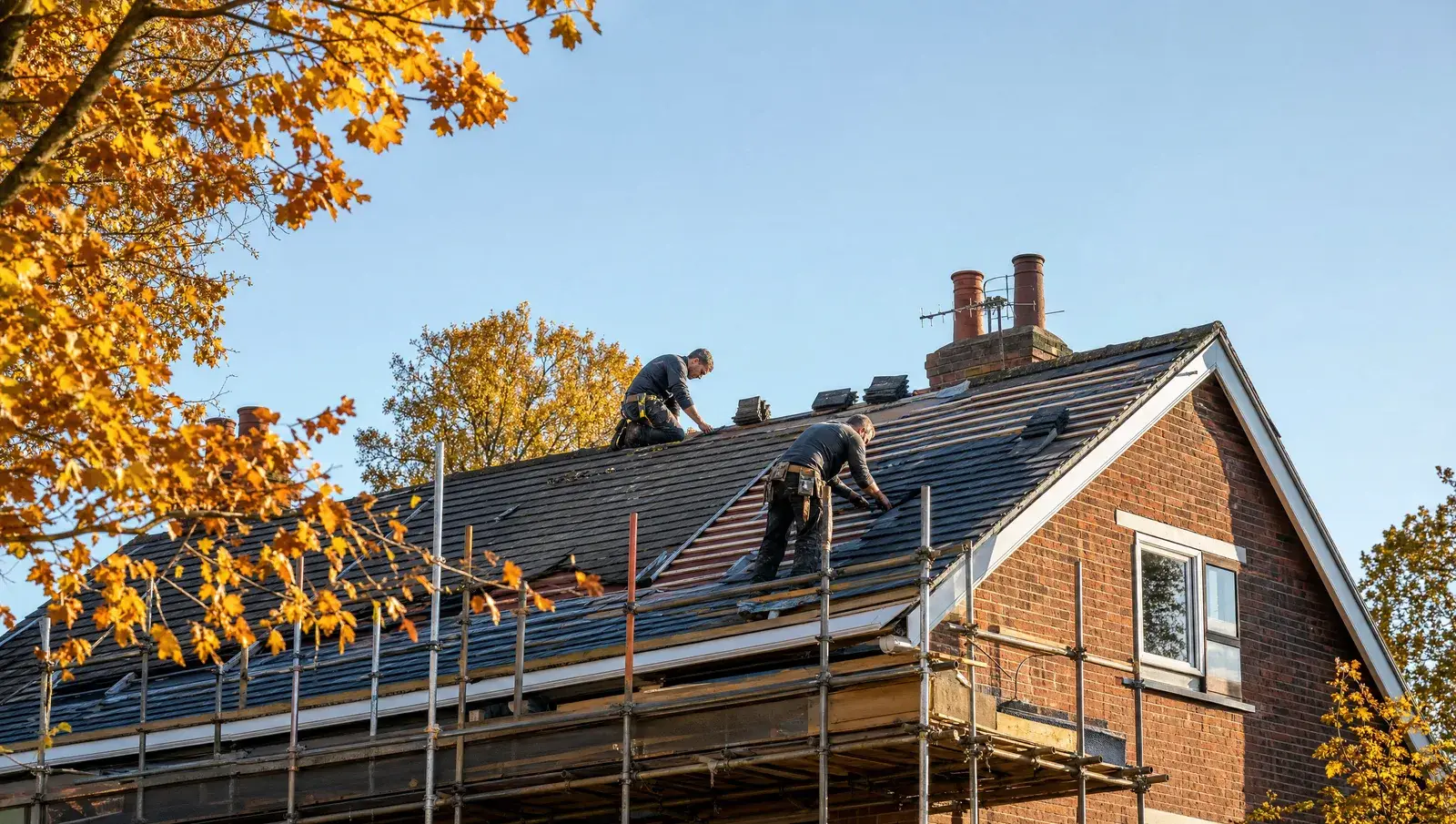
When is the best time of year to replace a roof?
The honest answer on timing: when the work is easiest, when the prices are keenest, and why they are not the same season.
Most homeowners assume roofing is a summer-only trade. It is not, and believing it costs people money. Here is how each season actually plays out, and how to use the demand curve to your advantage.
Season by season
| Season | Working conditions | Demand & availability |
|---|---|---|
| Spring | Improving weather, long days | Diaries filling fast; book early |
| Summer | Best conditions of the year | Peak demand, longest lead times |
| Autumn | Often dry and settled early on | Demand easing; availability improves |
| Winter | Short days, weather stoppages | Quietest season; keenest pricing |
Why summer is easiest but not always smartest
Long daylight and dry spells mean a summer roof replacement runs with fewest interruptions. The catch is that everyone else has the same idea. Reputable firms' summer diaries fill by late spring, so you either wait weeks for the roofer you actually want or settle for whoever is free, and "free in peak season" is not always a good sign.
The case for late autumn and winter
- Availability: lead times shrink from weeks to days once the summer rush ends.
- Price: some firms sharpen their numbers to keep skilled teams busy through the quiet months. The job itself is identical; see what it should cost in our new roof cost guide.
- Your pick of roofers: the best local firms can actually fit you in.
The trade-offs are real but manageable: shorter daylight stretches the programme by a day or two, and a wet week can pause work. Neither affects the quality of the finished roof.
How roofers manage winter weather
A re-roof is done in sections, never all at once. Whatever is stripped gets weatherproofed the same day, and temporary coverings protect open areas overnight and through rain. A professional outfit will stop work in heavy rain rather than trap moisture in the roof structure, which is exactly the behaviour you want. If a firm promises to power through any weather, treat it as a warning, not a selling point.
When timing does not matter at all
Emergency work is seasonless. If a storm has opened up your roof or water is coming through a ceiling, the repair happens now, in whatever weather, with temporary protection first and the permanent fix as soon as conditions allow. Waiting for spring with an active leak only multiplies the damage bill.
Get quotes while the diaries are open
Up to three itemised quotes from vetted local roofers, whatever the season. Free, no obligation.