
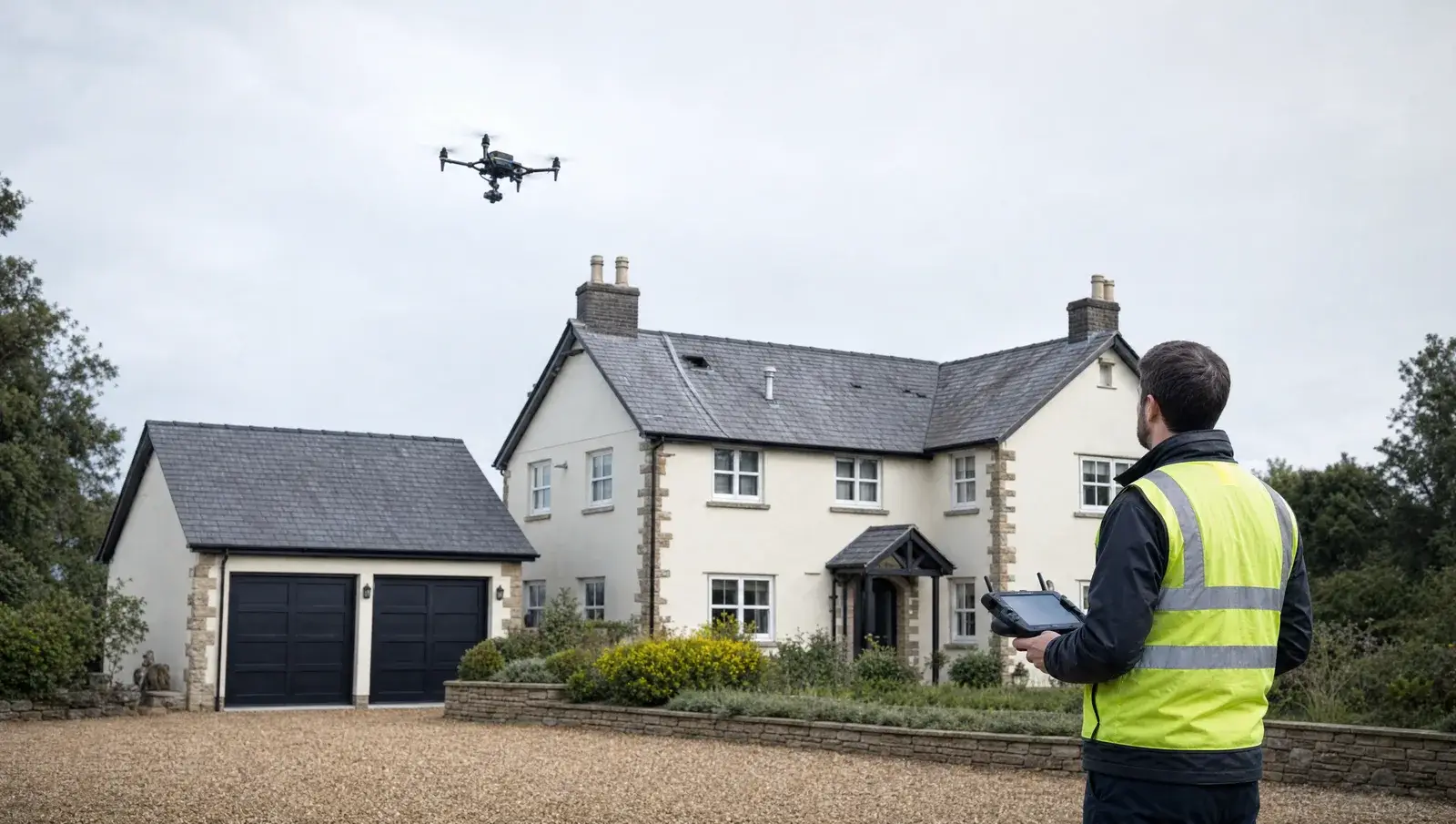
Drone roof surveys, explained
How a camera in the sky replaced the ladder, what a good survey actually delivers, and where a drone still cannot see.
Ten years ago, inspecting a roof properly meant ladders, roof ladders, or scaffolding for anything complicated. Drones changed that almost overnight, and for homeowners the shift is nearly all upside.
Why drones changed roof surveys
- No access equipment. No ladders against your gutters, no scaffold hire for a simple look, no one walking on fragile coverings. The whole roof is inspected from the ground in minutes.
- A complete photo record. Every slope and detail is captured and timestamped. You see exactly what the roofer sees, which makes it far harder for anyone to invent problems, and gives you a baseline to compare against after storms.
- Safe access to difficult roofs. Fragile slate, steep pitches, complex Victorian roofscapes and tall buildings can all be inspected without risk to anyone.
What a good drone survey delivers
- 4K images of every slope, not a quick orbit and three photos. Ridges, valleys, hips and abutments should all be covered.
- Close-ups of the failure points: flashings, chimney stacks, mortar joints and junctions, where most leaks actually start.
- A written condition report that ties the images to findings and recommendations, so you can get comparable quotes on the same evidence.
If a survey is being used to justify work, ask to see the images of the specific defect. A genuine operator will happily walk you through them; that transparency is half the point. Our signs you need a new roof guide explains what the photos should be checked for.
What a drone cannot tell you
A drone sees surfaces. It cannot lift a tile to check the underlay, press a screwdriver into a suspect rafter, or spot condensation soaking the loft insulation. Internal problems, rot, failed underlay, damp staining on timbers, show from inside the house. A proper roof inspection combines drone imagery outside with a loft check inside; together they catch almost everything a physical roof-walk would, with none of the risk.
The rules: CAA compliance matters
Commercial drone flying in the UK is regulated by the Civil Aviation Authority. Operators must be registered, hold the appropriate remote pilot competency, and carry insurance, and there are specific requirements for flying near people and buildings. This is not red tape you can ignore: an uninsured, unregistered flight over your neighbour's garden is a liability with your name near it. Ask any operator two questions before they launch: "Are you CAA registered?" and "Are you insured for commercial drone work?" Both answers should be an immediate yes.
Get your roof properly looked at
Up to three quotes from vetted local roofers, many with drone surveys included. Free, no obligation.