
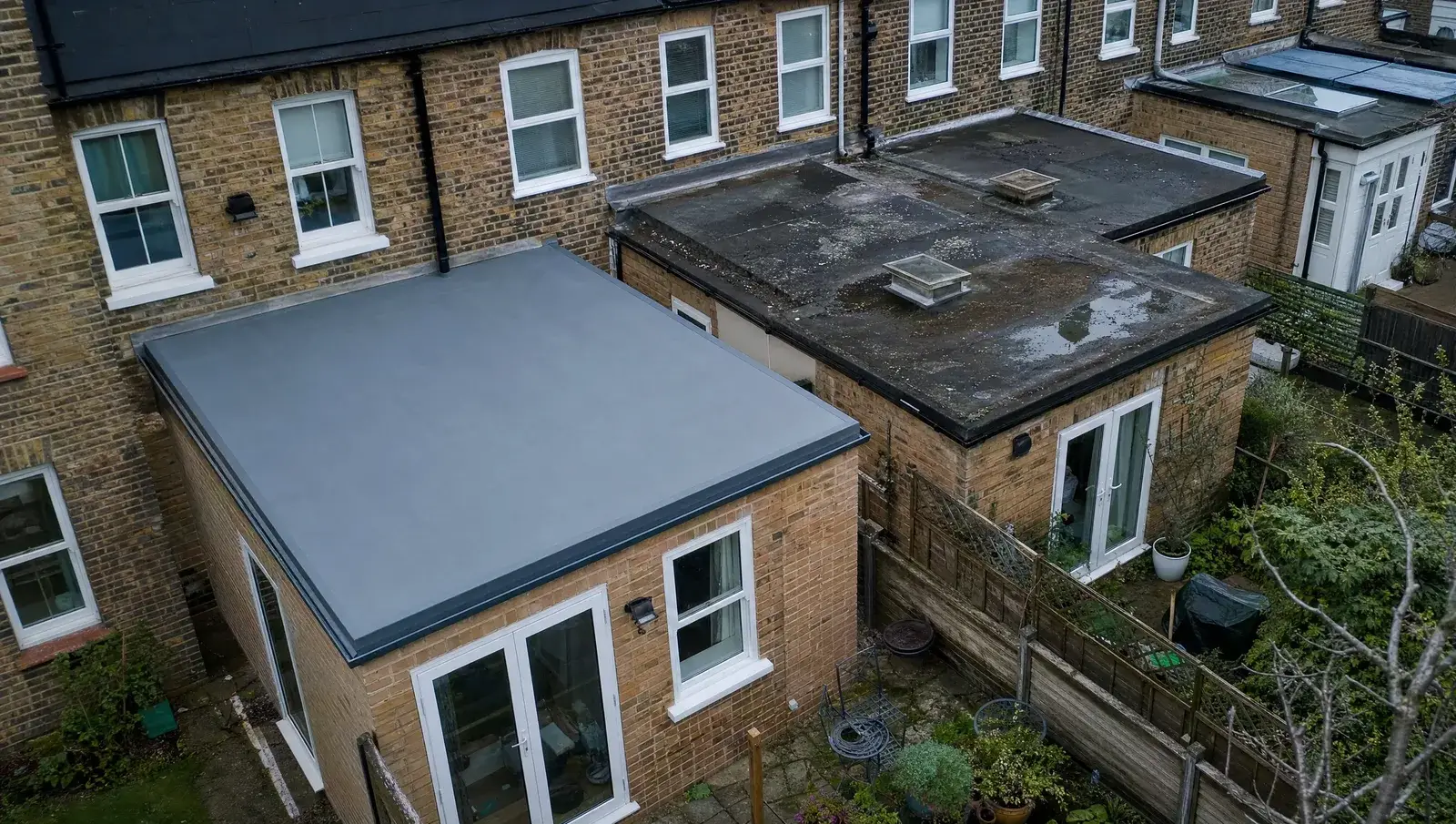
How long does a flat roof last?
Real lifespans by material, the five things that kill flat roofs early, and the cheap habits that add years.
"How long does a flat roof last?" has no single answer because "flat roof" covers materials with wildly different lifespans. The material on your roof right now, and how it was fitted, matter far more than its age in years.
Flat roof lifespan by material
| Material | Typical lifespan | Notes |
|---|---|---|
| Felt (bitumen) | 10 – 20 years | Modern torch-on systems reach the top of the range; old pour-and-roll felt the bottom |
| GRP fibreglass | 25 – 40 years | Seamless and tough, but needs a dry day and a good laminator to install well |
| Mastic asphalt | 30 – 50 years | The traditional heavyweight; rare on new domestic work but very long-lived |
| EPDM rubber | 30 – 50 years | Usually one seamless sheet on domestic roofs, removing the classic failure point |
Weighing up a replacement? The flat roof material comparison puts these head to head on cost, looks and durability, and the flat roof cost guide covers what each system costs to install.
What kills flat roofs early
- Ponding water. Water still sitting 48 hours after rain stresses every material and finds every weakness. It usually means the falls were built wrong or the deck has sagged; see our flat roof ponding guide.
- Foot traffic. Flat roofs are not terraces. Window cleaners, aerial installers and stored ladders crack GRP and puncture felt.
- UV on ageing felt. Sunlight makes old bitumen brittle; once the surface crazes, water gets in through hairline cracks.
- Blocked outlets. One autumn's leaves in a single outlet can hold a pond on the roof all winter.
- Patch-on-patch repairs. Each botched patch traps moisture in the build-up beneath, rotting the deck while the surface looks "fixed".
Maintenance that genuinely extends life
- Clear the outlets every autumn. Ten minutes with a gloved hand is the single highest-return job in roofing.
- Fix small damage promptly. A split repaired this month is a patch; left a year, it is a rotten deck.
- Look at the roof twice a year. From an upstairs window is fine: you are checking for ponding, bubbles, splits and debris.
- Keep traffic off it. If trades need access, boards spread the load.
When to replace rather than repair
Repairs make sense on a mid-life roof with one identifiable fault. Replacement is the better spend when leaks come back after repairs, when bubbling, cracking or sagging covers large areas rather than one spot, when the deck feels spongy underfoot, or when a felt roof past 15 years starts failing in several places at once. At that point every patch is money spent delaying the inevitable, and trapped moisture means the deck is often deteriorating faster than the surface suggests.
Flat roof on its last legs?
Up to three itemised quotes from vetted local flat roofing specialists. Free, no obligation.