
Insulating a conservatory roof: what works
Every option on this page makes the room warmer. Only two of them make it a room you would sit in through January.
The four options, and what each actually does
| Option | Typical cost | Winter effect | Summer effect |
|---|---|---|---|
| Thermal or pleated blinds | £300 – £900 | Small | Good on glare |
| Solar control film on glass | £300 – £700 | None | Good on heat |
| Internal insulated ceiling panels | £1,800 – £4,500 | Noticeable | Noticeable |
| Solid insulated panel roof | £5,000 – £12,000 | Transforms it | Transforms it |
| Lightweight tiled roof | £7,500 – £16,000 | Transforms it | Transforms it |
Blinds and film: the cheap end
Pleated thermal blinds fitted to the roof glazing cost £300 to £900 for a typical conservatory and are genuinely useful on glare and summer heat. In winter they add a thin layer of trapped air, which is better than nothing and nowhere near insulation. Solar control film does nothing for winter at all. Both are worth buying if summer is your problem and neither is worth buying if January is.
Internal insulated ceiling panels
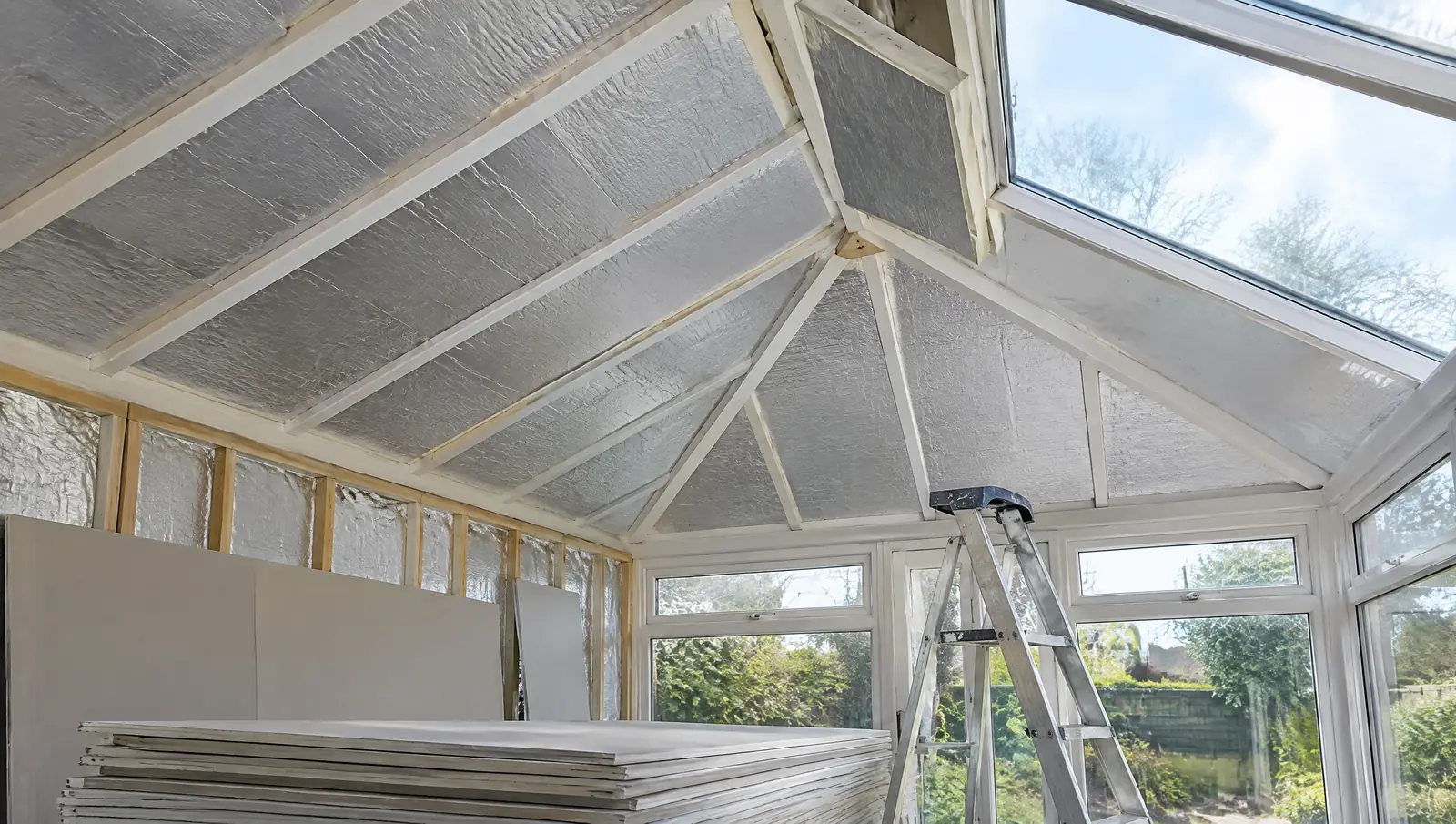
An insulated board system fixed to the inside of the existing glazing bars, usually finished in a plaster-effect or fabric panel, at £1,800 to £4,500. It is fitted in a day or two, needs no building control because the structure is unchanged, and it makes a measurable difference because you are finally putting insulation between the room and the sky.
The catch is condensation. Warm, moist air now meets cold glazing behind the panels rather than inside the room, and unless the system is properly sealed and ventilated you get moisture where you cannot see it. Insist on a vapour-controlled system with ventilation detail, and be sceptical of anyone quoting foil-backed insulation battened straight under the polycarbonate.
The solid roof route
Replacing the roof entirely with an insulated panel or lightweight tiled system is the only route that gets the roof to modern U-values, and it is the only one that building control signs off. The room then behaves like part of the house: heat it and it stays warm, and in summer it stops being the hottest space in the property. Costs and systems are compared in glass, tiled or polycarbonate and priced in detail in tiled conservatory roof costs.
Do not forget the rest of the box
A conservatory loses heat through everything, not only the roof. Before spending thousands on the roof alone, check three cheap things: the seals on the doors and windows, whether the dwarf wall has any insulation at all, and whether the floor is a bare slab. Draught-proofing and a decent floor covering cost a few hundred pounds and are frequently worth more per pound than roof film.
Leaking as well as cold? Replacing a polycarbonate roof covers the repair-versus-upgrade maths.
Get the options priced for your conservatory
Three free quotes from vetted local installers, so you can see what each route costs on your actual roof.