
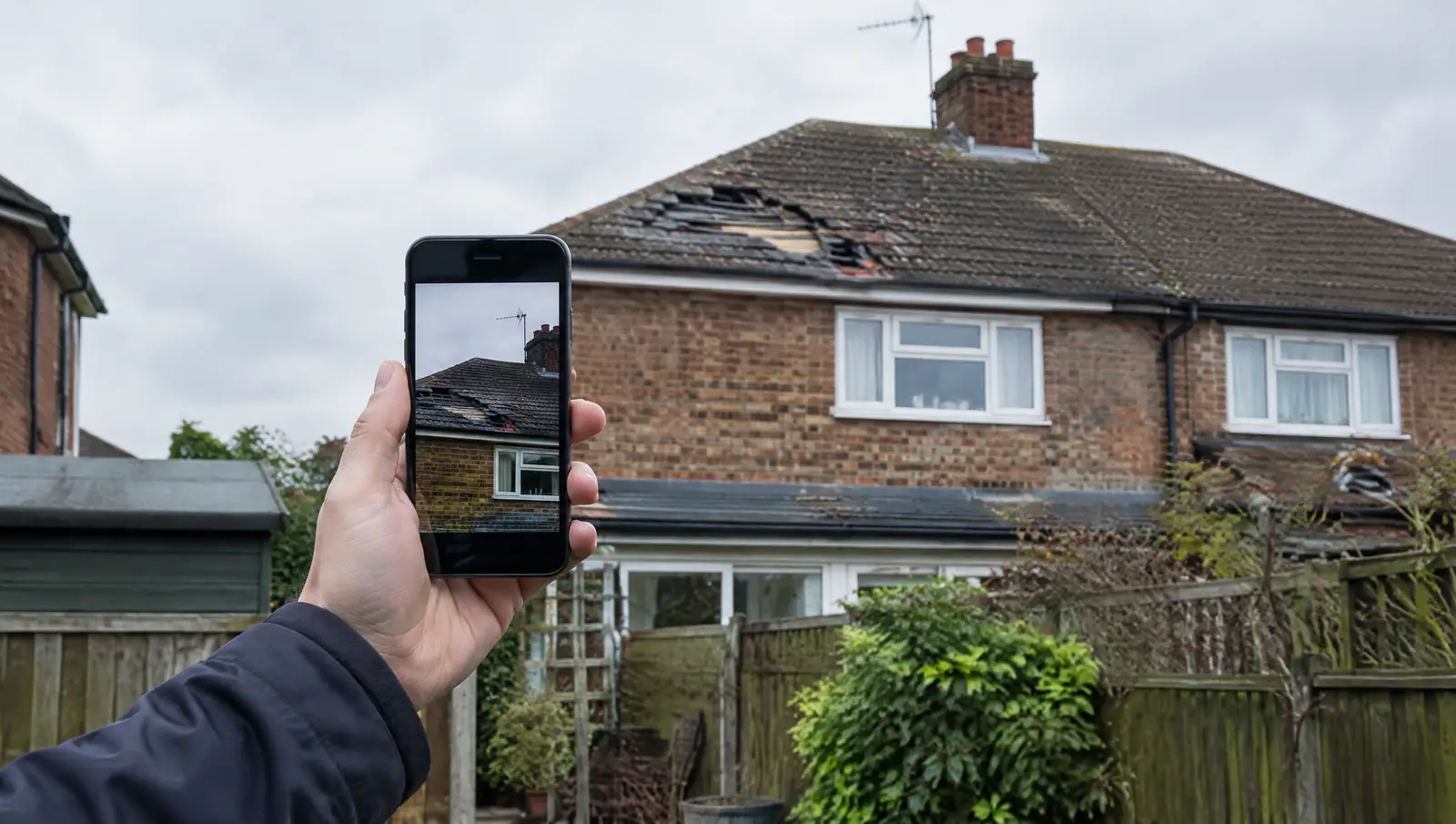
How to claim for roof damage, step by step
The order matters. Make it safe, evidence it, price it, then call the insurer. Doing those in the wrong order is how good claims get refused.
Step 1. Make it safe, and keep the receipt
Your policy obliges you to prevent further damage, so emergency work is both sensible and covered. Tarping or a temporary batten and membrane patch costs £150 to £400, with out-of-hours callouts adding £100 to £250. Photograph the damage before the make-safe goes on, and keep the invoice. Our emergency callout guide shows what fair pricing looks like when you are ringing round in a hurry.
Step 2. Photograph and date everything
- Wide shots of the whole elevation showing the roof in context
- Close shots of the damage itself, from the ground and from a window if you can
- Debris where it landed, before you tidy the garden
- Every room with internal damage, including the ceiling and any soaked belongings
- The make-safe work once it is done
Phone photographs carry a timestamp, which is precisely what an adjuster needs to accept that the damage is recent rather than gradual. Do not climb up to get a better angle: a roof after a storm is the most dangerous it will ever be.
Step 3. Get the weather record
Screenshot the wind gusts and rainfall recorded at the nearest weather station for the date. If the reading supports a storm, you have pre-empted the insurer's first test. If it does not, you have saved yourself from filing a claim under the wrong heading, and the storm damage guide explains what the alternatives are.
Step 4. Get a report, not just a quote
This is the step most people skip and the one that decides marginal claims. A written report from a roofer who is not bidding for the work costs £250 to £600 and should state:
- The age, type and condition of the covering and its fixings
- The specific damage and where it sits on the roof
- Whether the failure pattern is consistent with wind uplift, impact or age
- What remedial work is required, and what it costs
A quote says what someone wants to charge. A report says what happened, and that is what the adjuster is assessing. Roof inspections and surveys covers the types and prices.
Step 5. Notify the insurer
Report within days, not weeks. Give the date and time of the damage, the weather conditions, what you have done to make it safe, and say that you have photographs and an independent report available. Stick to what you observed: the moment you speculate that the roof "was due for replacement anyway", you have written the refusal letter for them.
Step 6. The loss adjuster visit
On claims above roughly £3,000 the insurer sends a loss adjuster, who works for them. Be present, be straightforward, and have the file ready: photographs, weather data, the report and the make-safe invoice. Ask two questions before they leave: what they are recommending, and what would change their mind. Write down the answers.
Step 7. Settlement
You will usually be offered either their approved contractor or a cash settlement.
| Option | Upside | Watch for |
|---|---|---|
| Insurer's approved contractor | No cash flow risk, guarantee handled by the insurer | Scope is priced to the insurer, timescales can be long |
| Cash settlement, your own roofer | Choose the firm, bundle other work while the scaffold is up | Get the figure agreed in writing, and check it against real quotes |
Check any cash figure against independent quotes before accepting. Settlements are calculated from schedules of rates that do not always reflect what a local firm charges for the same scope, and the gap is yours to fund.
How long it takes
A straightforward claim runs two to six weeks from notification to settlement. Add a fortnight where a loss adjuster is appointed, and longer after a named storm, when every insurer in the country is dealing with the same queue. Chase in writing, and keep every reference number.
Turned down? What to do when a roof claim is refused covers the challenge and the free Ombudsman route.
Get the work priced independently
Three itemised quotes from vetted local roofers, free, so you can check any settlement figure against the real cost.