
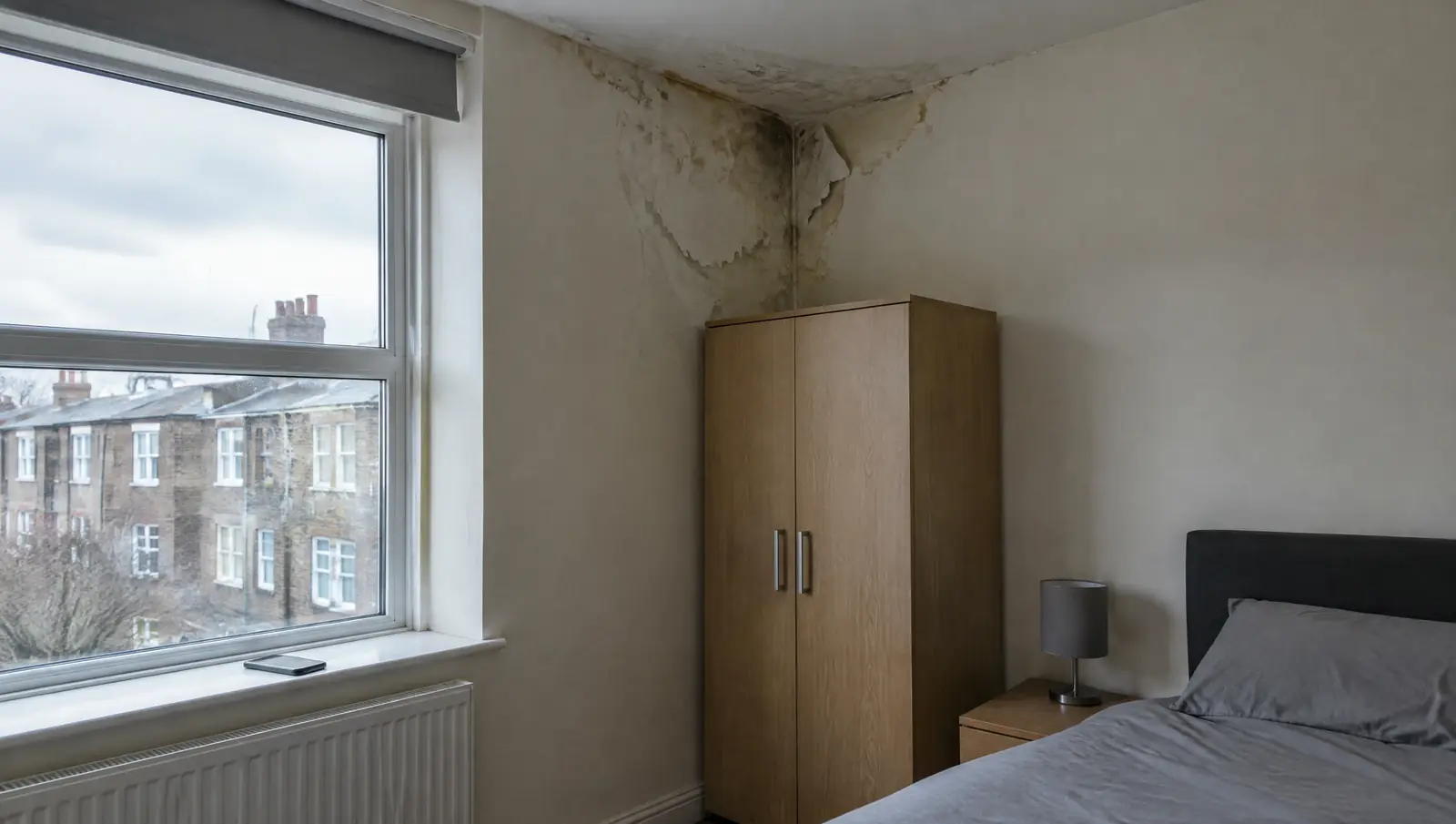
Roof leak in a rented home: who fixes it?
The law is unusually clear on this one. The roof is the landlord's, the reporting is the tenant's, and the argument is almost always about how long is too long.
What the landlord must do
Section 11 of the Landlord and Tenant Act 1985 puts the structure and exterior of the property, including the roof, gutters and external pipes, on the landlord in almost every assured shorthold tenancy. The Homes (Fitness for Human Habitation) Act 2018 goes further: the home has to be fit to live in for the whole tenancy, and serious damp from a leaking roof is squarely within that.
What the law does not do is set a fixed number of days. The standard is a reasonable time, judged on severity: water pouring through a ceiling is days, a slow stain in a spare room is weeks.
What the tenant must do
- Report it in writing as soon as you notice it, with photographs and the date. A text or email creates the record a phone call does not.
- Allow access for inspection and repair at reasonable times.
- Mitigate the damage: move belongings, put a container under the drip, do not leave it because it is not your house.
- Keep reporting. Each follow-up email is another dated entry in the timeline.
What a tenant should not do is stop paying rent. Withholding rent puts you in arrears and risks the tenancy, whatever the state of the roof.
If nothing happens
- Written chase to the landlord or agent, referencing the first report date and the effect on the property.
- The agent's formal complaints procedure, then their redress scheme, which letting agents in England must belong to.
- The council's environmental health team. They inspect under the housing health and safety rating system, and damp and mould score heavily. They can serve an improvement notice on the landlord.
- A disrepair claim through the courts for repairs and compensation, which is where the written timeline earns its keep.
In England, a tenant who complains in writing and receives an improvement notice also gains protection against a retaliatory section 21 eviction for a period. That protection depends on the complaint being in writing and going to the council, which is why steps one and three matter.
What the landlord actually faces
| Job | Typical 2026 cost |
|---|---|
| Trace and repair a leak | £150 – £600 |
| Emergency make-safe | £150 – £400 |
| Ceiling made good and redecorated | £150 – £500 |
| Mould treatment after prolonged damp | £300 – £900 |
| Timber repairs after a long-running leak | £1,000 – £3,000 |
The economics favour moving fast. A £250 repair in week one is a £2,000 problem by month six, and the tenant's belongings, a disrepair claim and an environmental health notice all sit on top of that.
Who pays for the tenant's damaged belongings
The landlord's buildings insurance covers the building, not the tenant's possessions. Contents insurance is the tenant's own. Where the landlord failed to repair after being told, the tenant may have a claim against them for the damage, which is another reason for the written record.
Leaseholder rather than tenant? Who pays for roof repairs in a leasehold flat covers service charges and freeholder duties.
Landlord or freeholder needing the work done?
Three free quotes from vetted local roofers, itemised, so the repair can be booked quickly and priced fairly.