
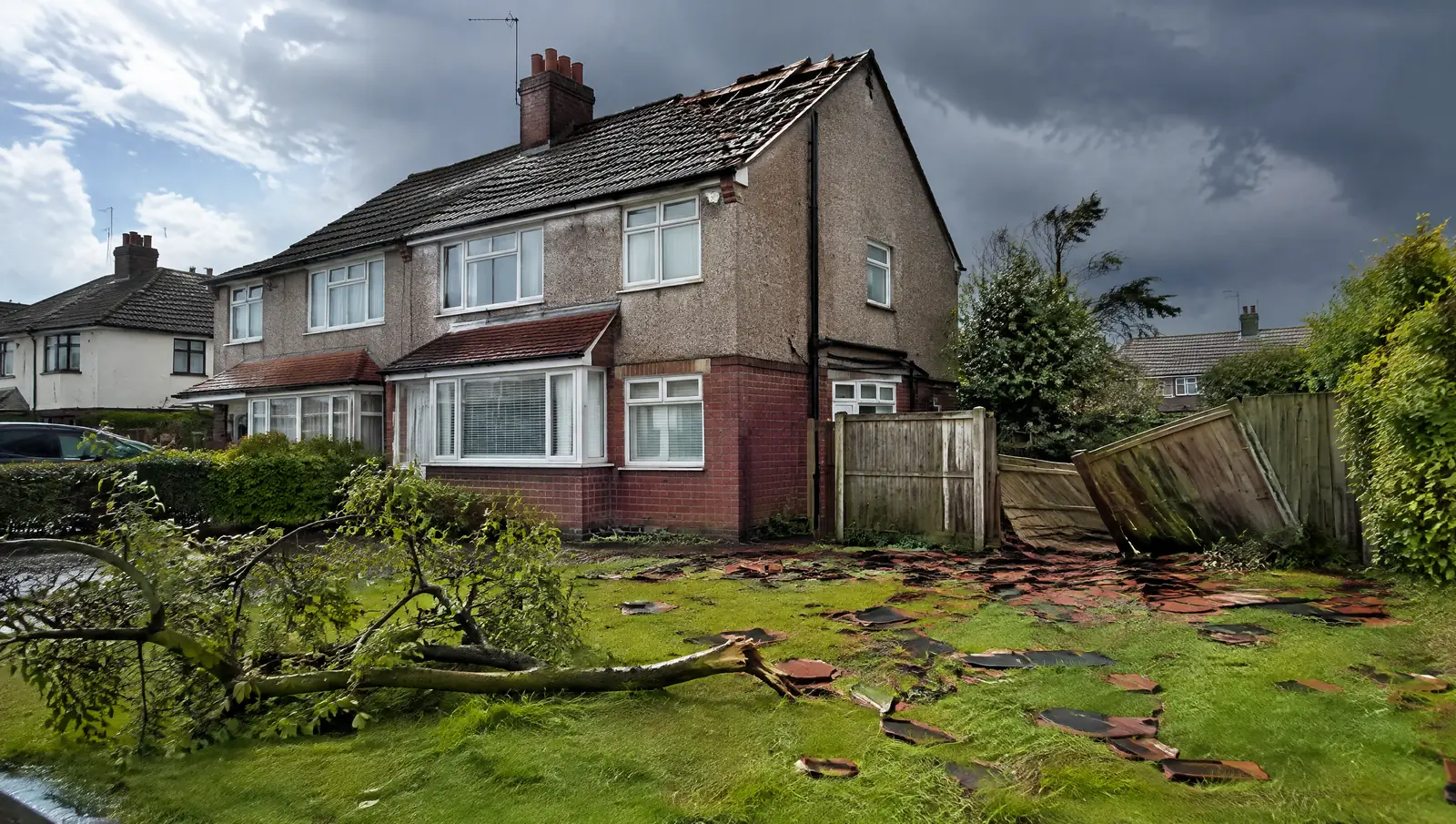
Storm damage roof claims: what insurers actually pay for
Insurers do pay for storm damage, and they refuse a great many storm claims. The difference is almost always evidence gathered in the first two days.
Storm claims are the most common roof claim in the UK and the most commonly rejected. The reason is not that insurers are difficult. It is that a roof damaged by a storm and a roof that was going to fail anyway look almost identical from the ground, and the policy only covers one of them.
The three tests
Every insurer, and the Financial Ombudsman when a dispute reaches it, works through the same three questions.
- Were the weather conditions actually a storm? Not "was it windy". Insurers pull data from the nearest weather station for the date you report.
- Is the damage consistent with a storm? Missing tiles on the exposed slope, a ridge lifted along its length, a fence down in the same garden: consistent. A stain on a bedroom ceiling with an intact roof above it: not.
- Was the storm the main cause of the damage? If the tiles were already loose, the mortar already perished or the felt already gone, the insurer argues the storm merely finished a job that age had started.
What counts as a storm
There is no single legal definition. The working standard across the industry is violent weather rather than bad weather:
- Wind gusts around 55mph or above, which is roughly gale force
- Torrential rain, usually taken as 25mm or more in an hour
- Heavy snow settling at depth, or large hail
Check the weather record for your postcode on the day before you ring, not after. If the gusts were 35mph, a claim framed as storm damage is going to be refused, and a different framing, such as an impact from a neighbour's debris, may be the accurate one.
What insurers pay for
| Usually paid | Usually refused |
|---|---|
| Tiles and slates blown off | Tiles that slipped through nail fatigue |
| Ridge or verge lifted by wind | Mortar that had already perished |
| Chimney pot or stack damage | A stack that was already leaning |
| Flashing peeled back | Flashing that was never dressed properly |
| Flat roof covering lifted | A felt roof past its lifespan |
| Internal damage from the resulting water | Damp that pre-dates the storm |
| Emergency make-safe work | Upgrades on top of a like-for-like repair |
Note the last line. Insurance restores what you had. If your felt garage roof is destroyed in a storm, the settlement is a felt garage roof, and upgrading to EPDM rubber is the difference paid by you. That is still the right call in most upgrades, because you are only paying the gap.
The first 48 hours
This is where claims are won. In order:
- Photograph everything before anyone touches it. Wide shots showing the whole house, close shots of the damage, the debris on the ground, and the date on your phone.
- Make it safe, and keep the receipt. Tarping and temporary repairs cost £150 to £400 and are almost always covered. Your policy requires you to prevent further damage, so this is not optional.
- Save the weather record. A screenshot of the local station data for that date, with gust speeds.
- Report it quickly. Most policies want notification within a few days, and a fortnight's delay invites the argument that the damage is gradual.
- Get a roofer's written report, not just a quote. See how to claim for roof damage for what the report needs to say.
When they argue wear and tear
Expect it, particularly on a roof over 25 years old. The counter-evidence that works is specific: photographs of the roof before the storm, a recent inspection report, receipts for maintenance, and a roofer's statement that the fixings and covering were sound and the failure pattern matches wind uplift rather than age. Where the damage is on the windward slope only, say so, because age-related failure scatters across the whole roof rather than concentrating where the wind hit.
Already had a refusal letter? The claim refused guide covers challenging it and the free Ombudsman route.
Get the damage priced properly
Three itemised quotes from vetted local roofers, free, so you know what the repair costs whether the insurer pays or you do.