
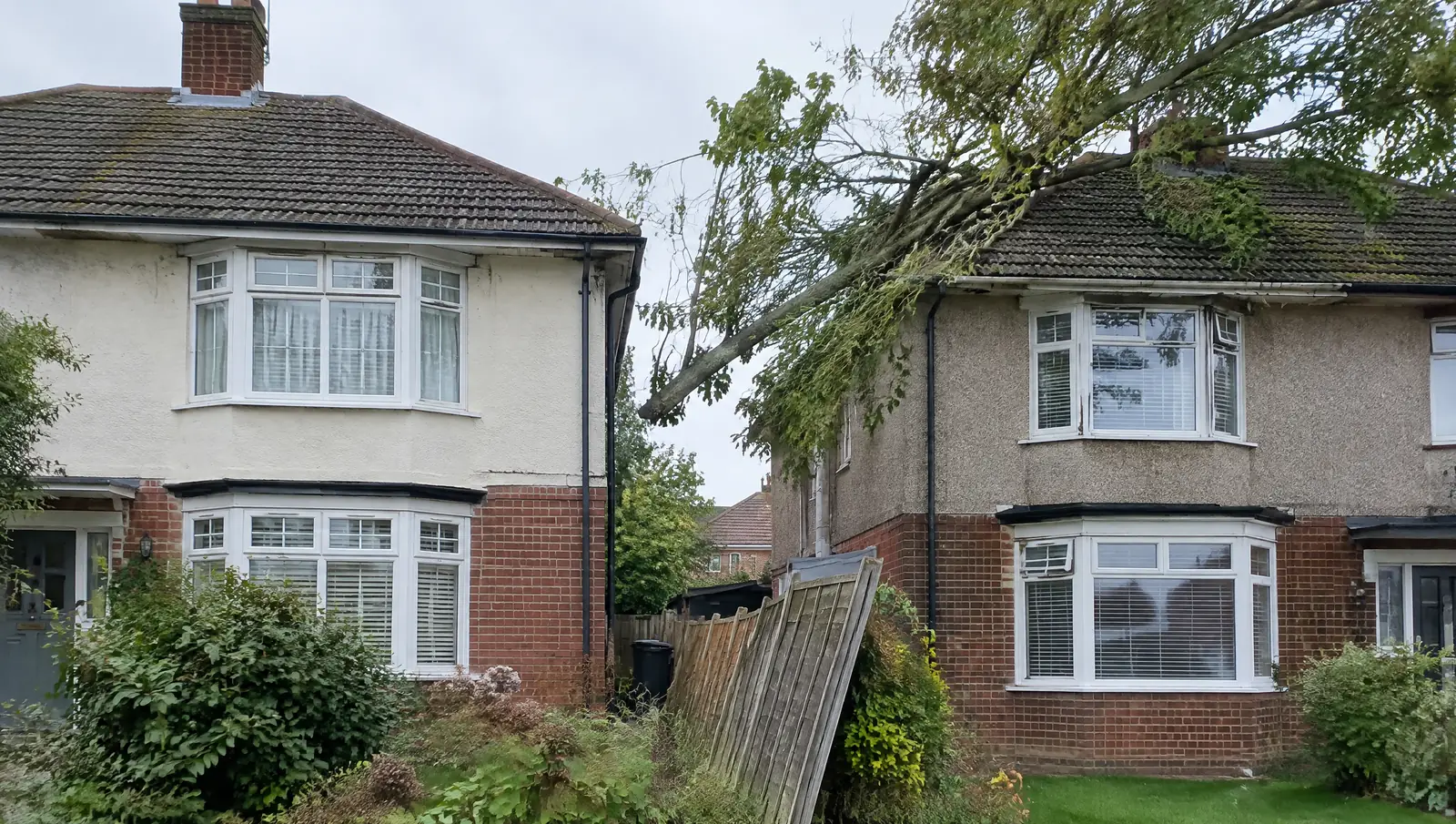
My neighbour's roof is damaging mine: where do I stand?
There is no general legal duty to keep a roof in good order. There is a duty not to let it damage someone else, and that is the one that matters here.
Quick answer: a neighbour is not obliged to maintain their roof, but they are liable if their neglect causes damage to your property, which is nuisance or negligence. Put it in writing with photographs, tell your insurer, and let the two insurers argue. Where a branch or gutter overhangs your land, you can generally cut it back to the boundary and offer the cuttings back.
The four situations
- Their gutter overflows onto your wall. Ongoing water onto your property from a blocked or broken gutter is a classic private nuisance once they know about it and do nothing.
- Tiles or debris fall onto your roof or garden. If the tiles came off in a freak storm, that is nobody's fault. If they came off a roof that has been visibly failing for two years, that is different.
- Their tree overhangs your roof. You can generally cut branches back to the boundary line without permission, subject to tree preservation orders and conservation area rules, and the cuttings belong to them.
- Their building work damaged your roof. Straightforward: their contractor's liability, and their insurer's problem.
The sequence that works
- Evidence first. Photographs with dates, from your own property, showing the source and the damage.
- A polite written note. Describe the problem, attach a photo, ask them to look at it. Most cases end here, because most neighbours simply had not noticed.
- A roofer's report stating where the water or damage originates. This single document is what converts a disagreement into a claim.
- Tell your insurer. They may repair your property and then recover from the neighbour's insurer, which keeps you out of the argument entirely.
- A formal letter setting out the damage, the cost and a reasonable deadline, if it is still unresolved.
- Court, as a last resort, for nuisance or negligence. The small claims track handles modest sums, and the paperwork trail from steps one to five is the case.
What it costs to put right on your side
| Damage | Typical cost |
|---|---|
| Tiles replaced after falling debris | £150 – £400 |
| Damp wall dried and made good | £300 – £900 |
| Gutter section replaced | £150 – £450 |
| Roofer's written report on the cause | £250 – £600 |
| Branch cut back to the boundary | £150 – £600 |
Where people go wrong
- Going onto their roof. Do not. It is trespass, and it hands them the grievance.
- Waiting for it to get worse to prove a point. You have a duty to mitigate your own loss, and a court will ask why you let a £200 problem become a £2,000 one.
- Only ever discussing it verbally. Without dated writing, "they knew and did nothing" is unprovable.
- Letting it become a feud. Disputes are disclosable when you sell, and buyers price them in.
If the neighbouring property is rented or leasehold
Write to the landlord or the freeholder, not only the occupier. A tenant cannot authorise roof work, and the party responsible for the structure is the one who can fix it. Our guides to roof leaks in rented homes and leasehold flats explain who that is.
Shared gutter or party wall rather than separate roofs? See who is responsible for shared gutters.
Get your side priced and protected
Three free quotes from vetted local roofers, with a written report of the cause if you need one for the claim.
Neighbour dispute FAQs
Neighbour roof damage, answered
Not directly. There is no general duty to maintain a roof, but a neighbour is liable for damage their neglect causes to your property. Evidence the damage, write to them, and let the insurers pursue it if they do not act.
Their insurer, where the damage resulted from neglect they knew about. Where tiles came off in a genuine storm, each owner usually claims on their own policy, because nobody is at fault for the weather.
Generally yes, back to the boundary line, provided the tree is not protected by a tree preservation order or conservation area rules. The cuttings belong to your neighbour, so offer them back rather than throwing them over.
Contact the council, which can trace owners and has powers over dangerous structures, and notify your insurer. Keep protecting your own property and keep the receipts.
Yes. Property information forms ask directly about disputes and complaints, and failing to disclose one creates a far bigger problem than the dispute. It is another reason to keep exchanges factual and polite.