
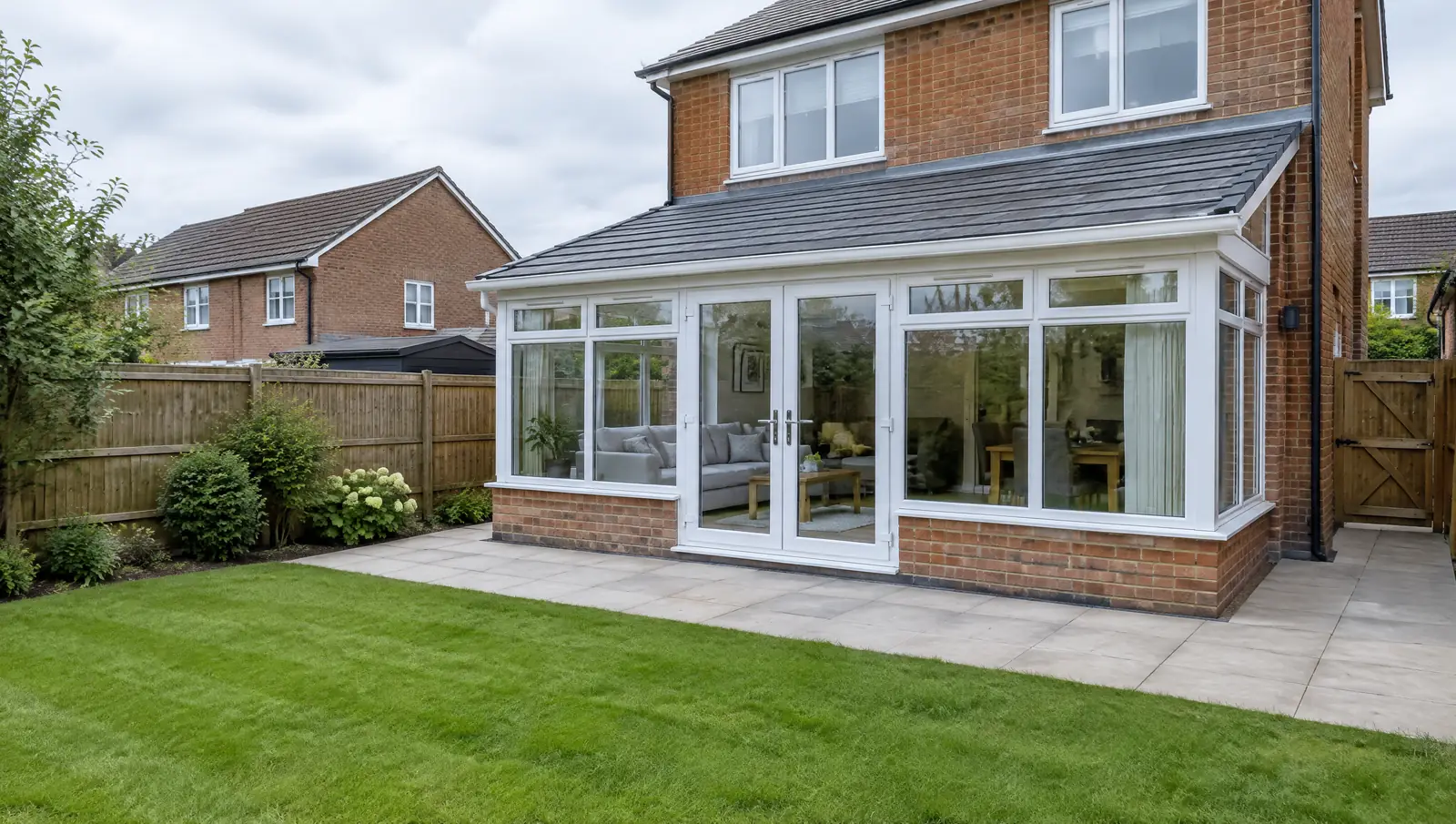
Glass, tiled or polycarbonate: which conservatory roof?
Four options, a £14,000 spread between the cheapest and the dearest, and only one question that really matters: how much of the year do you want to use the room?
The four options, side by side
| Roof | Typical cost | Warmth | Light | Best for |
|---|---|---|---|---|
| Polycarbonate, like for like | £1,500 – £3,500 | Poor | Bright but glaring | Selling soon, or a budget fix |
| Glass, modern self-cleaning units | £4,000 – £7,500 | Fair | Excellent | Keeping the garden room feel |
| Solid insulated panel | £5,000 – £12,000 | Good | Roof windows only | Year-round use on a budget |
| Lightweight tiled | £7,500 – £16,000 | Best | Roof windows only | Turning it into a proper room |
Polycarbonate: the honest case for it
Modern 35mm multi-wall polycarbonate is a long way from the thin sheet that came with 1990s conservatories, and swapping like for like is the cheapest way to stop a leak. It is still the worst performer on heat in both directions, and it is the noisiest in rain by a distance. Choose it if you are selling within a couple of years, or if the room is genuinely a greenhouse with furniture in it. Full detail in replacing a polycarbonate conservatory roof.
Glass: light without the glare
Modern conservatory glass is not the single-glazed sheet people remember. Self-cleaning coatings on the outside, solar control on the inside, argon-filled double glazed units: the result is a roof that cuts summer heat gain sharply and holds warmth better in winter, while keeping the room bright. It costs roughly double polycarbonate and it is the option that keeps a conservatory feeling like a conservatory. It does not make the room usable in January on its own.
Solid insulated panels
A lightweight layered panel system fixed to the existing frame, finished with a plastered ceiling inside and a tile-effect or membrane finish outside. It is the middle ground: far warmer than glass, far cheaper than a full tiled roof, usually installed in two to three days, and it takes roof windows so the room is not gloomy. Building regulations apply, because you are replacing a translucent roof with a solid one.
Lightweight tiled
An engineered timber or aluminium frame, insulation, membrane and lightweight tiles that look like the rest of your roof from the garden. Inside you get a plastered vaulted ceiling with spotlights. It is the only option that makes a conservatory read as an extension rather than an add-on, and it is priced accordingly. See tiled conservatory roof costs.
Two checks before you choose anything solid
- Will the frame take it? A solid roof is three to five times the weight of polycarbonate. The uPVC frame, the dwarf wall and the base all have to carry it. A structural check costs £300 to £600 and comes before the order, not after. Our guide to the structural check explains what a surveyor looks at.
- Building control. Swapping glazing for a solid roof is notifiable work in England and Wales. Reputable installers handle the application and hand you the certificate. See conservatory roof building regulations.
What we would choose
If the room is used all year and the frame is sound, a lightweight tiled roof earns its money: the space becomes a room you heat instead of a room you avoid, and it looks right from the garden. If the budget is tighter, solid insulated panels get you 80 per cent of the benefit for around two thirds of the price. Glass is the right answer only when light matters more than temperature, and polycarbonate is a repair rather than an upgrade.
Cold rather than leaking? Insulating a conservatory roof covers the cheaper options before you replace anything.
Get conservatory roof quotes
Three free quotes from vetted local installers, so you can compare the systems against real prices for your conservatory.