
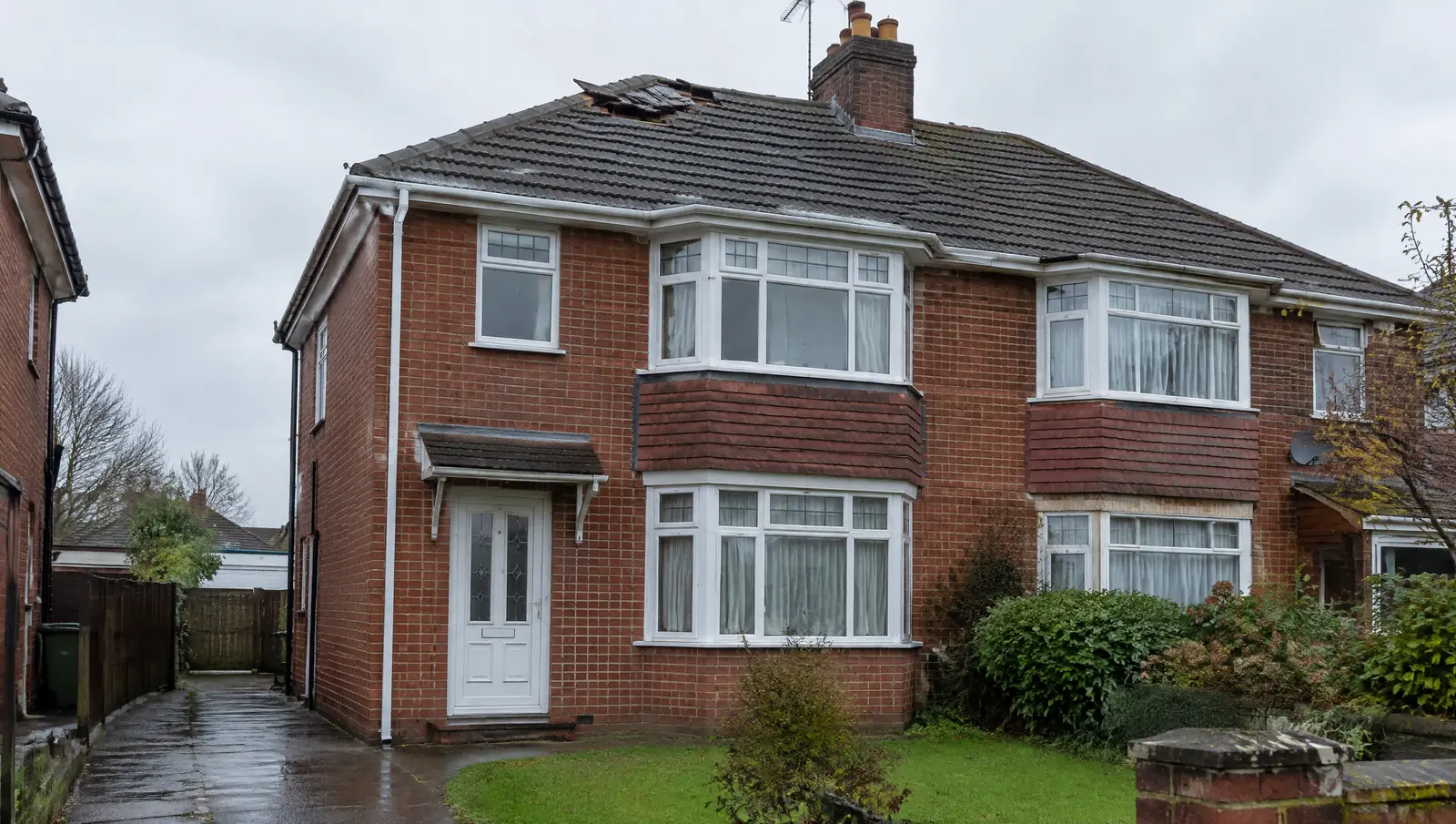
Does buildings insurance cover roof repairs?
Sometimes, and the deciding factor is never the size of the bill. It is what caused the damage, how sudden it was, and what the roof looked like beforehand.
Every buildings policy sold in the UK works the same way on roofs. It is not a maintenance contract. It insures you against specific events that come out of nowhere, and it deliberately excludes the slow decline that every roof goes through. That distinction decides almost every claim.
What buildings insurance does cover
Standard policies list their insured events. On a roof, these are the ones that matter:
- Storm damage. Tiles lifted or stripped, ridge tiles blown off, chimney pots down, flashing peeled back. See storm damage claims for the tests insurers apply.
- Falling trees and branches. Covered whether or not the tree is yours, provided it was not felled deliberately.
- Impact. A vehicle, scaffolding, aerials, debris from someone else's property.
- Fire, lightning and explosion. Including the water damage caused by putting the fire out.
- Escape of water. Burst tanks and pipes in the loft, which is roof-adjacent damage rather than roof damage, and usually a separate section of the policy.
- Vandalism and theft. Stripped lead is the classic, and many policies cap lead theft or exclude it after a first claim.
Where a claim succeeds, the insurer pays to put the damaged part back as it was, plus the access and scaffolding needed to do it, minus your excess.
What it never covers
This is the list that ends most claims, and none of it is unusual or unfair. It is simply what "insurance" means.
- Wear and tear. Nail fatigue, slipped tiles from age, perished felt, crumbling mortar, a covering at the end of its life.
- Gradual damage. A leak that has been happening for months, even if you only noticed it last week.
- Lack of maintenance. Blocked gutters, moss build-up, a valley nobody cleared. Insurers ask when the roof was last inspected for exactly this reason.
- Frost and damp. Damage from freezing conditions is excluded on most policies unless it burst a pipe.
- Poor workmanship. If the last roofer botched it, that is a claim against them or their guarantee, not against your insurer.
- Pre-existing damage. Anything that was already there when the policy started.
Told your claim is wear and tear when you think it is storm damage? Read what to do when a roof claim is refused.
The test an insurer applies
When a loss adjuster looks at a roof, they are answering three questions in order.
- Was there an insured event? For storm claims they check weather station data for your postcode on the date you gave them.
- Is the damage consistent with that event? Three tiles missing from a windward slope after 60mph gusts, yes. A slow-growing ceiling stain in still weather, no.
- Was the event the main cause? A roof already at the end of its life that finally let go in a breeze is decided against you, however genuine the leak.
That third question is where most disputes live, and it is why the condition of the roof before the event matters so much. A documented roof inspection from a year ago is worth more in a claim than any amount of arguing afterwards.
Should you claim at all?
Run the numbers before you pick up the phone. A typical excess is £250 to £500, and buildings excesses on storm damage are often higher than the headline figure.
| Repair | Typical cost | Worth claiming? |
|---|---|---|
| Two or three slipped tiles | £150 – £300 | No, below most excesses |
| Flashing repaired after storm | £200 – £600 | Marginal |
| Ridge tiles re-bedded along a run | £600 – £1,200 | Usually yes |
| Storm strips a slope | £2,500 – £8,000 | Yes |
| Tree through the roof | £5,000 + | Yes, and report it the same day |
A claim also sits on your record for five years and can lift your premium, so a £300 repair claimed today can cost more than £300 over that period. Price the work first. Our roof repair cost guide gives the fair 2026 range for every common job.
If you are not sure what caused it
Get an independent roofer to look before you call the insurer, and ask for a written report rather than a quote. A report describes the cause, the age and condition of the covering, and whether the damage is consistent with the weather on a given date. That document costs £250 to £600 and it is the single most useful thing you can put in front of a loss adjuster. A quote, by contrast, tells the insurer only what someone wants to charge.
Need the repair priced before you decide?
Get up to three itemised quotes from vetted local roofers, free and with no obligation, so you know whether the claim is worth it.